Schmid Vera K, Hobeika Elias
Institute of Immunology, Ulm University, Ulm, Germany.
Front Oncol. 2024 Feb 26;14:1339620. doi: 10.3389/fonc.2024.1339620. eCollection 2024.
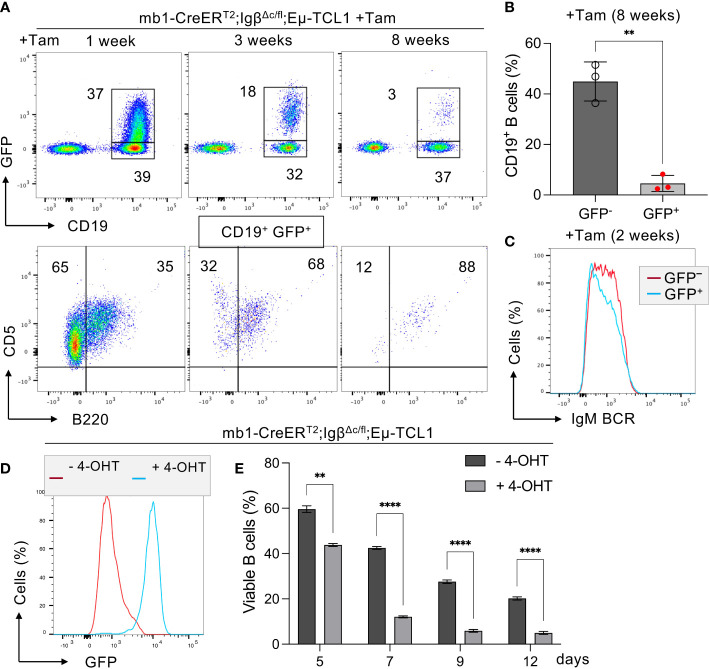
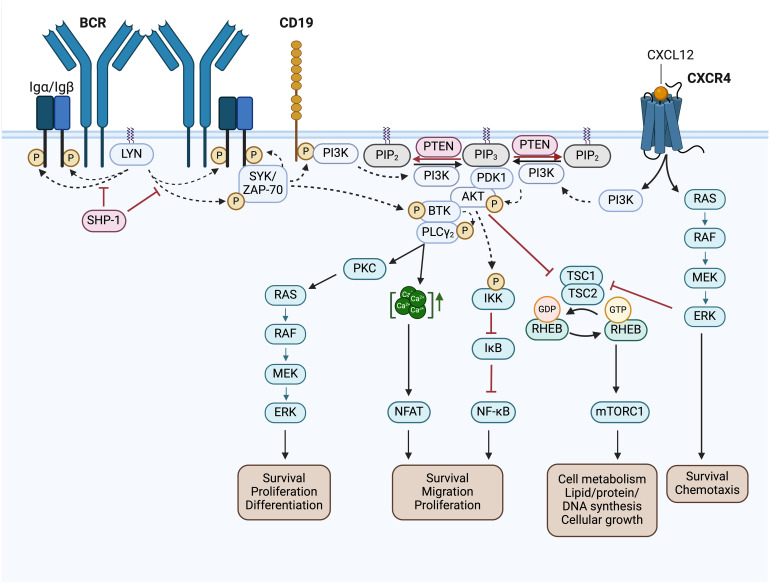
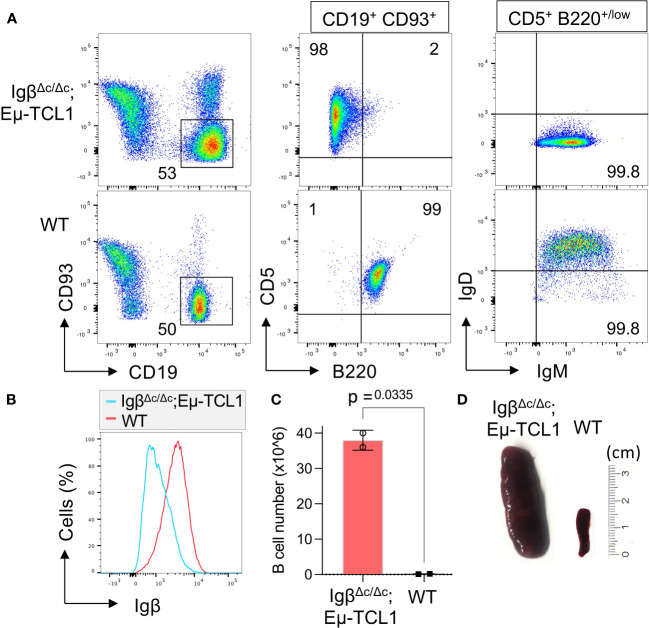
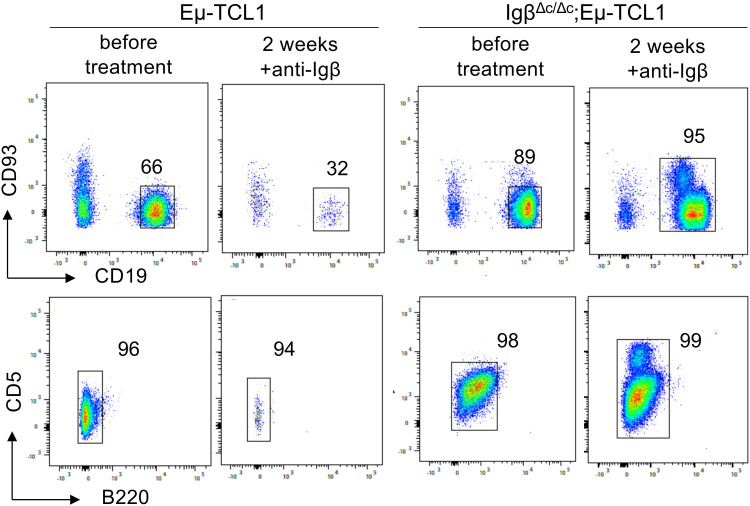
B cell antigen receptor (BCR) signaling is a key driver of growth and survival in both normal and malignant B cells. Several lines of evidence support an important pathogenic role of the BCR in chronic lymphocytic leukemia (CLL). The significant improvement of CLL patients' survival with the use of various BCR pathway targeting inhibitors, supports a crucial involvement of BCR signaling in the pathogenesis of CLL. Although the treatment landscape of CLL has significantly evolved in recent years, no agent has clearly demonstrated efficacy in patients with treatment-refractory CLL in the long run. To identify new drug targets and mechanisms of drug action in neoplastic B cells, a detailed understanding of the molecular mechanisms of leukemic transformation as well as CLL cell survival is required. In the last decades, studies of genetically modified CLL mouse models in line with CLL patient studies provided a variety of exciting data about BCR and BCR-associated kinases in their role in CLL pathogenesis as well as disease progression. BCR surface expression was identified as a particularly important factor regulating CLL cell survival. Also, BCR-associated kinases were shown to provide a crosstalk of the CLL cells with their tumor microenvironment, which highlights the significance of the cells' milieu in the assessment of disease progression and treatment. In this review, we summarize the major findings of recent CLL mouse as well as patient studies in regard to the BCR signalosome and discuss its relevance in the clinics.
B细胞抗原受体(BCR)信号传导是正常和恶性B细胞生长与存活的关键驱动因素。多项证据支持BCR在慢性淋巴细胞白血病(CLL)中具有重要的致病作用。使用各种靶向BCR途径的抑制剂可显著提高CLL患者的生存率,这支持了BCR信号传导在CLL发病机制中的关键作用。尽管近年来CLL的治疗格局发生了显著变化,但从长远来看,尚无药物在治疗难治性CLL患者中明确显示出疗效。为了确定肿瘤性B细胞中的新药物靶点和药物作用机制,需要详细了解白血病转化以及CLL细胞存活的分子机制。在过去几十年中,与CLL患者研究一致的转基因CLL小鼠模型研究提供了关于BCR及其相关激酶在CLL发病机制和疾病进展中作用的各种令人兴奋的数据。BCR表面表达被确定为调节CLL细胞存活的一个特别重要的因素。此外,BCR相关激酶被证明可使CLL细胞与其肿瘤微环境发生相互作用,这突出了细胞微环境在评估疾病进展和治疗中的重要性。在本综述中,我们总结了近期CLL小鼠以及患者研究中关于BCR信号体的主要发现,并讨论其在临床上的相关性。