Ibrahim Delveen R, Saadi Abdulrhaman T, Yahya Nizar B, Ibrahim Marwa S, Saeed Ali Y, Abdulaziz Sawsan S, Hasqyal Revan Y, Alarsalani Berivan K, Ibrahim Khalid S
Department of Biology, Collage of Science, University of Duhok, Duhok, Kurdistan Region, Iraq.
Medical Microbiology Department, College of Medicine, University of Duhok, Duhok, Kurdistan Region, Iraq.
Front Pharmacol. 2024 Feb 26;15:1347832. doi: 10.3389/fphar.2024.1347832. eCollection 2024.
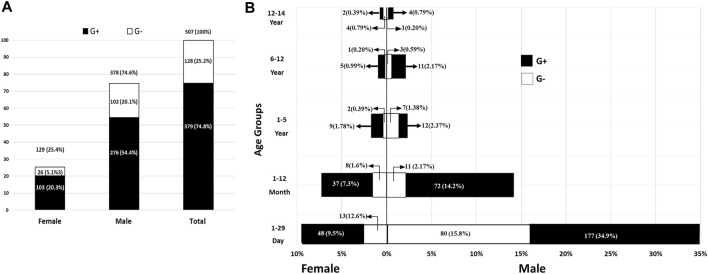
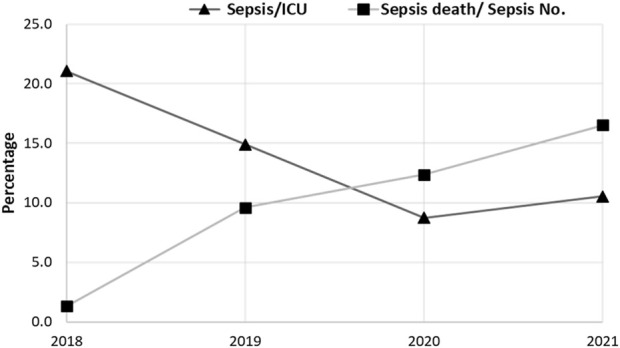
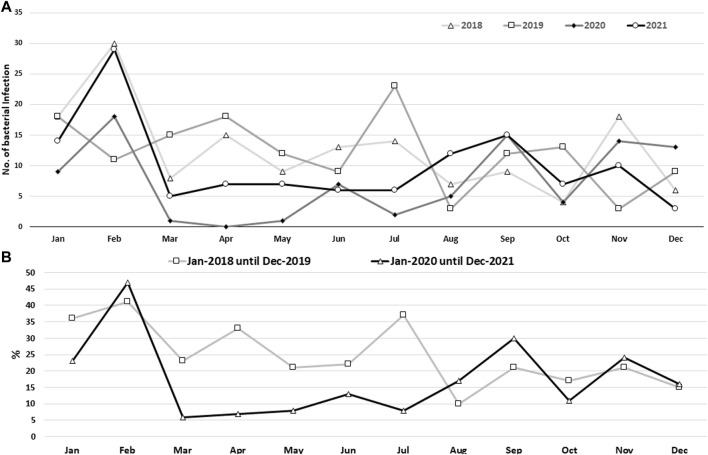
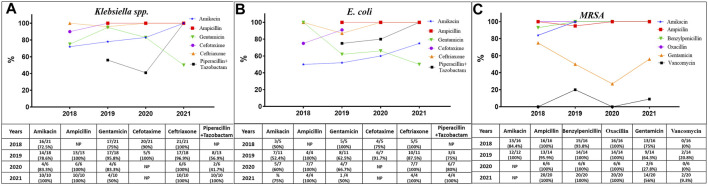
Sepsis is a life-threatening complication in pediatric patients. This study primarily aimed to investigate sepsis-causing bacteria and their antimicrobial resistance profile and check the change in the antimicrobial resistance trend for some selected bacteria. In addition, we evaluated the incidence of sepsis, the related mortality rate, and the effectiveness and outcome of the treatment regimes in sepsis pediatric patients. A retrospective analysis was conducted on 4-year data (2018-2021) collected from three intensive care units at the Hevi Pediatric Teaching Hospital. Sepsis screening involved clinical detection and confirmation by blood culture. A total of 520 out of 1,098 (47.35%) blood samples showed positive microbial growth. A decrease in sepsis rate was observed during the COVID-19 pandemic. Coagulase-negative Staphylococci (CoNS) and were the most commonly isolated bacteria. A notable variation in the antimicrobial resistance trend was observed among sepsis-causing bacteria. The empirical sepsis treatment recommended by the WHO was ineffective, as certain bacteria exhibited 100% resistance to every antibiotic tested. The mortality rate significantly increased from 1.3% in 2018 to 16.5% in 2021. The antimicrobial resistance profile of sepsis causing bacteria is of concerns, indicating a potentially serious situation. Thus, to avoid treatment failure, the monitoring of antimicrobial resistance in pediatric patients is essential.
脓毒症是儿科患者中一种危及生命的并发症。本研究主要旨在调查引起脓毒症的细菌及其抗菌药物耐药性特征,并检查某些选定细菌的抗菌药物耐药性趋势变化。此外,我们评估了脓毒症的发病率、相关死亡率以及脓毒症儿科患者治疗方案的有效性和结果。对从赫维儿科教学医院三个重症监护病房收集的4年数据(2018 - 2021年)进行了回顾性分析。脓毒症筛查包括临床检测和血培养确认。1098份血样中共有520份(47.35%)显示微生物生长呈阳性。在新冠疫情期间观察到脓毒症发生率有所下降。凝固酶阴性葡萄球菌(CoNS)是最常分离出的细菌。在引起脓毒症的细菌中观察到抗菌药物耐药性趋势存在显著差异。世界卫生组织推荐的脓毒症经验性治疗无效,因为某些细菌对所测试的每种抗生素都表现出100%的耐药性。死亡率从2018年的1.3%显著上升至2021年的16.5%。引起脓毒症的细菌的抗菌药物耐药性特征令人担忧,表明情况可能很严重。因此,为避免治疗失败,监测儿科患者的抗菌药物耐药性至关重要。