Bellini Tommaso, Brisca Giacomo, Orfanos Ioannis, Mariani Marcello, Pezzotta Federico, Giordano Benedetta, Pastorino Andrea, Misley Silvia, Formigoni Clelia, Fueri Elena, Ferretti Marta, Marin Marta, Finetti Martina, Piccotti Emanuela, Castagnola Elio, Moscatelli Andrea
Pediatric Emergency Room and Emergency Medicine Unit, Emergency Department, IRCCS Istituto Giannina Gaslini, 16147 Genoa, Italy.
Neonatal and Pediatric Intensive Care Unit, Emergency Department, IRCCS Istituto Giannina Gaslini, 16147 Genoa, Italy.
Healthcare (Basel). 2024 Feb 23;12(5):528. doi: 10.3390/healthcare12050528.
To provide a comprehensive description of the clinical features, biochemical characteristics, and outcomes of infants up to 90 days old with COVID-19. Moreover, to assess the severity of the disease and propose an effective management pathway.
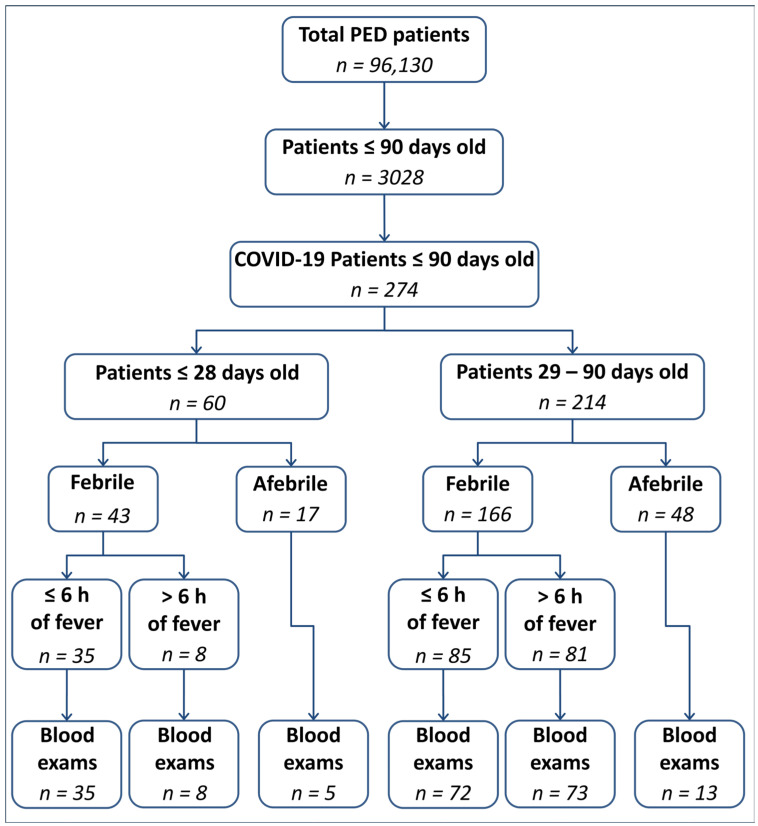
Retrospective single-center study spanning three years. Patient data includes age, sex, symptoms, comorbidities, blood and urine test results, cultures, admission, length of stay, therapies, intensive care unit admission, and mortality.
A total of 274 patients were enrolled in the study, comprising 55% males. Among them, 60 patients (22%) were under the age of 29 days, while 214 (78%) fell within the 29 to 90 days age range. The overall incidence of SARS-CoV-2 infections was 0.28 per 10,000 Pediatric Emergency Department admissions. Blood inflammatory markers showed no significant abnormalities, and there were no recorded instances of positive blood cultures. Less than 1% of infants showed urinary tract infections with positive urine cultures, and 1.5% of patients had a concurrent RSV infection. Hospitalization rates were 83% for neonates and 67% for infants, with a median length of stay (LOS) of 48 h for both age groups. None of the patients required admission to the Pediatric or Neonatal Intensive Care Unit, and only one required High Flow Nasal Cannula (HFNC). No secondary serious bacterial infections were observed, and all hospitalized patients were discharged without short-term sequelae. No deaths were reported.
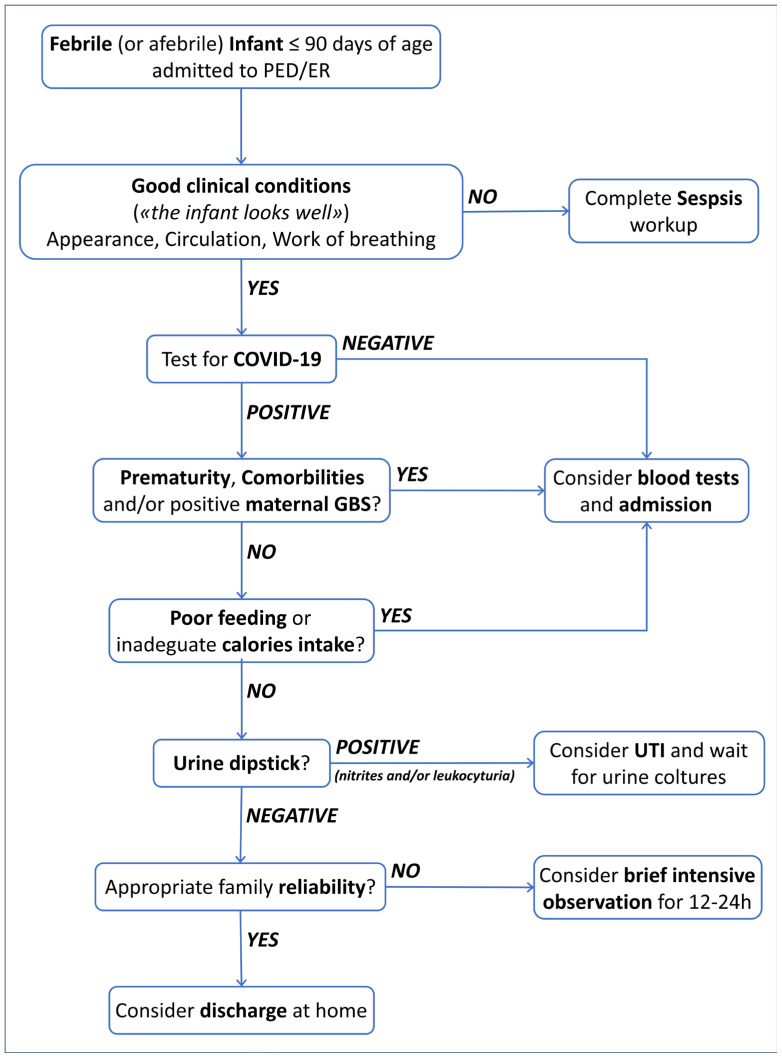
Infants with COVID-19 generally exhibit milder or asymptomatic forms of the disease, making home management a viable option in most cases. Blood tests, indicative of a mild inflammatory response, are recommended primarily for children showing symptoms of illness. Hospitalization precautions for infants without apparent illness or comorbidities are deemed unnecessary. Given the evolving nature of experiences with COVID-19 in infants, maintaining a high level of clinical suspicion remains imperative.
全面描述90日龄及以下感染新型冠状病毒肺炎(COVID-19)婴儿的临床特征、生化特性及转归。此外,评估疾病严重程度并提出有效的管理途径。
一项为期三年的回顾性单中心研究。患者数据包括年龄、性别、症状、合并症、血液和尿液检测结果、培养结果、入院情况、住院时长、治疗方法、入住儿科重症监护病房情况及死亡率。
共274例患者纳入研究,其中55%为男性。其中,60例(22%)年龄在29日龄以下,214例(78%)年龄在29至90日龄之间。新型冠状病毒2(SARS-CoV-2)感染的总体发生率为每10000例儿科急诊科入院病例中有0.28例。血液炎症标志物无明显异常,且无血培养阳性记录。不到1%的婴儿尿培养阳性显示有尿路感染,1.5%的患者同时感染呼吸道合胞病毒(RSV)。新生儿住院率为83%,婴儿住院率为67%,两个年龄组的中位住院时长均为48小时。无一例患者需要入住儿科或新生儿重症监护病房,仅1例需要高流量鼻导管吸氧(HFNC)。未观察到继发性严重细菌感染,所有住院患者均出院且无短期后遗症。无死亡病例报告。
感染COVID-19的婴儿通常表现为病情较轻或无症状,多数情况下居家管理是可行的选择。主要建议对出现疾病症状的儿童进行血液检查,以提示轻度炎症反应。对于无明显疾病或合并症的婴儿,无需采取住院预防措施。鉴于婴儿感染COVID-19的情况不断变化,保持高度的临床怀疑仍然至关重要。