Andronikidi Paraskevi Eva, Orovou Eirini, Mavrigiannaki Eleftheria, Athanasiadou Virginia, Tzitiridou-Chatzopoulou Maria, Iatrakis George, Grapsa Eirini
Department of Nephrology, Aretaieion University Hospital, School of Medicine, National and Kapodistrian University of Athens, 11528 Athens, Greece.
Department of Midwifery, University of Western Macedonia, 50200 Ptolemaida, Greece.
Int J Mol Sci. 2024 Feb 27;25(5):2741. doi: 10.3390/ijms25052741.
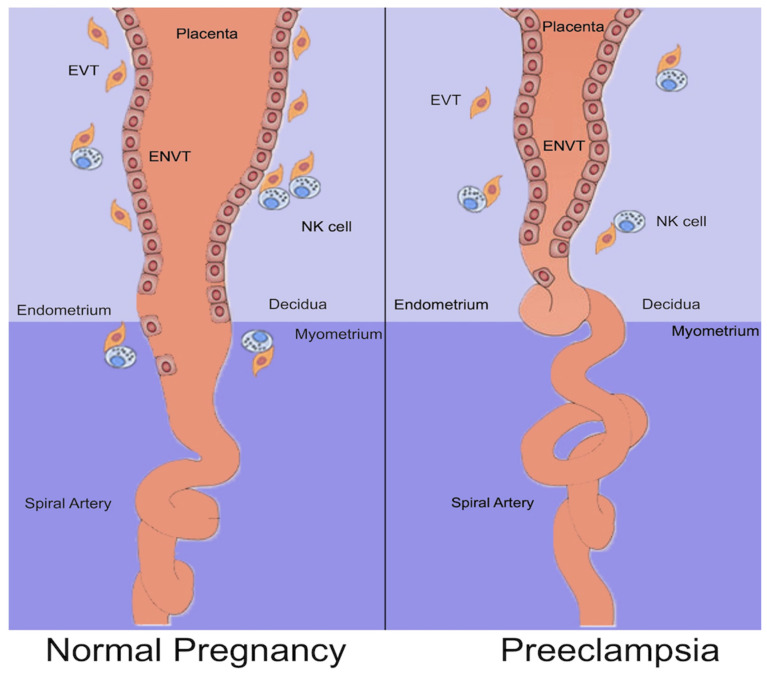
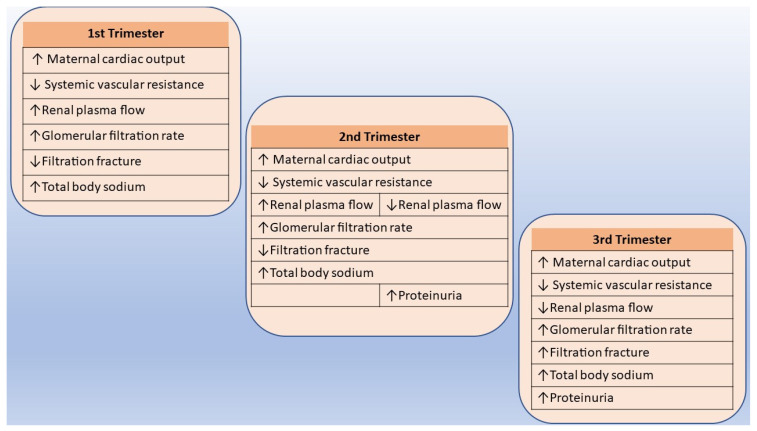
Pre-eclampsia is a serious complication of pregnancy characterized by a state of multiorgan hypertensive disorders, with or without proteinuria and possible multiorgan dysfunction. Chronic kidney disease is an established risk factor for the development of pre-eclampsia, as angiogenic homeostasis is altered and the maternal circulation is already hypertensive. Facing pre-eclampsia in the context of chronic kidney disease is a challenging emergency for both the mother and the fetus. The clinical features and the management of this multi-organ disorder are clearly defined in the modern literature but the underlying pathophysiologic mechanisms remain not fully elucidated. Understanding the pathophysiology that mediates the onset of pre-eclampsia itself and in synergy with chronic kidney disease is fundamental for developing prompt prevention strategies, treatment planning, and patient counseling. This review aims to summarize the main molecular mechanisms involved in the process of pre-eclampsia, with a particular focus on the role of the kidneys and hormonal pathways related to renal function in normal pregnancy and pre-eclamptic syndromes.
子痫前期是一种严重的妊娠并发症,其特征是多器官高血压紊乱状态,伴有或不伴有蛋白尿以及可能的多器官功能障碍。慢性肾脏病是子痫前期发生的既定危险因素,因为血管生成稳态发生改变且母体循环已经处于高血压状态。在慢性肾脏病背景下面对子痫前期,对母亲和胎儿来说都是具有挑战性的紧急情况。现代文献中已明确界定了这种多器官疾病的临床特征和管理方法,但潜在的病理生理机制仍未完全阐明。了解介导子痫前期发病本身以及与慢性肾脏病协同作用的病理生理学,对于制定及时的预防策略、治疗计划和患者咨询至关重要。本综述旨在总结子痫前期过程中涉及的主要分子机制,特别关注肾脏的作用以及正常妊娠和子痫前期综合征中与肾功能相关的激素途径。