Department of Surgery, Zuyderland Medical Centre, Henri Dunantstraat 5, Heerlen, 6419 PC, The Netherlands.
School of Nutrition and Translational Research in Metabolism (NUTRIM), Maastricht University, Universiteitssingel 40, Maastricht, 6229 ER, The Netherlands.
BMC Health Serv Res. 2024 Mar 13;24(1):330. doi: 10.1186/s12913-024-10837-z.
An accumulating body of research suggests that an accelerating enhanced recovery after colon surgery protocol is beneficial for patients, however, to obtain these effects, adherence to all elements of the protocol is important. The implementation of complex interventions, such as the Enhanced Recovery After Surgery protocol (ERAS), and their strict adherence have proven to be difficult. The same challenges can be expected in the implementation of the accelerated Enhanced Recovery Pathways (ERPs). This study aimed to understand the perspectives of both healthcare professionals (HCPs) and patients on the locally studied acCelerated enHanced recovery After SurgEry (CHASE) protocol.
For this mixed-method study, HCPs who provided CHASE care and patients who received CHASE care were recruited using purposive sampling. Ethical approval was obtained by the Medical Ethical Committee of the Zuyderland Medical Centre (NL71804.096.19, METCZ20190130, October 2022). Semi-structured, in-depth, one-on-one interviews were conducted with HCPs (n = 13) and patients (n = 11). The interviews consisted of a qualitative and quantitative part, the protocol evaluation and the Measurement Instrument or Determinant of Innovations-structured questionnaire. We explored the perspectives, barriers, and facilitators of the CHASE protocol implementation. The interviews were audiotaped, transcribed verbatim and analysed independently by two researchers using direct content analysis.
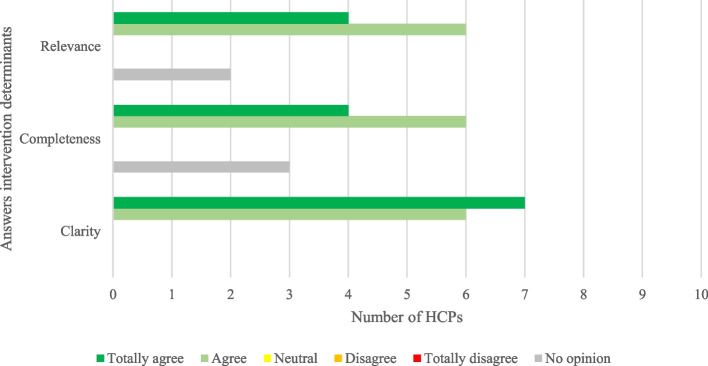
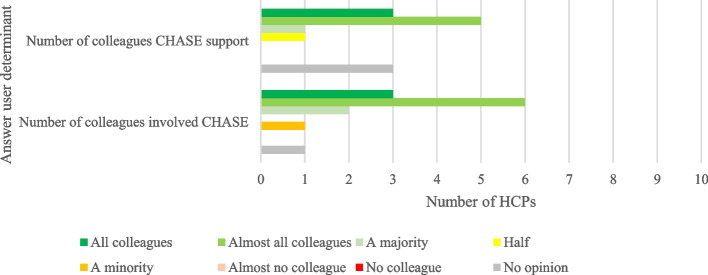
The results showed that overall, HCPs support the implementation of the CHASE protocol. The enablers were easy access to the protocol, the relevance of the intervention, and thorough patient education. Some of the reported barriers included the difficulty of recognizing CHASE patients, the need for regular feedback, and the updates on the implementation progress. Most patients were enthusiastic about early discharge after surgery and expressed satisfaction with the care they received. On the other hand, the patients sometimes received different information from different HCPs, considered the information to be too extensive and few experienced some discomfort with CHASE care.
Bringing CHASE care into practice was challenging and required adaptation from HCPs. The experiences of HCPs showed that the protocol can be improved further, and the mostly positive experiences of patients are a motivation for this improvement. These results yielded practical implications to improve the implementation of accelerated ERPs.
越来越多的研究表明,加速结直肠手术后康复方案对患者有益,然而,要获得这些效果,重要的是要坚持方案的所有内容。复杂干预措施(如加速康复外科方案)的实施及其严格遵循已被证明具有挑战性。在实施加速增强康复途径(ERPs)时,也可以预期会遇到同样的挑战。本研究旨在了解医疗保健专业人员(HCPs)和患者对当地研究的加速增强手术后康复(CHASE)方案的看法。
对于这项混合方法研究,使用目的抽样法招募了提供 CHASE 护理的 HCPs 和接受 CHASE 护理的患者。医疗伦理委员会(Zuyderland 医疗中心 NL71804.096.19,METCZ20190130,2022 年 10 月)获得了伦理批准。对 HCPs(n=13)和患者(n=11)进行了半结构化、深入的一对一访谈。访谈包括定性和定量部分、方案评估和测量工具或创新决定因素问卷。我们探讨了实施 CHASE 方案的观点、障碍和促进因素。访谈进行了录音,逐字转录,并由两名研究人员使用直接内容分析进行独立分析。
结果表明,总体而言,HCPs 支持实施 CHASE 方案。促进因素包括容易获得方案、干预的相关性以及对患者的彻底教育。报告的一些障碍包括难以识别 CHASE 患者、需要定期反馈以及更新实施进展。大多数患者对手术后尽早出院感到兴奋,并对所接受的护理表示满意。另一方面,患者有时会从不同的 HCP 那里获得不同的信息,认为信息过于广泛,少数人对 CHASE 护理感到不适。
将 CHASE 护理付诸实践具有挑战性,需要 HCPs 进行调整。HCPs 的经验表明,该方案可以进一步改进,患者的大多数积极体验是改进的动力。这些结果产生了切实可行的影响,以改善加速 ERP 的实施。