Department of Integrative Physiology, Tottori University Graduate School and Faculty of Medicine, Yonago, Japan.
Physiol Rep. 2024 Mar;12(5):e15970. doi: 10.14814/phy2.15970.
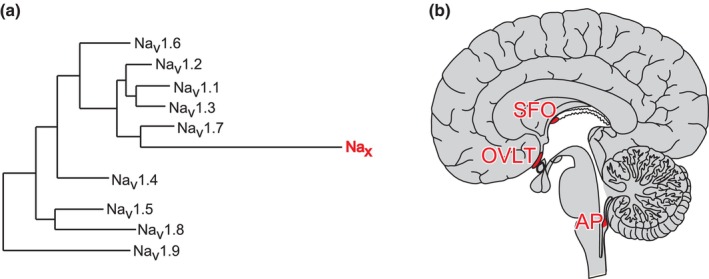
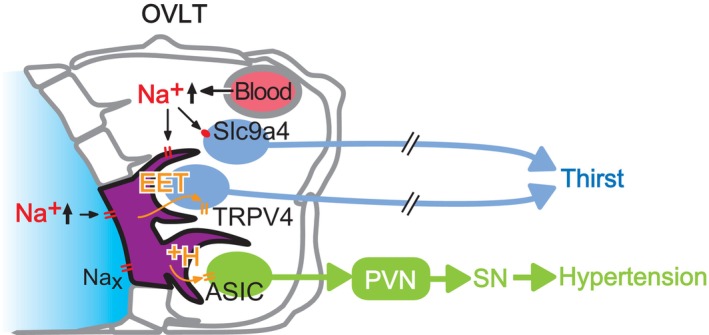
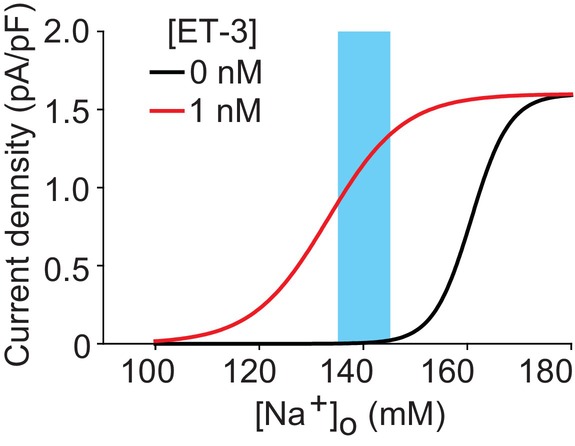
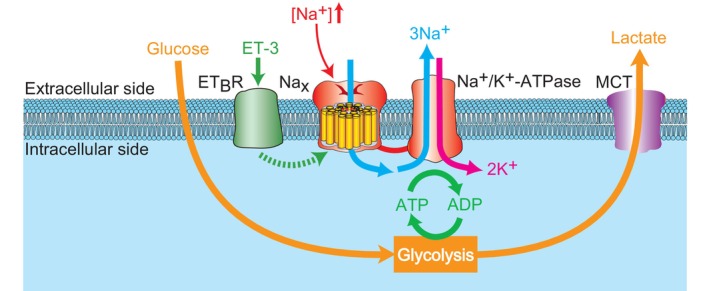
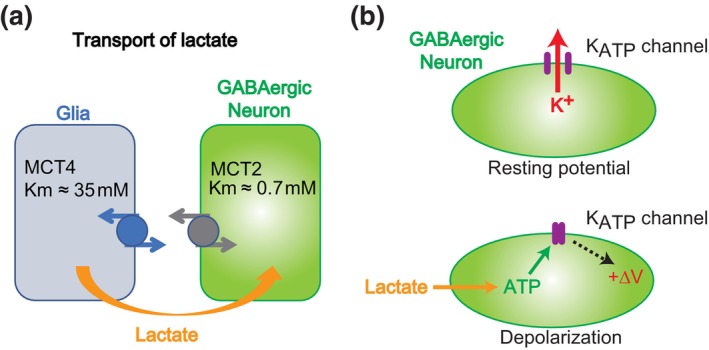
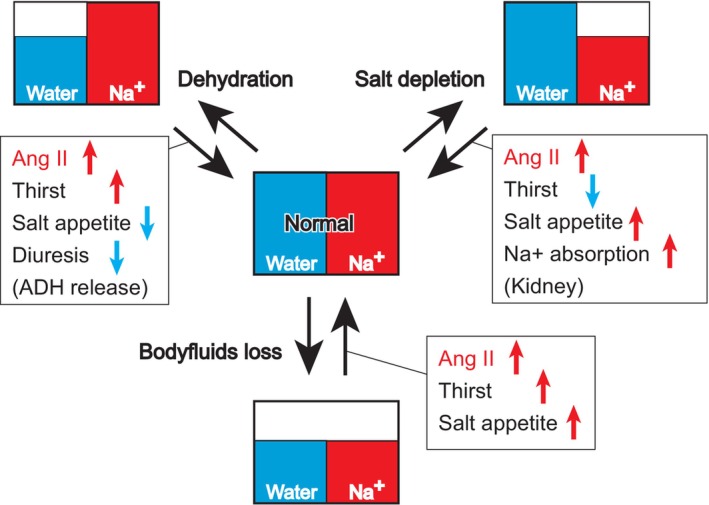
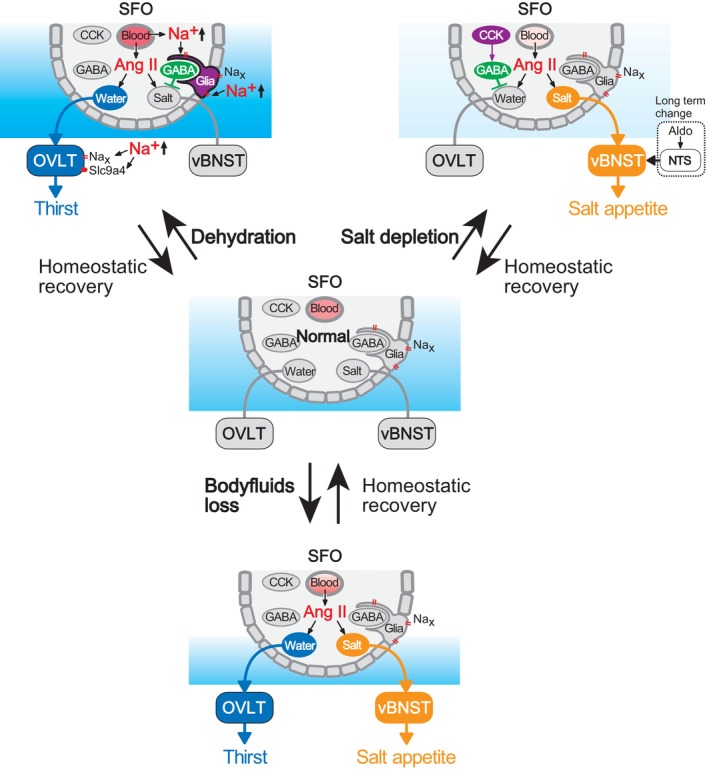
The brain possesses intricate mechanisms for monitoring sodium (Na) levels in body fluids. During prolonged dehydration, the brain detects variations in body fluids and produces sensations of thirst and aversions to salty tastes. At the core of these processes Na , the brain's Na sensor, exists. Specialized neural nuclei, namely the subfornical organ (SFO) and organum vasculosum of the lamina terminalis (OVLT), which lack the blood-brain barrier, play pivotal roles. Within the glia enveloping the neurons in these regions, Na collaborates with Na /K -ATPase and glycolytic enzymes to drive glycolysis in response to elevated Na levels. Lactate released from these glia cells activates nearby inhibitory neurons. The SFO hosts distinct types of angiotensin II-sensitive neurons encoding thirst and salt appetite, respectively. During dehydration, Na -activated inhibitory neurons suppress salt-appetite neuron's activity, whereas salt deficiency reduces thirst neuron's activity through cholecystokinin. Prolonged dehydration increases the Na sensitivity of Na via increased endothelin expression in the SFO. So far, patients with essential hypernatremia have been reported to lose thirst and antidiuretic hormone release due to Na -targeting autoantibodies. Inflammation in the SFO underlies the symptoms. Furthermore, Na activation in the OVLT, driven by Na retention, stimulates the sympathetic nervous system via acid-sensing ion channels, contributing to a blood pressure elevation.
大脑拥有复杂的机制来监测体液中的钠 (Na) 水平。在长时间脱水的情况下,大脑会检测到体液的变化,并产生口渴的感觉和对咸味的厌恶。在这些过程的核心,存在着大脑的 Na 传感器,即钠感受器。缺乏血脑屏障的专门神经核,即下丘脑血管加压素器官 (SFO) 和终板血管器 (OVLT),起着关键作用。在这些区域神经元周围的神经胶质细胞中,Na 与 Na /K -ATP 酶和糖酵解酶协同作用,以响应升高的 Na 水平促进糖酵解。从这些神经胶质细胞中释放的乳酸激活附近的抑制性神经元。SFO 中存在着分别编码口渴和盐食欲的两种不同类型的血管紧张素 II 敏感神经元。在脱水期间,Na 激活的抑制性神经元抑制盐食欲神经元的活动,而盐缺乏则通过胆囊收缩素减少口渴神经元的活动。在 SFO 中,由于内皮素表达增加,延长的脱水会增加 Na 的敏感性。到目前为止,据报道,由于针对 Na 的自身抗体,原发性高钠血症患者会失去口渴和抗利尿激素的释放。SFO 中的炎症是这些症状的基础。此外,由于 Na 潴留导致的 OVLT 中的 Na 激活,通过酸感应离子通道刺激交感神经系统,导致血压升高。