Shapiro Lucas, Basra Mahi, Patel Hemangi, Payne Collin, Brazen Brett, Biglione Alejandro
Osteopathic Medicine, Nova Southeastern University Dr. Kiran C. Patel College of Osteopathic Medicine, Clearwater, USA.
Sports Medicine, Nova Southeastern University Dr. Kiran C. Patel College of Osteopathic Medicine, Fort Lauderdale, USA.
Cureus. 2024 Feb 12;16(2):e54058. doi: 10.7759/cureus.54058. eCollection 2024 Feb.
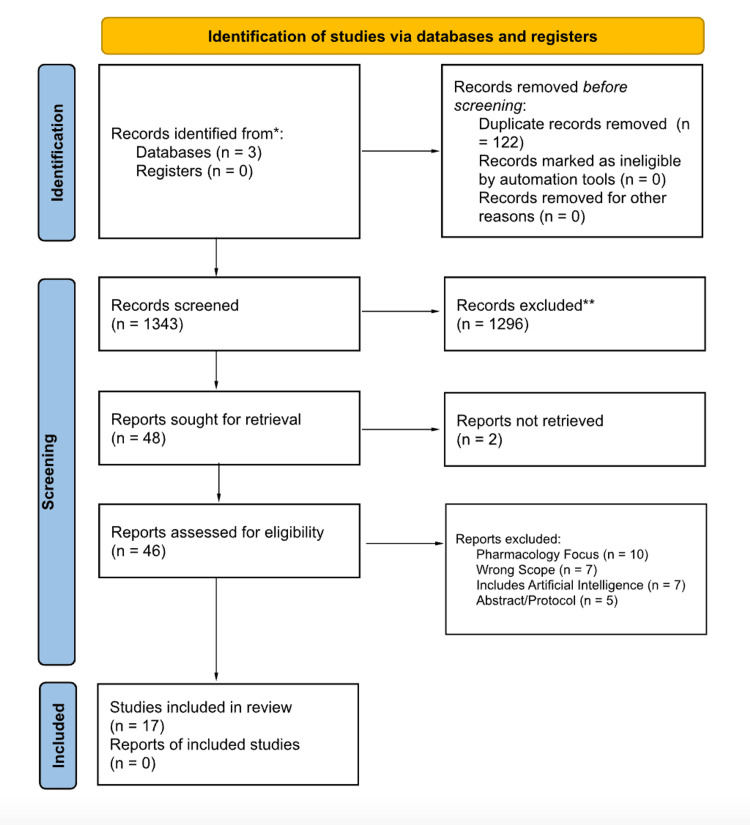
Melanomas arise de novo or in the context of a precursor lesion. Lesions typically grow radially and then undergo a vertical growth phase proceeding to local invasion and metastasis. This review describes the utility of different imaging modalities in diagnosis and melanocytic lesion monitoring. A literature search was performed in November 2023 utilizing EMBASE, Medline, and PubMed. The PRISMA diagram demonstrates the review process. Reflectance confocal microscopy (RCM) utilizes near-infrared light to help diagnose dermatologic lesions. RCM was found to demonstrate nearly two times the positive predictive value compared to dermoscopy. The introduction of the Berlin Ultrasound (US) Morphology Criteria permitted a 65-80% improvement in diagnostic sensitivity. US with fine-needle aspiration cytology (FNAC) accurately predicts the necessity for sentinel lymph node biopsy and lymphadenectomy, sparing patients with metastasis and prompting biopsy for equivocal lesions. Single-photon emission computed tomography/computed tomography (SPECT/CT) is an adjunctive tool to anatomically and functionally assess lymphatic invasion. SPECT/CT improves the detection of sentinel nodes while decreasing operating time and improving cosmetic outcomes. 18F-fluorodeoxyglucose (18F-FDG) positron emission tomography/computed tomography (PET/CT) with small voxel reconstruction demonstrated increased specificity and sensitivity for detecting in-transit metastases of melanomas, specifically in the limbs. Dermoscopy allows providers to cost-effectively recognize common lesion patterns. Multiphoton microscopy assigns a weight-based score based on malignant features. Optical coherence angiography captures images of vessels to help diagnose equivocal lesions. Utilization of imaging techniques may increase diagnostic accuracy, reduce unnecessary procedures, and help guide treatment plans. Additional research is needed to further characterize the utility of these techniques in order to improve the diagnosis and treatment of melanomas.
黑色素瘤可原发产生,也可在前驱病变的基础上发生。病变通常先呈放射状生长,然后进入垂直生长阶段,进而发生局部侵袭和转移。本综述描述了不同成像方式在黑色素细胞病变诊断和监测中的应用。2023年11月利用EMBASE、Medline和PubMed进行了文献检索。PRISMA流程图展示了综述过程。反射式共聚焦显微镜(RCM)利用近红外光辅助诊断皮肤病变。研究发现,与皮肤镜检查相比,RCM的阳性预测值几乎高出两倍。柏林超声(US)形态学标准的引入使诊断敏感性提高了65 - 80%。超声联合细针穿刺细胞学检查(FNAC)能准确预测前哨淋巴结活检和淋巴结清扫的必要性,使有转移的患者避免不必要的手术,并促使对可疑病变进行活检。单光子发射计算机断层扫描/计算机断层扫描(SPECT/CT)是一种从解剖学和功能上评估淋巴管侵袭的辅助工具。SPECT/CT提高了前哨淋巴结的检出率,同时减少了手术时间并改善了美容效果。18F - 氟脱氧葡萄糖(18F - FDG)正电子发射断层扫描/计算机断层扫描(PET/CT)结合小体素重建对黑色素瘤的远处转移,尤其是四肢的远处转移,显示出更高的特异性和敏感性。皮肤镜检查使医生能够经济高效地识别常见病变模式。多光子显微镜根据恶性特征赋予基于权重的评分。光学相干血管造影术可采集血管图像以辅助诊断可疑病变。成像技术的应用可能会提高诊断准确性,减少不必要的程序,并有助于指导治疗方案。需要进一步研究以更全面地描述这些技术的效用,从而改善黑色素瘤的诊断和治疗。