Li Xiaobin, Ma Jun, Li Haiying, Li Hai, Ma Yuhui, Deng Haifeng, Yang Kailun
Xinjiang Key Laboratory of Herbivore Nutrition for Meat and Milk Production, College of Animal Science, Xinjiang Agricultural University, Ürümqi, China.
Xinjiang Key Laboratory of Horse Breeding and Exercise Physiology, College of Animal Science, Xinjiang Agricultural University, Ürümqi, China.
Front Vet Sci. 2024 Feb 28;11:1339940. doi: 10.3389/fvets.2024.1339940. eCollection 2024.
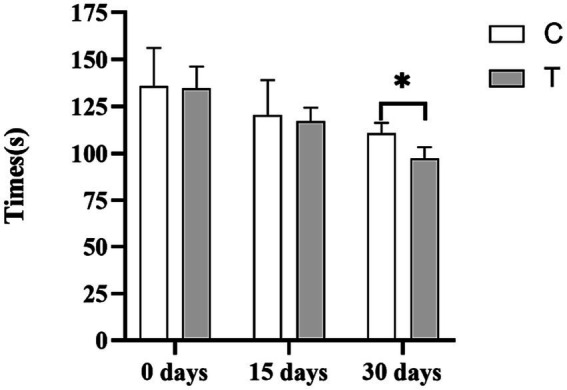
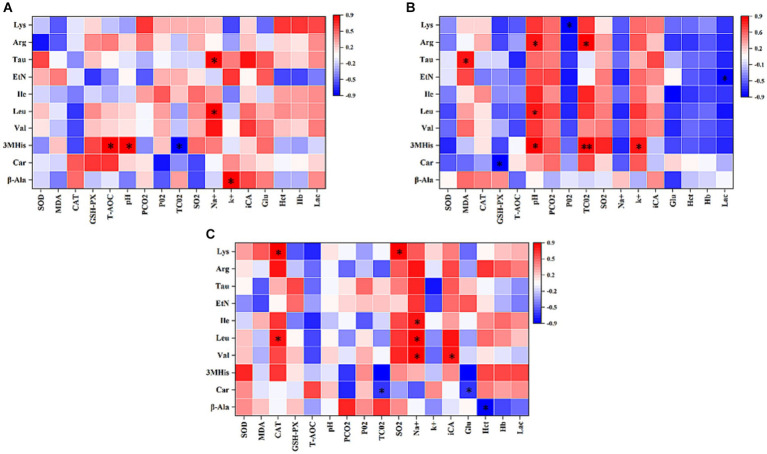
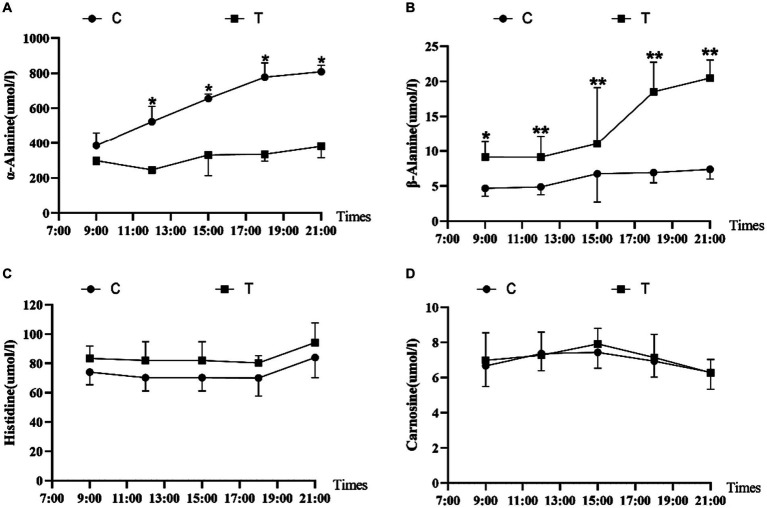
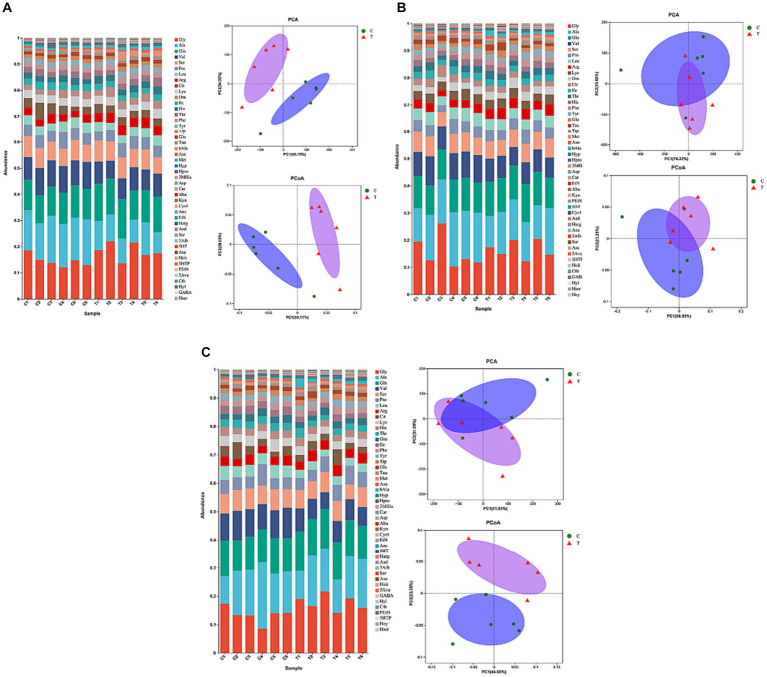
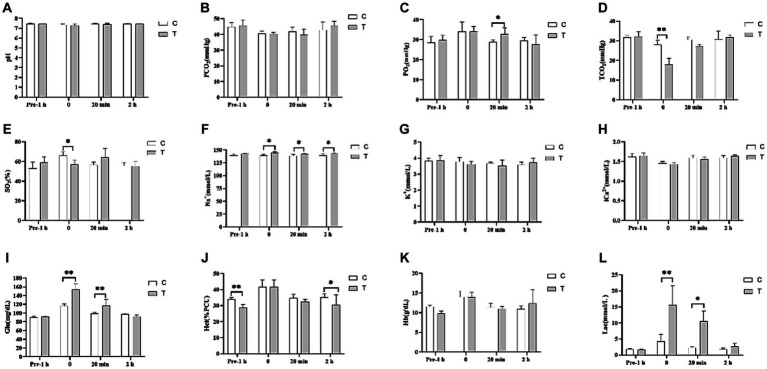
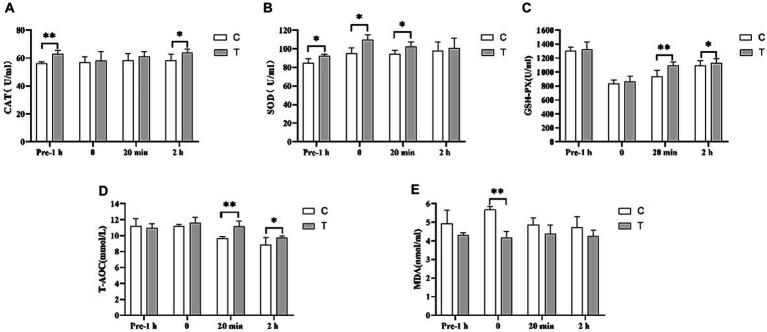
The objective of this study was to examine the effects of supplemental β-alanine feeding on the athletic performance of Yili horses involved in speed racing, focusing on alterations in plasma free amino acid patterns pre and post exercise. Additionally, the research aimed to evaluate the effects of carnosine on the plasma acid-base buffering capacity and antioxidant levels in these horses. Twelve Yili horse stallions, averaging 3 years in age and 346.50 ± 21.39 kg in weight, were chosen and randomly divided into two groups: a control group and a test group, each comprising six horses. The control group received a supplementation of 300 mg/kg BW/day of α-alanine, while the test group received 300 mg/kg BW/day of β-alanine. This supplementation regimen was maintained for a 30-day supplementation trial period, under identical feeding and management conditions. Throughout the trial, the horses participated in the 1,000 Speed Race, and three distinct blood samples were gathered for assessing plasma free amino acids, blood gases, biochemical parameters, and antioxidant parameters. The outcomes indicated a considerable enhancement in the 1,000 m exercise performance of the speed racing Yili horses in the test group compared to the control group, showcasing a noteworthy improvement of 12.01%, with the test group completing the race 13.29 s faster. Notably, the α-alanine content in the plasma of the control group Yili horses remained higher than that of the test group, demonstrating a consistent increasing trend. By contrast, the plasma β-alanine content was notably higher in the test group than in the control group. Over the course of the supplementation period, plasma β-alanine exhibited an escalating and then stabilizing trend in the test group, whereas in the control group, although β-alanine content also increased, the trend was less pronounced. The plasma levels of histidine and carnosine showed minimal variance between the two groups. Overall, the test group of Yili horses exhibited slightly higher plasma levels of histidine and carnosine compared to the control group. The addition of β-alanine to their diet for a duration of 30 days notably affected the plasma levels of amino acids both pre- and post-exercise in speed-racing Yili horses. Furthermore, β-alanine demonstrated an inhibitory effect on the catabolism of these horses' bodies during high-intensity exercise. Ten marker amino acids, including valine, leucine, β-alanine, isoleucine, carnosine, 3-methyl-histidine, lysine, ethanolamine, argnine, and taurine, displayed statistically significant changes. β-alanine notably increased the blood glucose levels of Yili horses and played a role in expediting the restoration of blood gas levels post-exercise. Moreover, in the test group of Yili horses, the levels of superoxide dismutase, glutathione peroxidase, and total antioxidant capacity significantly increased both before and after the race, while the content of malondialdehyde, an oxidation product, exhibited an extremely significant decrease immediately after the race. These outcomes suggest that the addition of β-alanine significantly augmented antioxidant levels during high-intensity exercise in Yili horses. Consequently, it reduced post-exercise injuries and accelerated the recovery process after exercise.
本研究的目的是研究补充β-丙氨酸对参加速度赛马的伊犁马运动表现的影响,重点关注运动前后血浆游离氨基酸模式的变化。此外,该研究旨在评估肌肽对这些马匹血浆酸碱缓冲能力和抗氧化水平的影响。选取12匹平均年龄3岁、体重346.50±21.39千克的伊犁种公马,随机分为两组:对照组和试验组,每组6匹马。对照组每天按300毫克/千克体重补充α-丙氨酸,而试验组每天按300毫克/千克体重补充β-丙氨酸。在相同的饲养和管理条件下,这种补充方案维持30天的补充试验期。在整个试验过程中,马匹参加1000米速度赛,并采集三份不同的血样以评估血浆游离氨基酸、血气、生化参数和抗氧化参数。结果表明,与对照组相比,试验组速度赛马伊犁马的1000米运动表现有显著提高,成绩显著提高了12.01%,试验组完成比赛的时间快了13.29秒。值得注意的是,对照组伊犁马血浆中的α-丙氨酸含量仍高于试验组,且呈持续上升趋势。相比之下,试验组血浆β-丙氨酸含量明显高于对照组。在补充期内,试验组血浆β-丙氨酸呈现先上升后稳定的趋势,而对照组虽然β-丙氨酸含量也有所增加,但趋势不明显。两组之间组氨酸和肌肽的血浆水平差异最小。总体而言,试验组伊犁马的组氨酸和肌肽血浆水平略高于对照组。在伊犁速度赛马的日粮中添加β-丙氨酸30天,显著影响了运动前后血浆氨基酸水平。此外,β-丙氨酸在高强度运动期间对这些马匹身体的分解代谢有抑制作用。包括缬氨酸、亮氨酸、β-丙氨酸、异亮氨酸、肌肽、3-甲基组氨酸、赖氨酸、乙醇胺、精氨酸和牛磺酸在内的10种标记氨基酸显示出统计学上的显著变化。β-丙氨酸显著提高了伊犁马的血糖水平,并在运动后加速血气水平的恢复中发挥了作用。此外,在伊犁马试验组中,超氧化物歧化酶、谷胱甘肽过氧化物酶和总抗氧化能力在比赛前后均显著增加,而氧化产物丙二醛的含量在比赛后立即显著降低。这些结果表明,添加β-丙氨酸显著提高了伊犁马在高强度运动期间的抗氧化水平。因此,它减少了运动后的损伤,并加速了运动后的恢复过程。