Department of Chemistry, Faculty of Natural Sciences, Constantine The Philosopher University in Nitra, Nitra, 949 74, Slovakia.
Doping Research Chair, Zoology Department, College of Science, King Saud University, 11451, Riyadh, Saudi Arabia.
Arch Toxicol. 2024 May;98(5):1323-1367. doi: 10.1007/s00204-024-03696-4. Epub 2024 Mar 14.
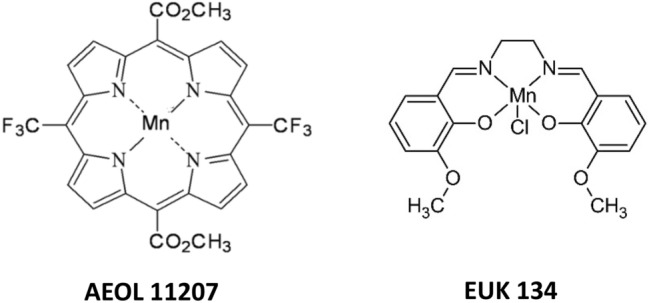
Reactive oxygen species (ROS) and reactive nitrogen species (RNS) are well recognized for playing a dual role, since they can be either deleterious or beneficial to biological systems. An imbalance between ROS production and elimination is termed oxidative stress, a critical factor and common denominator of many chronic diseases such as cancer, cardiovascular diseases, metabolic diseases, neurological disorders (Alzheimer's and Parkinson's diseases), and other disorders. To counteract the harmful effects of ROS, organisms have evolved a complex, three-line antioxidant defense system. The first-line defense mechanism is the most efficient and involves antioxidant enzymes such as superoxide dismutase (SOD), catalase (CAT), and glutathione peroxidase (GPx). This line of defense plays an irreplaceable role in the dismutation of superoxide radicals (O) and hydrogen peroxide (HO). The removal of superoxide radicals by SOD prevents the formation of the much more damaging peroxynitrite ONOO (O + NO → ONOO) and maintains the physiologically relevant level of nitric oxide (NO), an important molecule in neurotransmission, inflammation, and vasodilation. The second-line antioxidant defense pathway involves exogenous diet-derived small-molecule antioxidants. The third-line antioxidant defense is ensured by the repair or removal of oxidized proteins and other biomolecules by a variety of enzyme systems. This review briefly discusses the endogenous (mitochondria, NADPH, xanthine oxidase (XO), Fenton reaction) and exogenous (e.g., smoking, radiation, drugs, pollution) sources of ROS (superoxide radical, hydrogen peroxide, hydroxyl radical, peroxyl radical, hypochlorous acid, peroxynitrite). Attention has been given to the first-line antioxidant defense system provided by SOD, CAT, and GPx. The chemical and molecular mechanisms of antioxidant enzymes, enzyme-related diseases (cancer, cardiovascular, lung, metabolic, and neurological diseases), and the role of enzymes (e.g., GPx4) in cellular processes such as ferroptosis are discussed. Potential therapeutic applications of enzyme mimics and recent progress in metal-based (copper, iron, cobalt, molybdenum, cerium) and nonmetal (carbon)-based nanomaterials with enzyme-like activities (nanozymes) are also discussed. Moreover, attention has been given to the mechanisms of action of low-molecular-weight antioxidants (vitamin C (ascorbate), vitamin E (alpha-tocopherol), carotenoids (e.g., β-carotene, lycopene, lutein), flavonoids (e.g., quercetin, anthocyanins, epicatechin), and glutathione (GSH)), the activation of transcription factors such as Nrf2, and the protection against chronic diseases. Given that there is a discrepancy between preclinical and clinical studies, approaches that may result in greater pharmacological and clinical success of low-molecular-weight antioxidant therapies are also subject to discussion.
活性氧(ROS)和活性氮(RNS)被认为具有双重作用,因为它们可能对生物系统有害或有益。ROS 产生和消除之间的不平衡被称为氧化应激,这是许多慢性疾病(如癌症、心血管疾病、代谢疾病、神经退行性疾病(阿尔茨海默病和帕金森病)和其他疾病)的关键因素和共同特征。为了抵消 ROS 的有害影响,生物体已经进化出了一种复杂的三线抗氧化防御系统。第一道防线机制是最有效的,涉及抗氧化酶,如超氧化物歧化酶(SOD)、过氧化氢酶(CAT)和谷胱甘肽过氧化物酶(GPx)。这条防线在超氧自由基(O)和过氧化氢(HO)的歧化中起着不可替代的作用。SOD 清除超氧自由基可防止形成更具破坏性的过氧亚硝酸盐 ONOO(O + NO → ONOO),并维持生理相关水平的一氧化氮(NO),NO 是神经传递、炎症和血管舒张中的重要分子。抗氧化防御的第二道防线涉及外源性饮食来源的小分子抗氧化剂。第三线抗氧化防御由各种酶系统修复或清除氧化蛋白和其他生物分子来保证。本综述简要讨论了内源性(线粒体、NADPH、黄嘌呤氧化酶(XO)、Fenton 反应)和外源性(如吸烟、辐射、药物、污染)ROS(超氧自由基、过氧化氢、羟基自由基、过氧自由基、次氯酸、过氧亚硝酸盐)的来源。重点介绍了 SOD、CAT 和 GPx 提供的第一道抗氧化防御系统。讨论了抗氧化酶的化学和分子机制、与酶相关的疾病(癌症、心血管、肺、代谢和神经疾病)以及酶(如 GPx4)在细胞过程中的作用(如铁死亡)。还讨论了酶模拟物的潜在治疗应用和具有类似酶活性的金属(铜、铁、钴、钼、铈)和非金属(碳)纳米材料(纳米酶)的最新进展。此外,还关注了低分子量抗氧化剂(抗坏血酸(抗坏血酸)、维生素 E(α-生育酚)、类胡萝卜素(如β-胡萝卜素、番茄红素、叶黄素)、类黄酮(如槲皮素、花青素、表儿茶素)和谷胱甘肽(GSH))的作用机制、转录因子 Nrf2 的激活以及对慢性疾病的保护。鉴于临床前研究和临床研究之间存在差异,因此还讨论了可能导致低分子量抗氧化治疗在药理学和临床方面取得更大成功的方法。