Nauth Aaron, Haller Justin, Augat Peter, Anderson Donald D, McKee Michael D, Shearer David, Jenkinson Richard, Pape Hans-Christoph
St. Michael's Hospital, University of Toronto, Toronto, ON, Canada.
University of Utah, Salt Lake City, UT.
OTA Int. 2024 Mar 11;7(2 Suppl):e320. doi: 10.1097/OI9.0000000000000320. eCollection 2024 Mar.
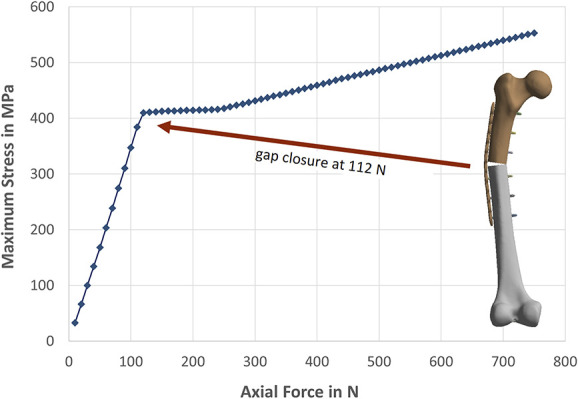
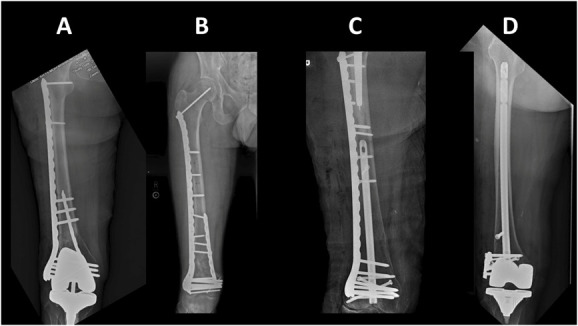
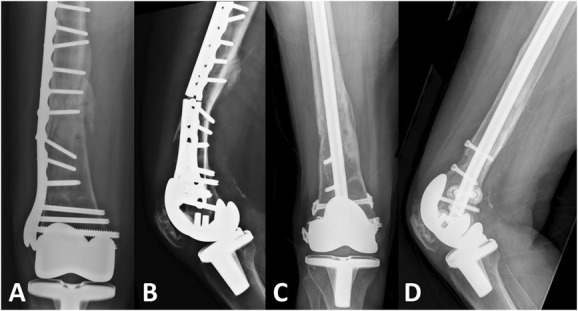
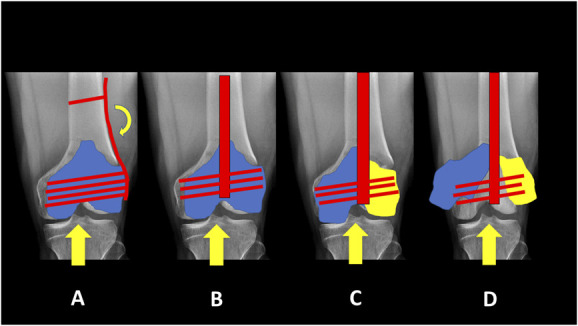
Distal femur fractures are challenging injuries to manage, and complication rates remain high. This article summarizes the international and basic science perspectives regarding distal femoral fractures that were presented at the 2022 Orthopaedic Trauma Association Annual Meeting. We review a number of critical concepts that can be considered to optimize the treatment of these difficult fractures. These include biomechanical considerations for distal femur fixation constructs, emerging treatments to prevent post-traumatic arthritis, both systemic and local biologic treatments to optimize nonunion management, the relative advantages and disadvantages of plate versus nail versus dual-implant constructs, and finally important factors which determine outcomes. A robust understanding of these principles can significantly improve success rates and minimize complications in the treatment of these challenging injuries.
股骨远端骨折的治疗颇具挑战性,并发症发生率居高不下。本文总结了在2022年骨科创伤协会年会上提出的有关股骨远端骨折的国际观点和基础科学观点。我们回顾了一些关键概念,这些概念可用于优化这些复杂骨折的治疗。其中包括股骨远端固定结构的生物力学考量、预防创伤后关节炎的新疗法、优化骨不连治疗的全身和局部生物治疗、钢板与髓内钉与双植入物结构的相对优缺点,以及最终决定治疗结果的重要因素。对这些原则的深入理解可显著提高治疗成功率,并将这些具有挑战性损伤的治疗并发症降至最低。