Laboratory of Cancer and Metabolism, Faculty of Medicine, Saint-Joseph University, Beirut, Lebanon.
Department of Biochemistry and Molecular Genetics, Faculty of Medicine, American University of Beirut, Beirut, Lebanon.
PLoS One. 2024 Mar 15;19(3):e0298127. doi: 10.1371/journal.pone.0298127. eCollection 2024.
Ovarian Cancer (OC) stands as the most lethal gynecological malignancy, presenting an urgent clinical challenge in the quest to improve response rates. One approach to address this challenge is through drug repurposing, exemplified by the investigation of metabolic-modulating drugs such as Metformin (MTF) and Simvastatin (SIM). This study aims to explore the molecular mechanisms contributing to the potential synergistic anti-cancer effects between MTF and SIM on ovarian cancer cells.
We assessed the effects of the combination on the proliferation and viability of two cell lines OVCAR-3 and SKOV-3. IC50 concentrations of MTF and SIM were determined using a proliferation assay, followed by subtoxic concentrations to explore the potential synergistic effects on the viability of both cell lines. Transcriptomic analysis was conducted on OVCAR-3 treated cells, and the findings were validated by assessing the expression levels of differentially expressed genes (DEGs) through real-time PCR in both cell lines SK-OV-3 and OVCAR-3.
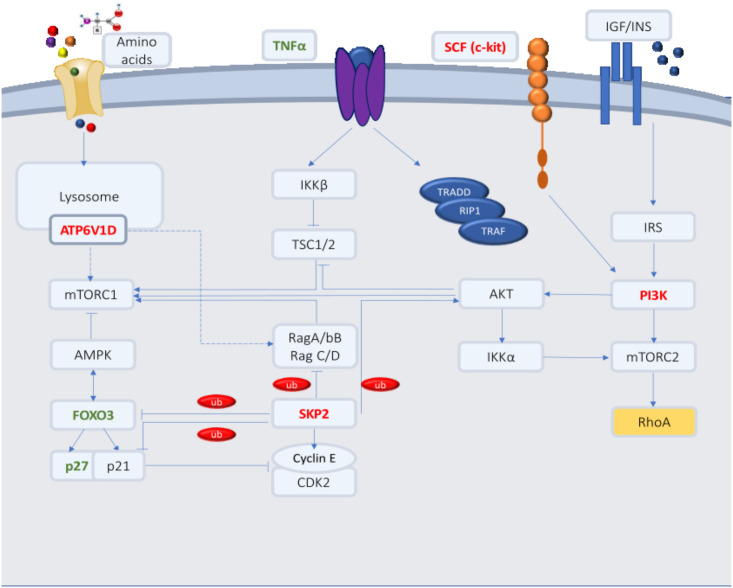
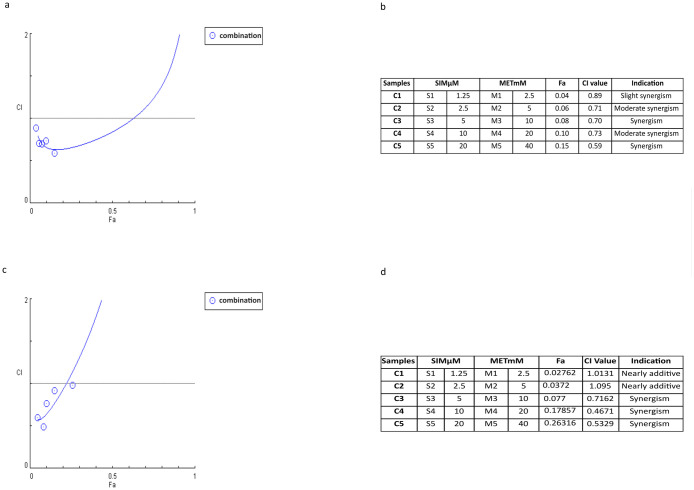
Cytotoxicity analysis guided the selection of treatment concentrations as such MTF 10 mM and SIM 5 μM. The combined treatment of MTF and SIM demonstrated a synergistic inhibition of proliferation and viability in both cell lines. In OVCAR-3, exclusive identification of 507 DEGs was seen in the combination arm. Upregulation of FOXO3, RhoA, and TNFα, along with downregulation of PIK3R1, SKP2, and ATP6V1D levels, was observed in OVCAR-3 treated cells. Real-time PCR validation confirmed the consistency of expression levels for the mentioned DEGs.
Our data strongly supports the presence of synergy between MTF and SIM in OC cells. The combination's effect is associated with the dysregulation of genes in the key regulators AMPK and mTOR alongside other interconnected pathways.
卵巢癌(OC)是最致命的妇科恶性肿瘤,在提高反应率方面提出了紧迫的临床挑战。解决这一挑战的一种方法是通过药物再利用,例如研究代谢调节药物,如二甲双胍(MTF)和辛伐他汀(SIM)。本研究旨在探讨 MTF 和 SIM 对卵巢癌细胞潜在协同抗癌作用的分子机制。
我们评估了该组合对 OVCAR-3 和 SKOV-3 两种细胞系增殖和活力的影响。使用增殖测定法确定 MTF 和 SIM 的 IC50 浓度,然后用亚毒性浓度来探索对两种细胞系活力的潜在协同作用。对 OVCAR-3 处理的细胞进行转录组分析,并通过实时 PCR 在 SK-OV-3 和 OVCAR-3 两种细胞系中评估差异表达基因(DEGs)的表达水平来验证发现。
细胞毒性分析指导了治疗浓度的选择,即 MTF 10 mM 和 SIM 5 μM。MTF 和 SIM 的联合治疗在两种细胞系中均表现出协同抑制增殖和活力的作用。在 OVCAR-3 中,仅在联合组中鉴定出 507 个 DEGs。在 OVCAR-3 处理的细胞中观察到 FOXO3、RhoA 和 TNFα 的上调,以及 PIK3R1、SKP2 和 ATP6V1D 水平的下调。实时 PCR 验证证实了所述 DEGs 的表达水平的一致性。
我们的数据强烈支持 MTF 和 SIM 在 OC 细胞中存在协同作用。该组合的作用与 AMPK 和 mTOR 关键调节剂中基因的失调以及其他相互关联的途径有关。