Department of Life Sciences, Hemchandracharya North Gujarat University, Patan, Gujarat, India.
Department of Zoology, College of Science, King Saud University, Riyadh, Saudi Arabia.
PeerJ. 2024 Mar 13;12:e17065. doi: 10.7717/peerj.17065. eCollection 2024.
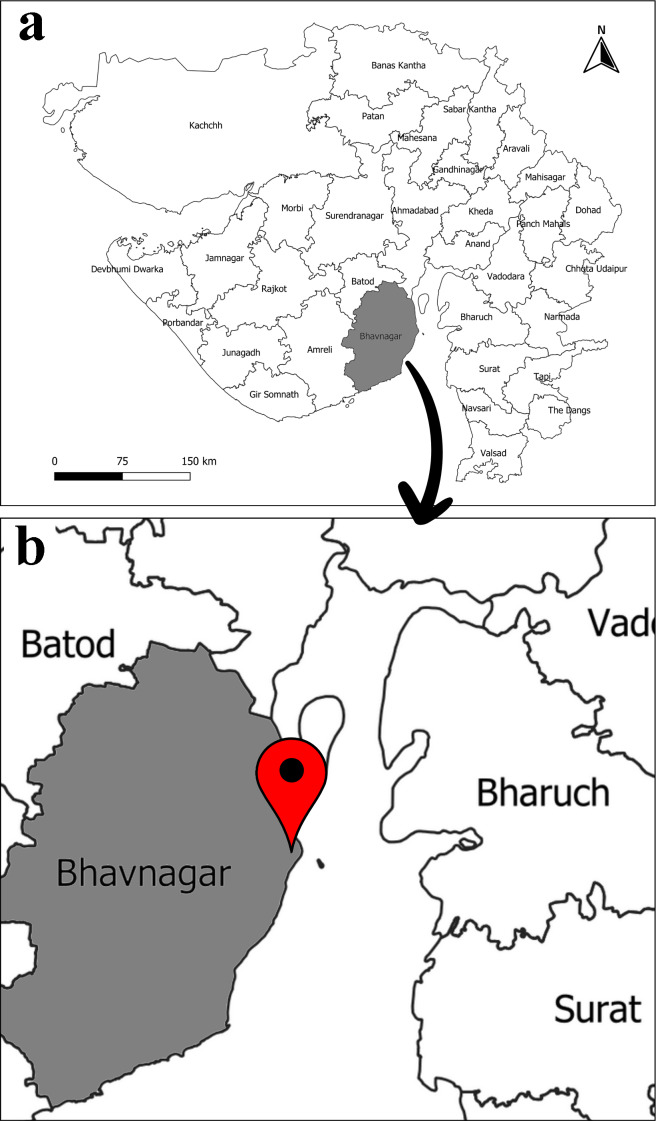
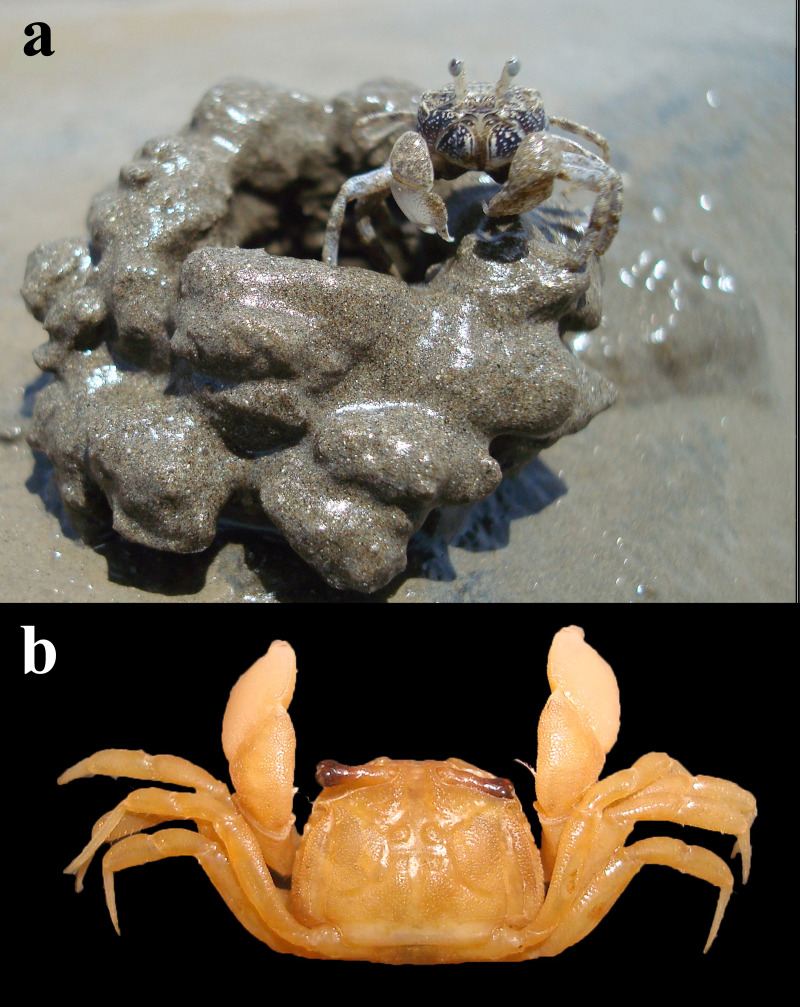
The present study investigated the population structure and breeding biology of the burrowing brachyuran crab species Alcock, 1900, which is commonly found on the sandy beach of Bhavnagar, located on the Gulf of Kachchh, Gujarat coast, India.
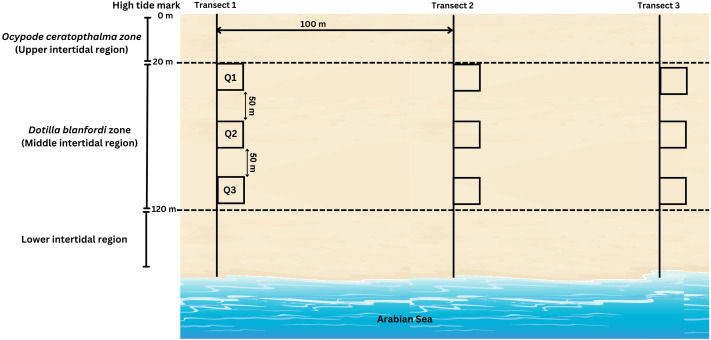
Monthly sampling was conducted from February 2021 to January 2022 at the time of low tide using three line transects perpendicular to the water line, intercepted by a quadrate (0.25 m) each at three different levels of the middle intertidal region: 20 m, 70 m, and 120 m. The quadrate area was excavated up to 30 cm and sieved for specimen collection. The collected specimens were categorised into different sexes viz., male, non-ovigerous female, or ovigerous female. For the fecundity study of , the carapace width (mm) as a measure of size as well as their wet weight (g), size, number, and mass of their eggs were also recorded.
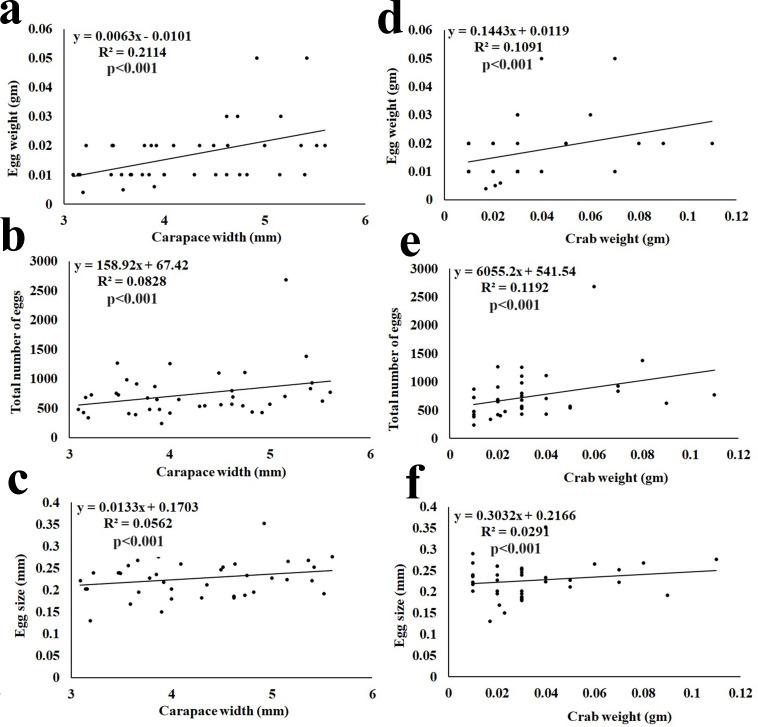
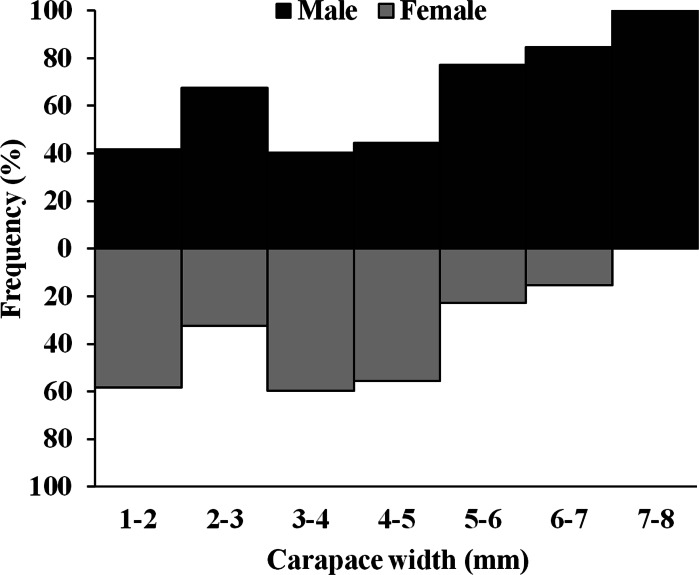
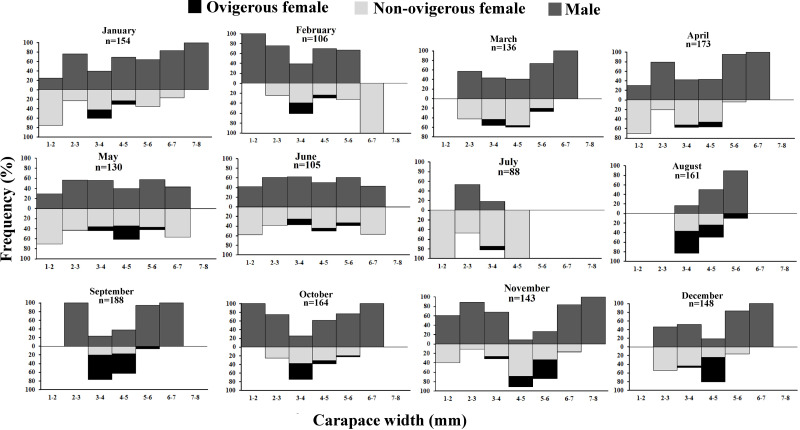
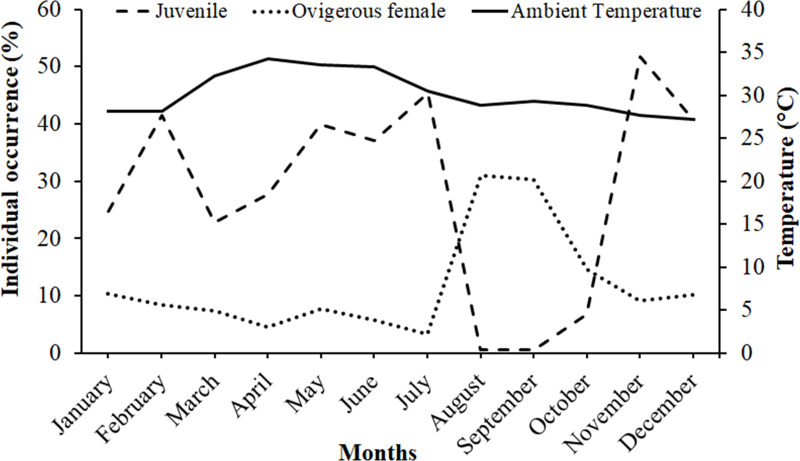
The study revealed sexual dimorphism among the population, with females having significantly smaller sizes as compared to males. The overall population was skewed towards females, with a bimodal distribution of males and females. The occurrence of ovigerous females throughout the year suggests that the population breeds incessantly throughout the year, with the highest occurrence in August and September. A positive correlation was observed between the morphology of crabs (carapace width and wet body weight) and the size, number, and mass of eggs.
本研究调查了穴居短尾长足蟹(Alcock, 1900)的种群结构和繁殖生物学,该种蟹常见于印度古吉拉特邦卡奇湾的巴夫那加尔沙滩上的沙质海滩。
2021 年 2 月至 2022 年 1 月,在低潮时,通过三条与水线垂直的线截流,在中潮带的三个不同水平上(20 m、70 m 和 120 m),每个水平用一个 0.25 m 的正方形进行每月采样。挖掘正方形区域至 30 cm 深并用筛子收集标本。收集的标本分为不同性别,即雄性、非抱卵雌蟹或抱卵雌蟹。为了研究的繁殖力,还记录了壳宽(mm)作为大小的度量以及它们的湿重(g)、大小、卵的数量和质量。
研究表明,该种群存在性二态性,与雄性相比,雌性的体型明显较小。整个种群向雌性倾斜,具有两性的双峰分布。全年都有抱卵雌蟹的存在表明该种群全年不断繁殖,8 月和 9 月的繁殖量最高。蟹的形态(壳宽和湿体重)与卵的大小、数量和质量之间存在正相关。