Phoenix Eimear, Suwanwalaikorn Varit, Wilkinson Jordan, Morrison Colin M, Dolan Roisin T
Department of Plastic and Reconstructive Surgery, St Vincent's University Hospital, Dublin, Ireland.
Royal College of Surgeons Ireland, St Stephen's Green, Dublin, Ireland.
Trauma Case Rep. 2024 Mar 4;50:100983. doi: 10.1016/j.tcr.2024.100983. eCollection 2024 Apr.
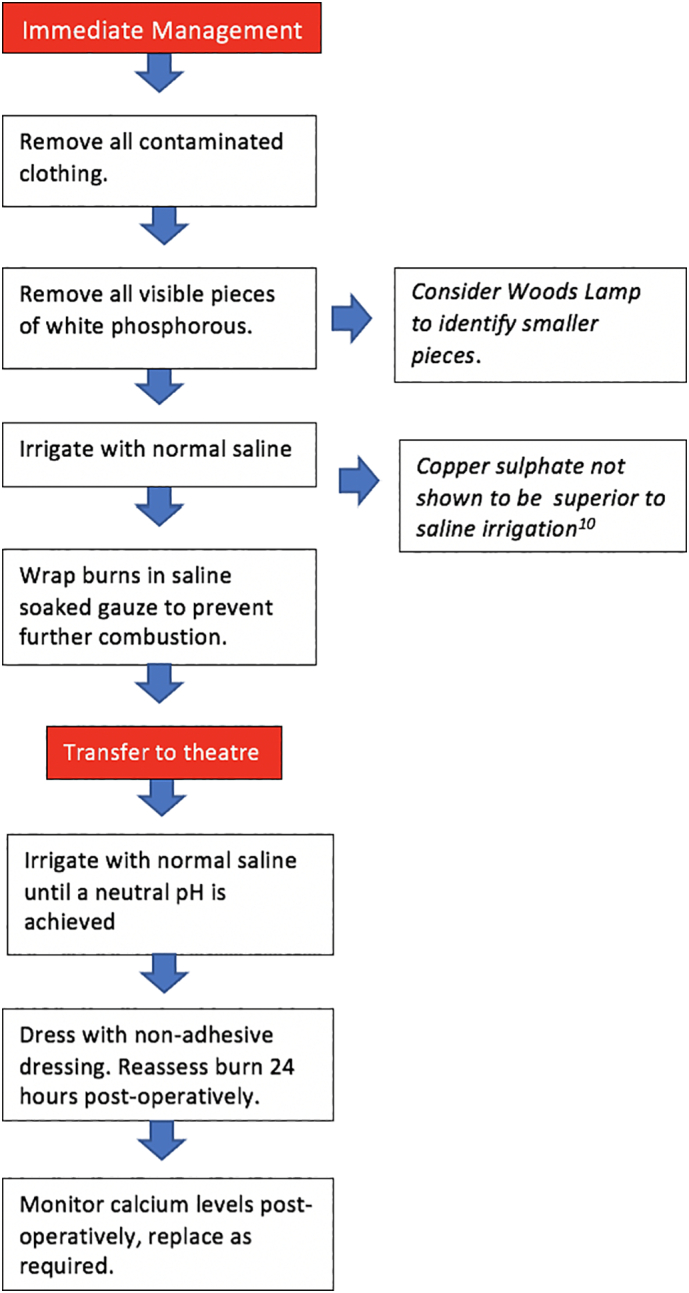
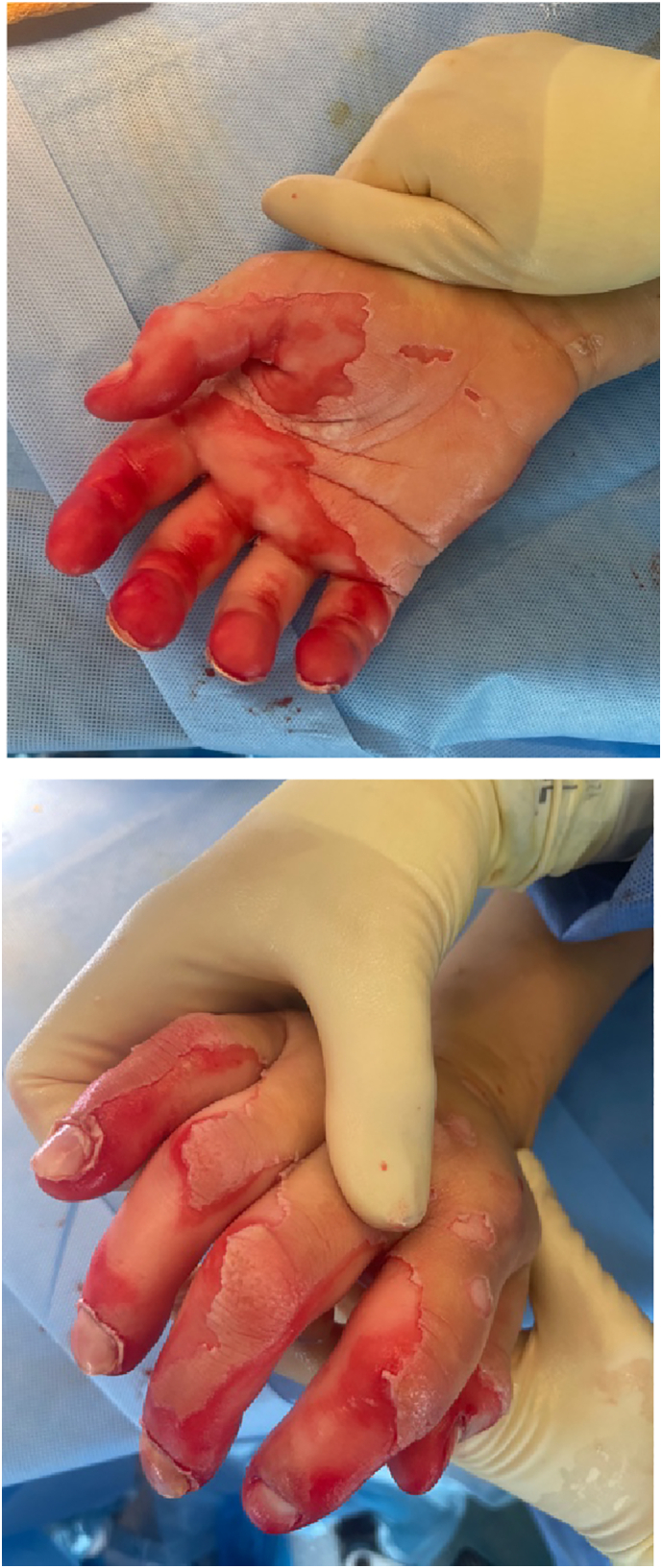
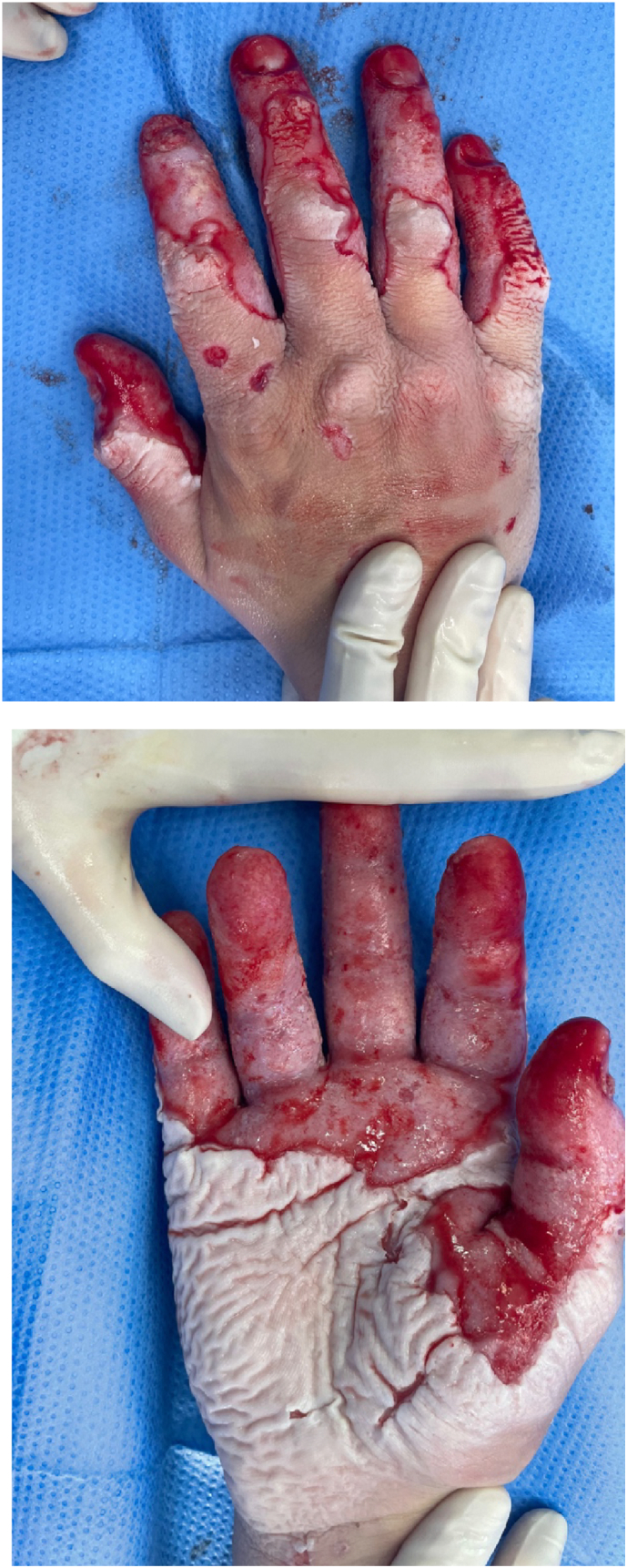
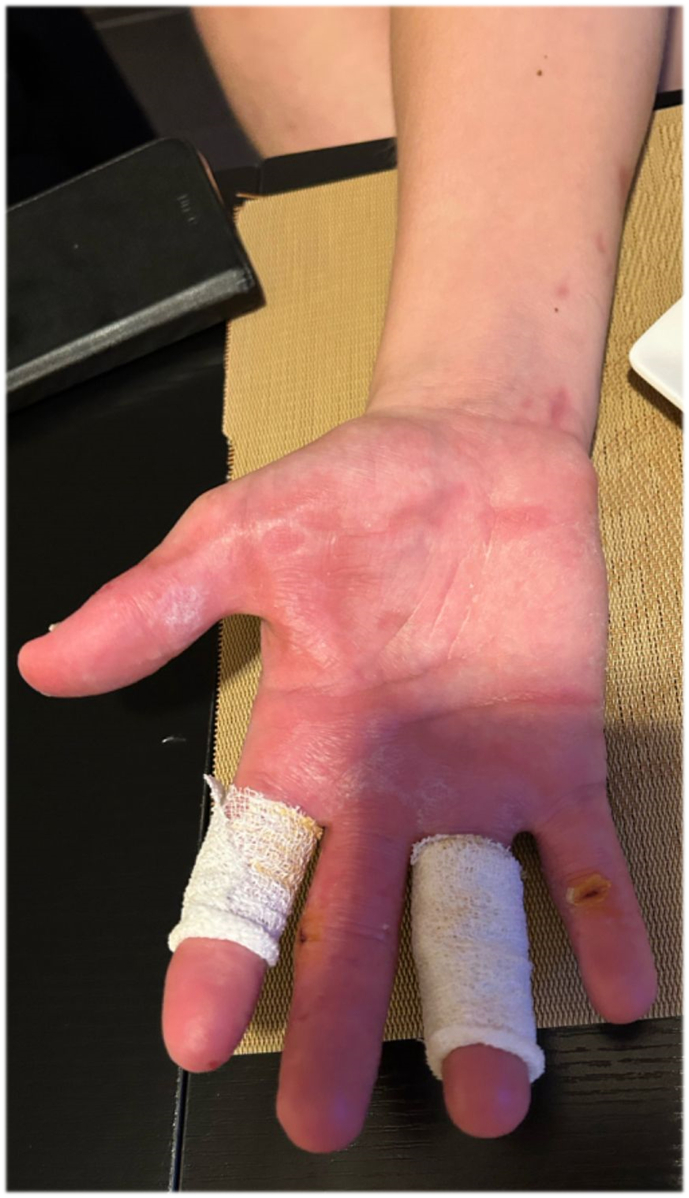
First discovered in 1669, white phosphorus is well known for its use in military warfare (Davis, 2002). Its application has since been expanded to include industrial disinfectants, fertilisers and fireworks (Davis, 2002). Exposure to white phosphorus can lead to severe chemical burns with high morbidity and potentially fatal systemic effects. Fortunately, civilian casualties from this potent agent are remarkably rare with few reports in the literature to date (Frank et al., 2008; Aviv et al., 2017). We present the case of a 27-year-old fisherman who sustained a chemical burn to his right hand from a substance suspected to be white phosphorus. We propose an evidence-based algorithm to guide non-military physicians literature on the acute management of white phosphorus burns to optimise timely emergency management of this uncommonly encountered substance.
白磷于1669年首次被发现,因其在军事战争中的用途而广为人知(戴维斯,2002年)。自那时起,其应用范围已扩大到包括工业消毒剂、肥料和烟花(戴维斯,2002年)。接触白磷可导致严重的化学灼伤,发病率高,并可能产生致命的全身影响。幸运的是,这种强效药剂造成的平民伤亡极为罕见,迄今为止文献报道极少(弗兰克等人,2008年;阿维夫等人,2017年)。我们报告一例27岁渔民右手被疑似白磷的物质造成化学灼伤的病例。我们提出一种循证算法,以指导非军事医生参考有关白磷灼伤急性处理的文献,从而优化对这种罕见物质的及时急诊处理。