Tamizhselvi Ramamoorthi, Bhaskar Rangaswamy, Ashok Kumar Somanahalli Kalleshappa, Mohandoss Sonaimuthu, Lee Yong Rok, Napoleon Ayyakannu Arumugam
Department of Chemistry, School of Advanced Sciences, VIT, Vellore 632014, Tamilnadu, India.
School of Chemical Engineering, Yeungnam University, Gyeongsan, Gyeongbuk-do 38541, Republic of Korea.
ACS Omega. 2024 Feb 27;9(10):11223-11231. doi: 10.1021/acsomega.3c06057. eCollection 2024 Mar 12.
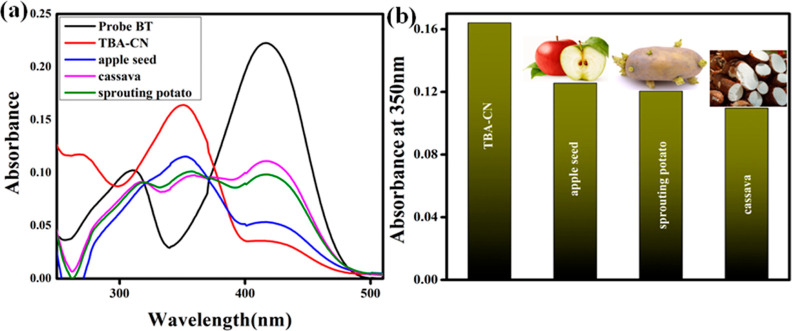
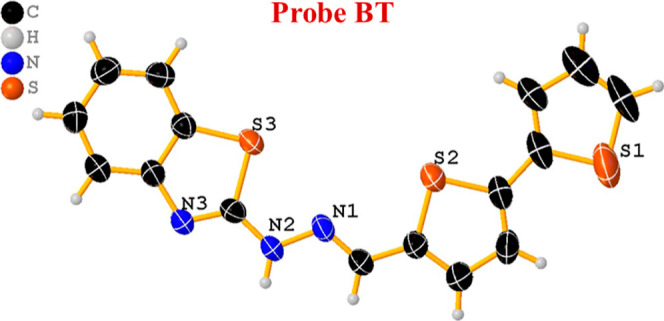
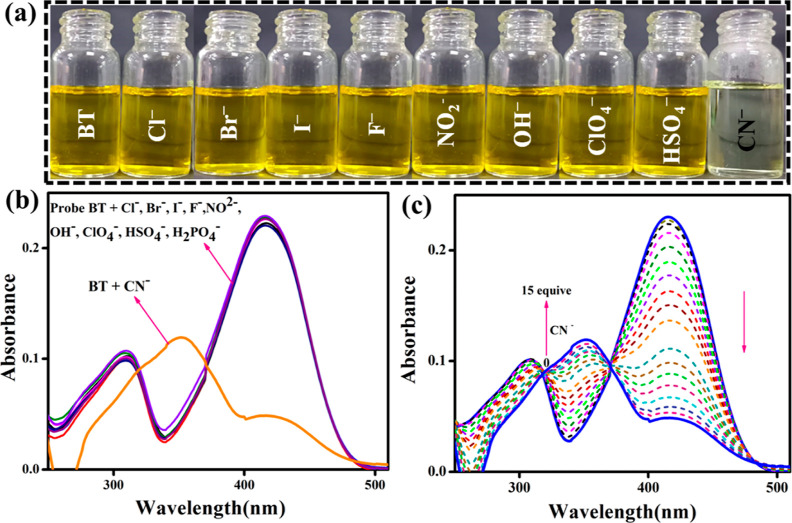
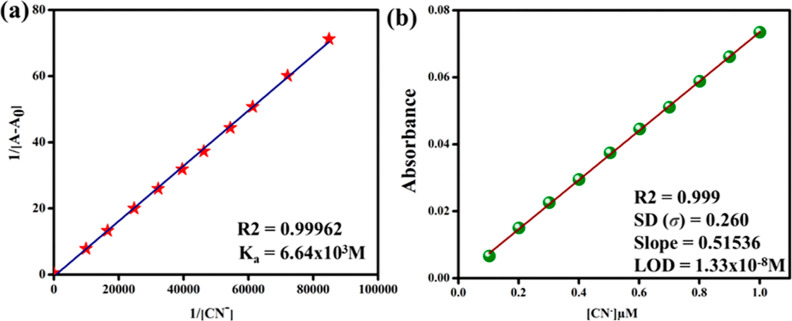
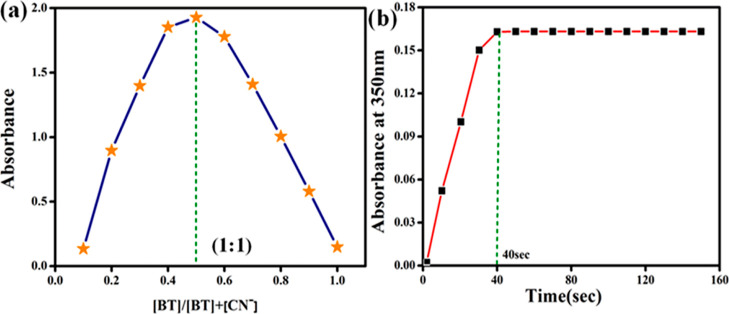
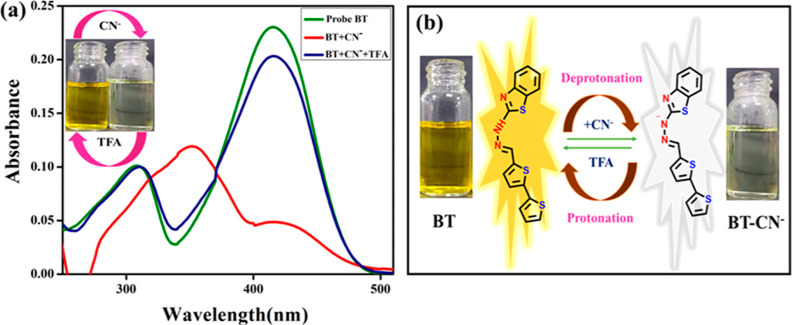
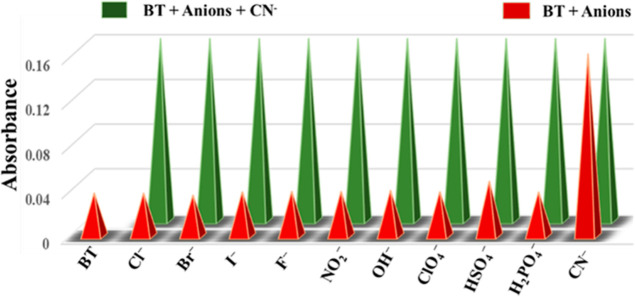
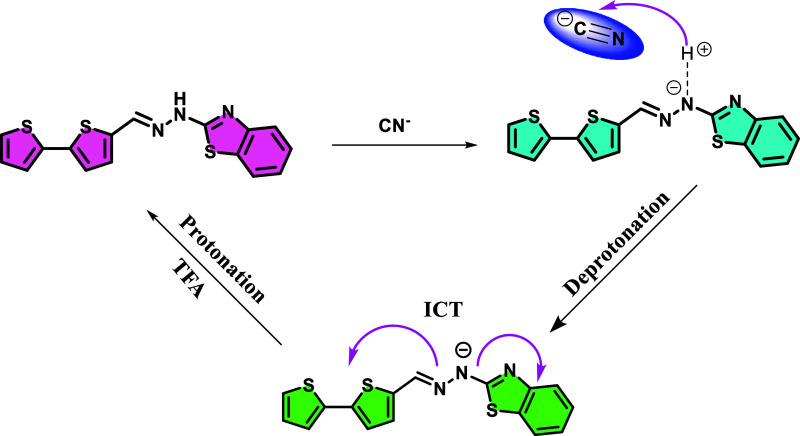
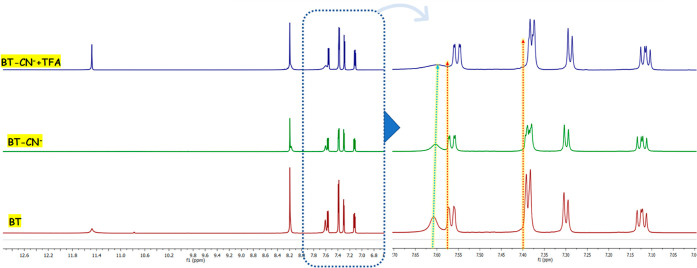
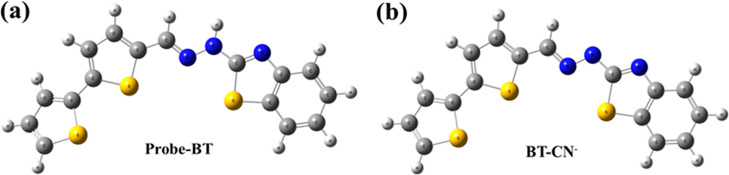
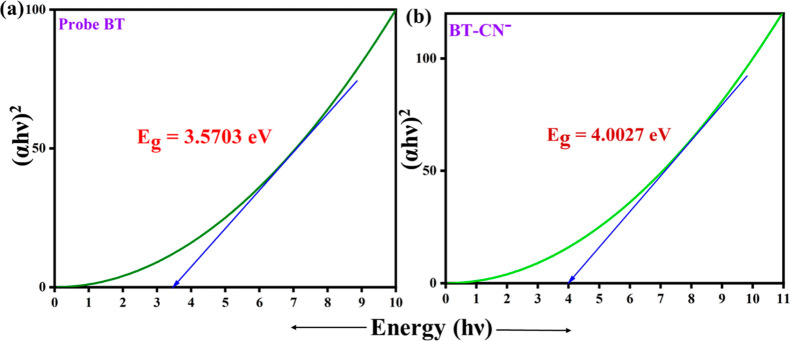
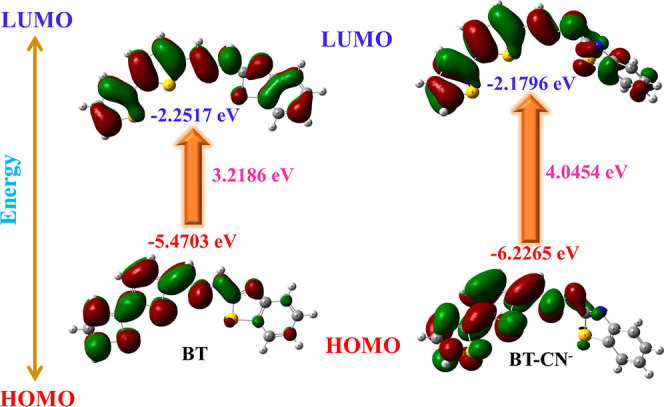
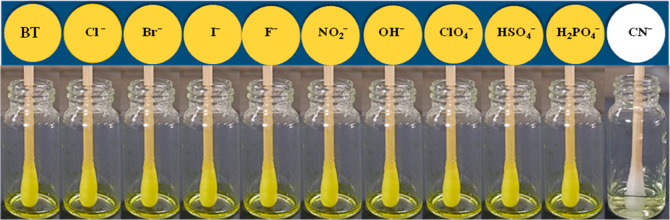
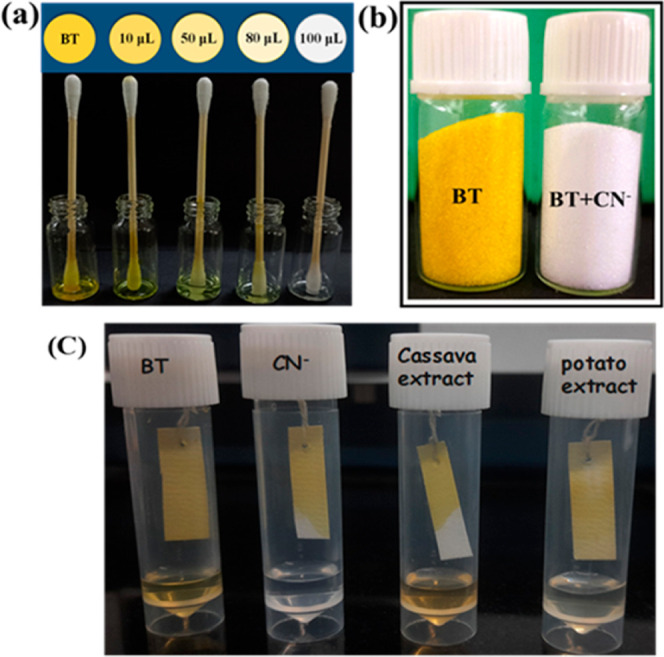
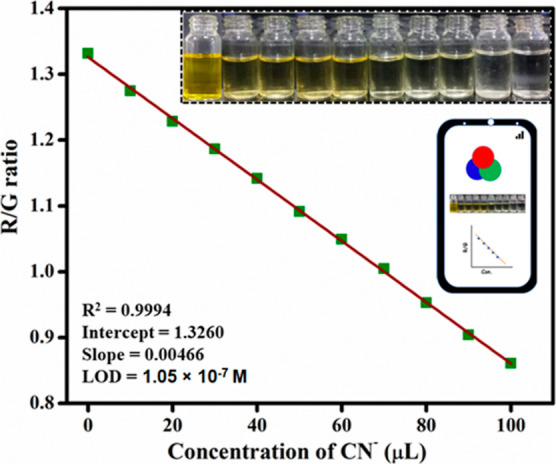
A newly synthesized Schiff's base 2-(2-([2,2'-bithiophen]-5-ylmethylene)hydrazinyl)benzothiazole () was obtained from the condensation reaction between 2-hydrazinobenzothiazole and 2,2-bithiophene-5-carboxaldehyde. The prepared probe was subjected to a confirmation of the structural arrangement through NMR, FTIR, ESI-HRMS, and single-crystal XRD spectral analysis. The colorimetric sensor showed selectivity and sensitivity toward the cyanide (CN) ion over other common anions such as ClO, Cl, Br, F, I, NO, OH, HSO, and HPO in a partial aqueous system CHCN/HO (8:2, v/v). The probe detects CN with the lowest detection range as low as 1.33 × 10 M (3.59 ppm); in comparison to that given by WHO guidelines, it is significantly lower. The stoichiometric interaction between the probe and analyte CN was found to be 1:1 (BT/CN) binding mode using Jobs plot, and further association binding affinity was calculated to be 6.64 × 10 M. Additionally, these results were further supported by the FTIR and DFT calculations, as well as the H NMR titration analysis, which complemented the binding data. The sensor probe was successfully employed in a cotton swab test kit approach and also in smartphone-assisted applications for the determination of CN ions. Finally, the outstanding sensing properties of probe aided the quantitative detection of CN ions, and it could be further applied to a variety of food samples, including apple seeds, sprouting potatoes, and cassava.
一种新合成的席夫碱2-(2-([2,2'-联噻吩]-5-基亚甲基)肼基)苯并噻唑()是由2-肼基苯并噻唑与2,2-联噻吩-5-甲醛经缩合反应制得的。通过核磁共振、傅里叶变换红外光谱、电喷雾高分辨质谱和单晶X射线衍射光谱分析对制备的探针进行了结构排列确认。在部分水体系CHCN/H₂O(8:2,v/v)中,该比色传感器对氰化物(CN⁻)离子表现出对其他常见阴离子如ClO⁻、Cl⁻、Br⁻、F⁻、I⁻、NO₃⁻、OH⁻、HSO₄⁻和HPO₄²⁻的选择性和敏感性。该探针检测CN⁻的最低检测范围低至1.33×10⁻⁷M(3.59ppm);与世界卫生组织指南给出的范围相比,显著更低。使用乔布图发现探针与分析物CN⁻之间的化学计量相互作用为1:1(BT/CN)结合模式,进一步计算缔合结合亲和力为6.64×10⁵M。此外,傅里叶变换红外光谱和密度泛函理论计算以及¹H核磁共振滴定分析进一步支持了这些结果,补充了结合数据。该传感器探针成功应用于棉签测试试剂盒方法以及智能手机辅助应用中用于测定CN⁻离子。最后,探针出色的传感性能有助于CN⁻离子的定量检测,并且它可以进一步应用于各种食品样品,包括苹果籽、发芽的土豆和木薯。