Novo Nordisk, Lexington, Massachusetts, USA.
AstraZeneca, Waltham, Massachusetts, USA.
Clin Transl Sci. 2024 Mar;17(3):e13746. doi: 10.1111/cts.13746.
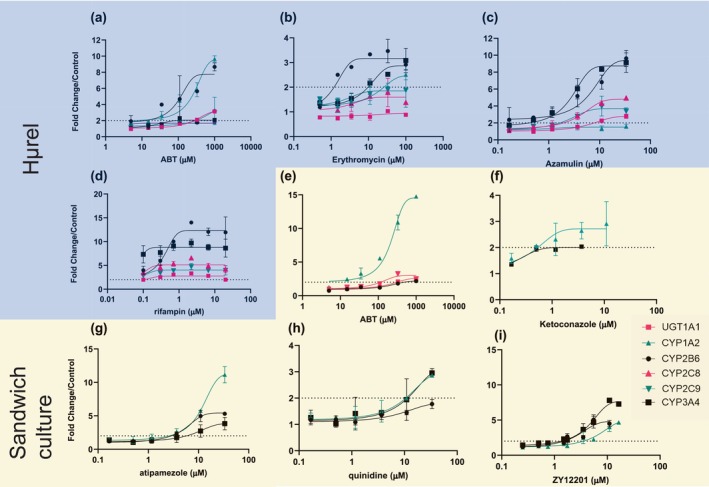
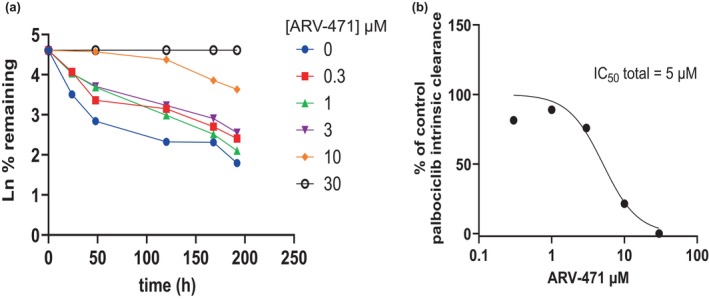
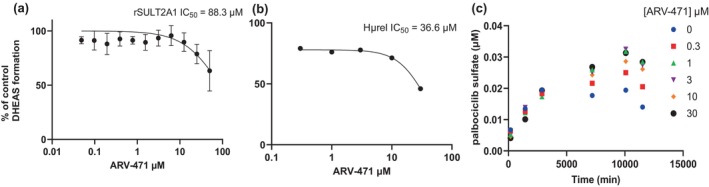
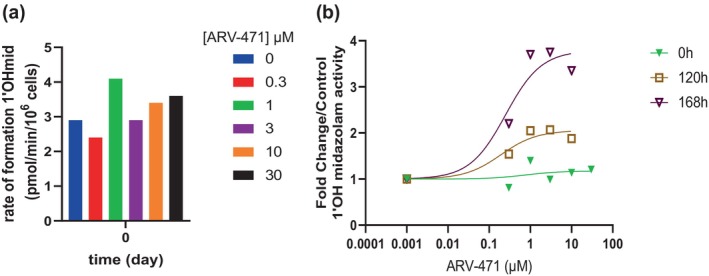
Aminobenzotriazole (ABT) is commonly used as a non-selective inhibitor of cytochrome P450 (CYP) enzymes to assign contributions of CYP versus non-CYP pathways to the metabolism of new chemical entities. Despite widespread use, a systematic review of the drug-drug interaction (DDI) potential for ABT has not been published nor have the implications for using it in plated hepatocyte models for low clearance reaction phenotyping. The goal being to investigate the utility of ABT as a pan-CYP inhibitor for reaction phenotyping of low clearance compounds by evaluating stability over the incubation period, inhibition potential against UGT and sulfotransferase enzymes, and interaction with nuclear receptors involved in the regulation of drug metabolizing enzymes and transporters. Induction potential for additional inhibitors used to ascribe fraction metabolism (f ), pathway including erythromycin, ketoconazole, azamulin, atipamezole, ZY12201, and quinidine was also investigated. ABT significantly inhibited the clearance of a non-selective UGT substrate 4-methylumbelliferone, with several UGTs shown to be inhibited using selective probe substrates in human hepatocytes and rUGTs. The inhibitors screened in the induction assay were shown to induce enzymes regulated through Aryl Hydrocarbon Receptor, Constitutive Androstane Receptor, and Pregnane X Receptor. Lastly, a case study identifying the mechanisms of a clinical DDI between Palbociclib and ARV-471 is provided as an example of the potential consequences of using ABT to derive f . This work demonstrates that ABT is not an ideal pan-CYP inhibitor for reaction phenotyping of low clearance compounds and establishes a workflow that can be used to enable robust characterization of other prospective inhibitors.
氨苯砜(ABT)通常被用作细胞色素 P450(CYP)酶的非选择性抑制剂,以确定 CYP 与非 CYP 途径对新化学实体代谢的贡献。尽管广泛使用,但尚未发表关于 ABT 的药物相互作用(DDI)潜力的系统评价,也未说明在用于低清除率反应表型的 plated 肝细胞模型中使用 ABT 的含义。其目标是通过评估孵育期间的稳定性、对 UGT 和磺基转移酶的抑制潜力以及与参与调节药物代谢酶和转运体的核受体的相互作用,来研究 ABT 作为泛 CYP 抑制剂用于低清除率化合物反应表型的实用性。还研究了用于归因分数代谢(f)的其他抑制剂的诱导潜力,途径包括红霉素、酮康唑、阿扎米林、阿替美唑、ZY12201 和奎尼丁。ABT 显著抑制了非选择性 UGT 底物 4-甲基伞形酮的清除,在人肝细胞和 rUGTs 中使用选择性探针底物显示几种 UGT 受到抑制。在诱导测定中筛选的抑制剂被证明可以诱导通过芳香烃受体、组成型雄烷受体和孕烷 X 受体调节的酶。最后,提供了一个案例研究,确定了 Palbociclib 和 ARV-471 之间临床 DDI 的机制,作为使用 ABT 推导 f 的潜在后果的一个例子。这项工作表明,ABT 不是用于低清除率化合物反应表型的理想泛 CYP 抑制剂,并建立了一个可以用于对其他潜在抑制剂进行稳健表征的工作流程。