Gong Xingyu, Liang Yuan, Wang Jingjing, Pang Yipeng, Wang Fang, Chen Xiaohan, Zhang Qiaoya, Song Chengchuang, Wang Yanhong, Zhang Chunlei, Fang Xingtang, Chen Xi
Institute of Cellular and Molecular Biology, School of Life Science, Jiangsu Normal University, Xuzhou, China.
College of Veterinary Medicine, Qingdao Agricultural University, Qingdao, China.
J Biol Chem. 2024 Apr;300(4):107199. doi: 10.1016/j.jbc.2024.107199. Epub 2024 Mar 18.
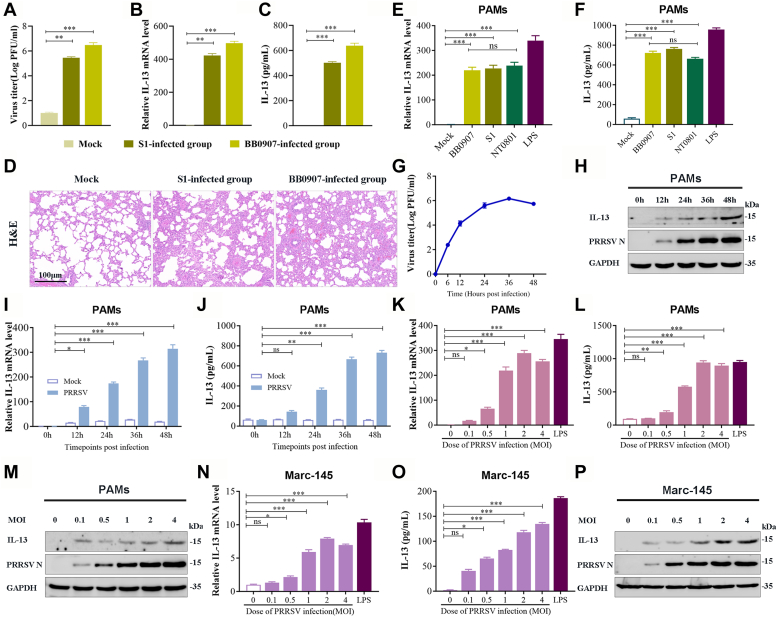
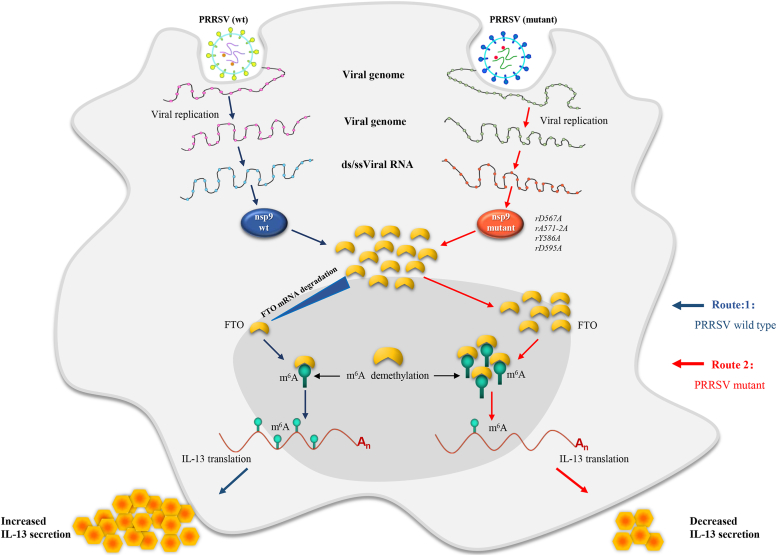
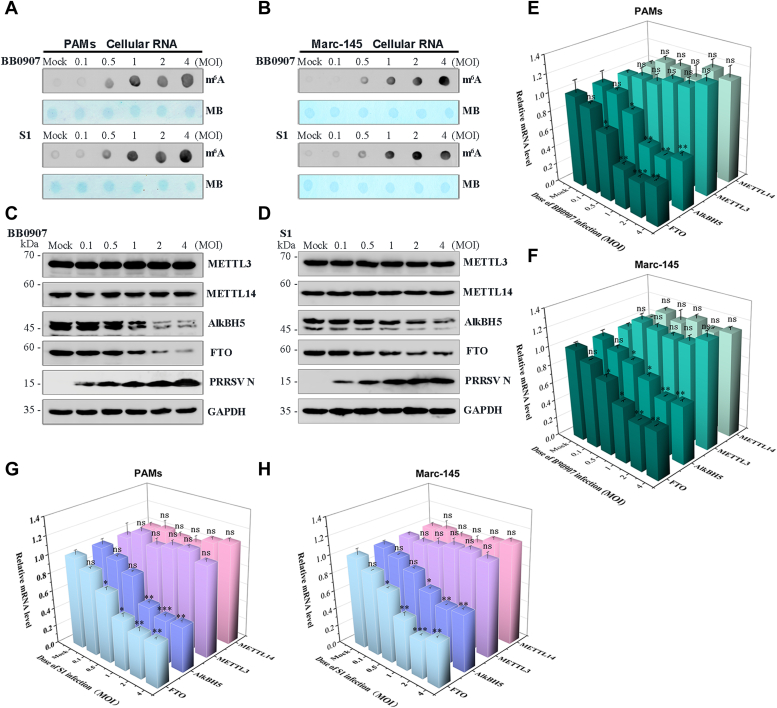
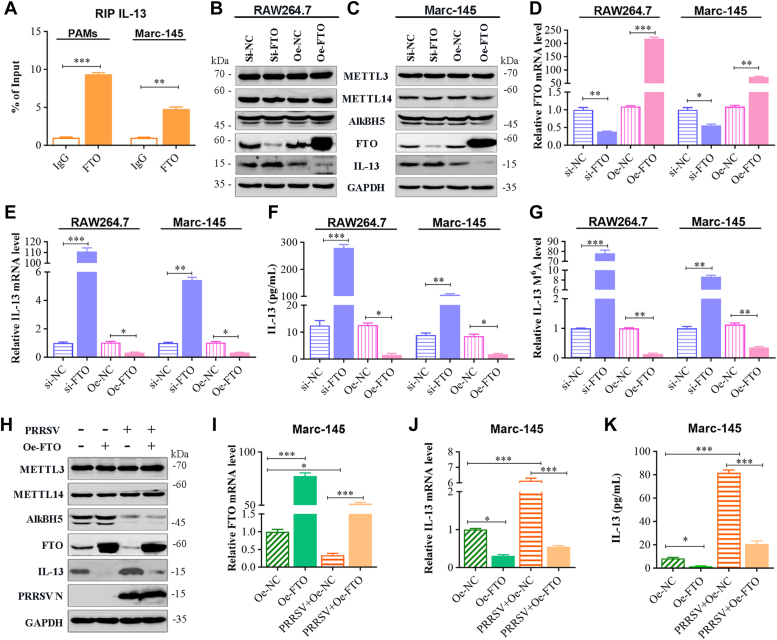
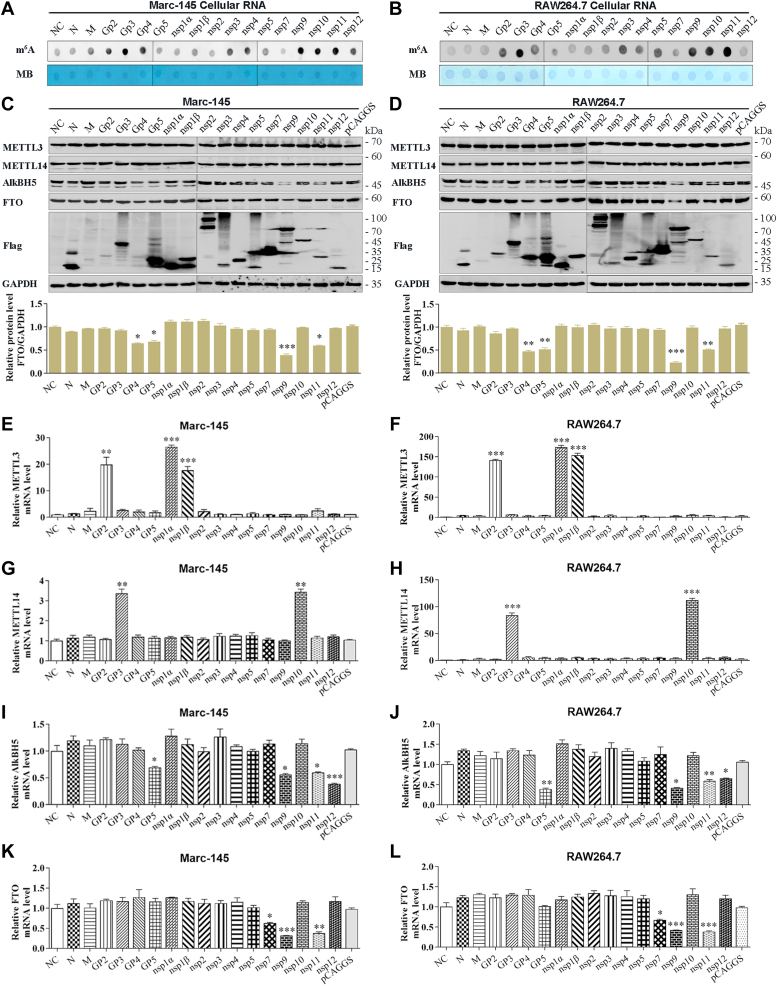
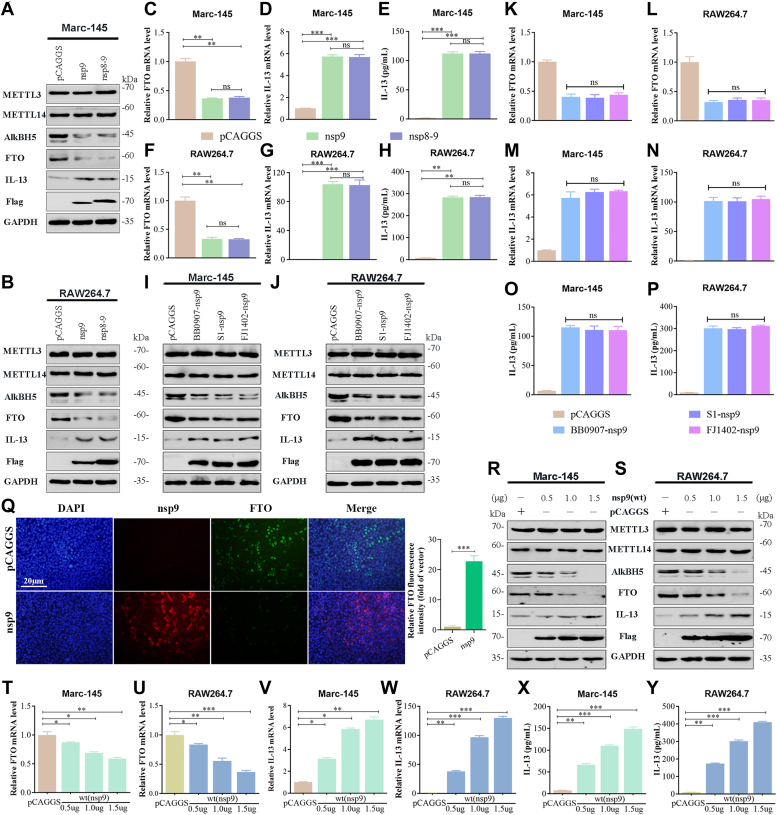
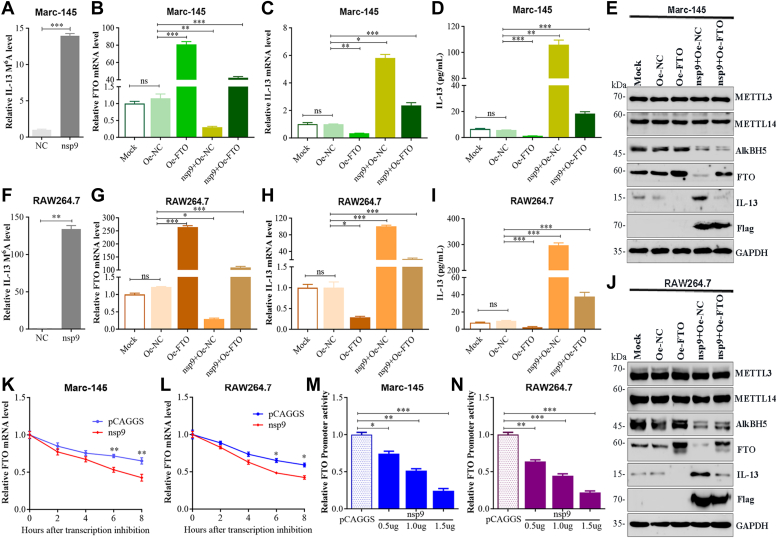
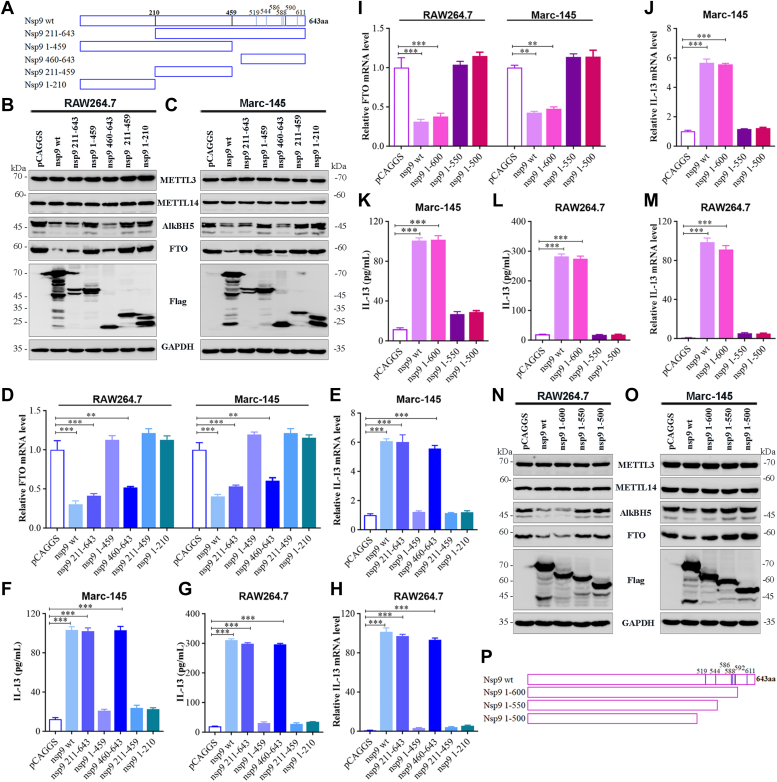
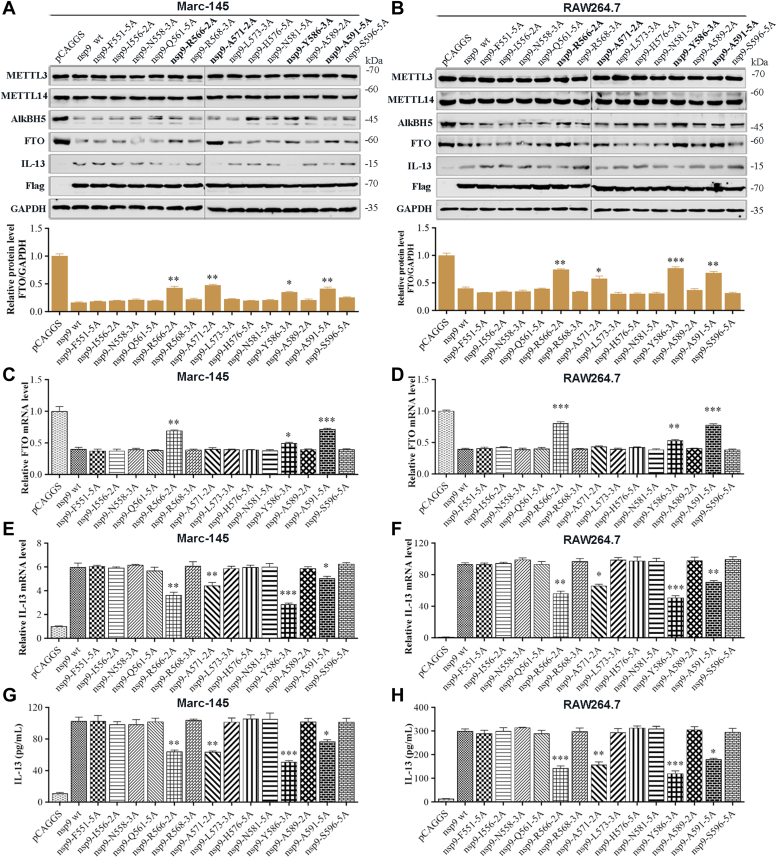
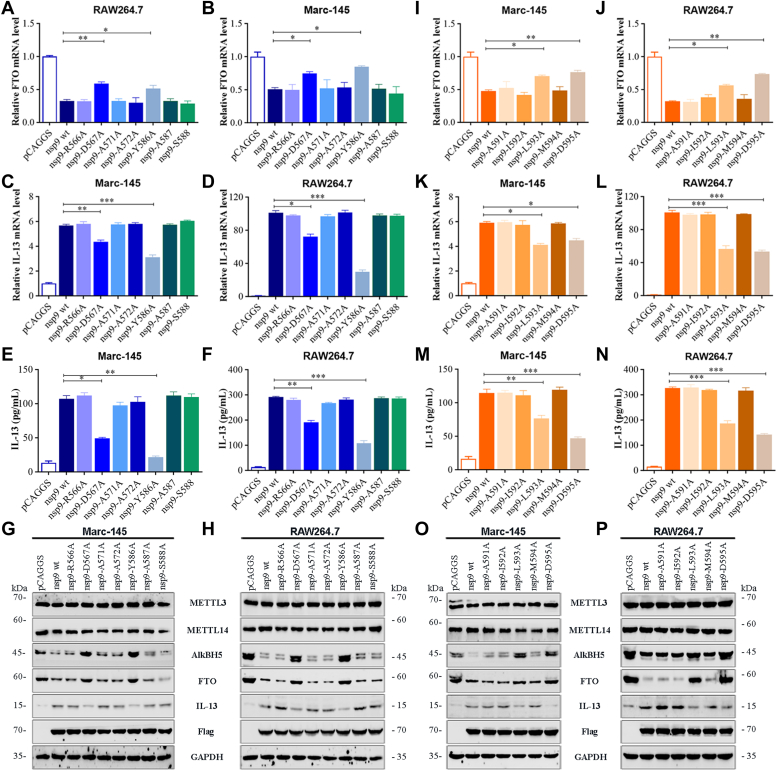
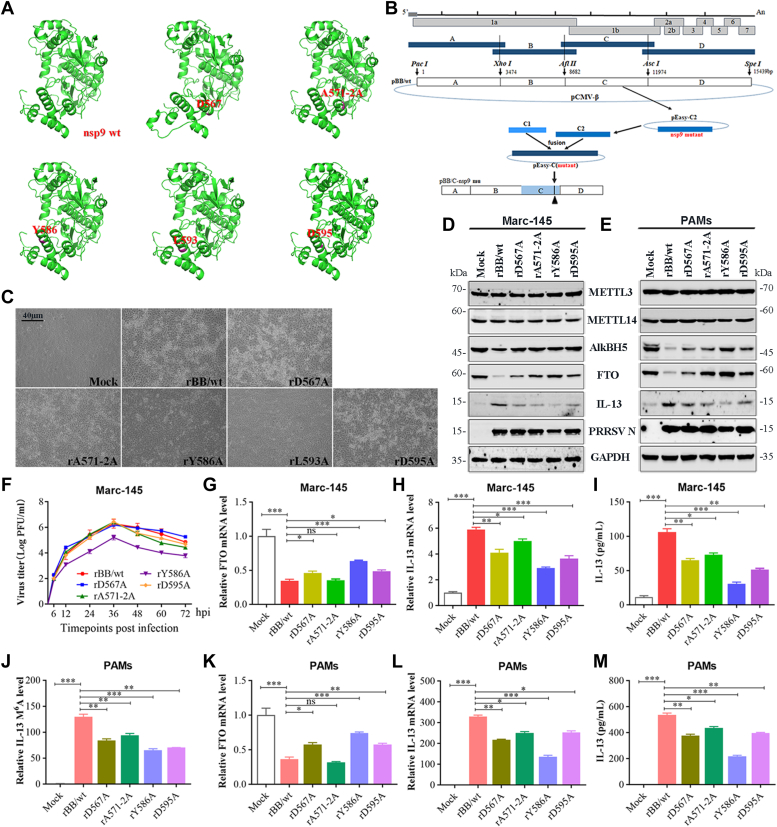
Porcine reproductive and respiratory syndrome virus (PRRSV), a highly infectious virus, causes severe losses in the swine industry by regulating the inflammatory response, inducing tissue damage, suppressing the innate immune response, and promoting persistent infection in hosts. Interleukin-13 (IL-13) is a cytokine that plays a critical role in regulating immune responses and inflammation, particularly in immune-related disorders, certain types of cancer, and numerous bacterial and viral infections; however, the underlying mechanisms of IL-13 regulation during PRRSV infection are not well understood. In this study, we demonstrated that PRRSV infection elevates IL-13 levels in porcine alveolar macrophages. PRRSV enhances mA-methylated RNA levels while reducing the expression of fat mass and obesity associated protein (FTO, an mA demethylase), thereby augmenting IL-13 production. PRRSV nonstructural protein 9 (nsp9) was a key factor for this modulation. Furthermore, we found that the residues Asp567, Tyr586, Leu593, and Asp595 were essential for nsp9 to induce IL-13 production via attenuation of FTO expression. These insights delineate PRRSV nsp9's role in FTO-mediated IL-13 release, advancing our understanding of PRRSV's impact on host immune and inflammatory responses.
猪繁殖与呼吸综合征病毒(PRRSV)是一种高度传染性病毒,通过调节炎症反应、诱导组织损伤、抑制先天免疫反应以及促进在宿主体内的持续感染,给养猪业造成严重损失。白细胞介素-13(IL-13)是一种细胞因子,在调节免疫反应和炎症中起关键作用,特别是在免疫相关疾病、某些类型的癌症以及众多细菌和病毒感染中;然而,PRRSV感染期间IL-13调节的潜在机制尚不清楚。在本研究中,我们证明PRRSV感染会提高猪肺泡巨噬细胞中IL-13的水平。PRRSV提高了m⁶A甲基化RNA水平,同时降低了脂肪量和肥胖相关蛋白(FTO,一种m⁶A去甲基化酶)的表达,从而增加了IL-13的产生。PRRSV非结构蛋白9(nsp9)是这种调节的关键因素。此外,我们发现Asp567、Tyr586、Leu593和Asp595残基对于nsp9通过减弱FTO表达来诱导IL-13产生至关重要。这些见解阐明了PRRSV nsp9在FTO介导的IL-13释放中的作用,加深了我们对PRRSV对宿主免疫和炎症反应影响的理解。