De Michieli Laura, Cipriani Alberto, Iliceto Sabino, Dispenzieri Angela, Jaffe Allan S
Department of Cardiac, Thoracic and Vascular Sciences and Public Health, University of Padua, Padua, Italy.
Cardiovascular Department, Mayo Clinic and Medical School, Rochester, Minnesota, USA.
JACC CardioOncol. 2024 Feb 20;6(1):1-15. doi: 10.1016/j.jaccao.2023.12.006. eCollection 2024 Feb.
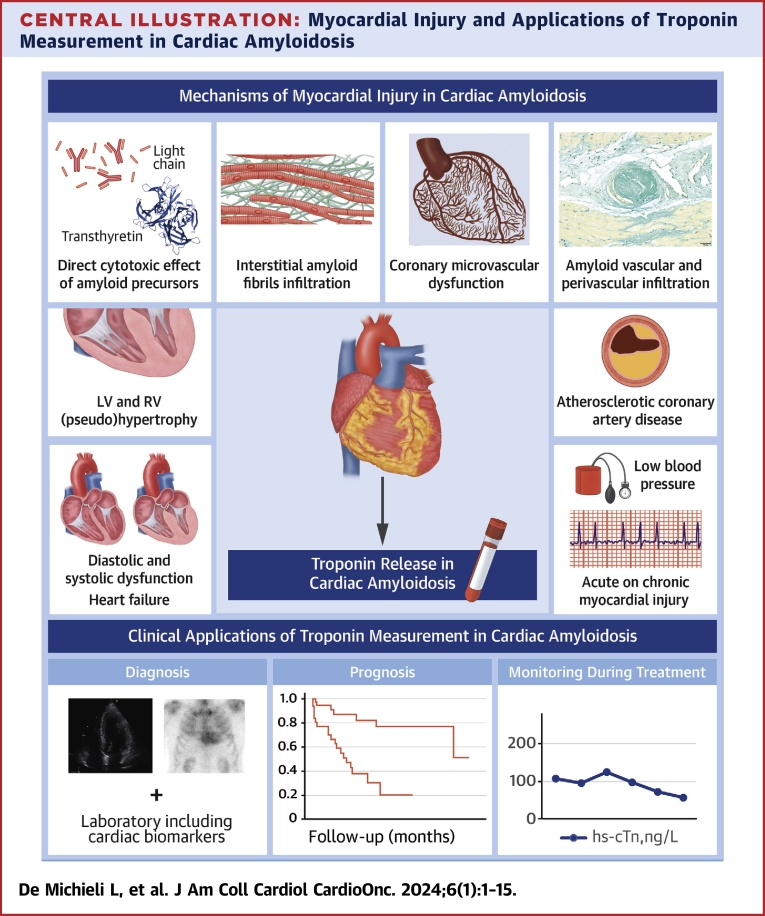
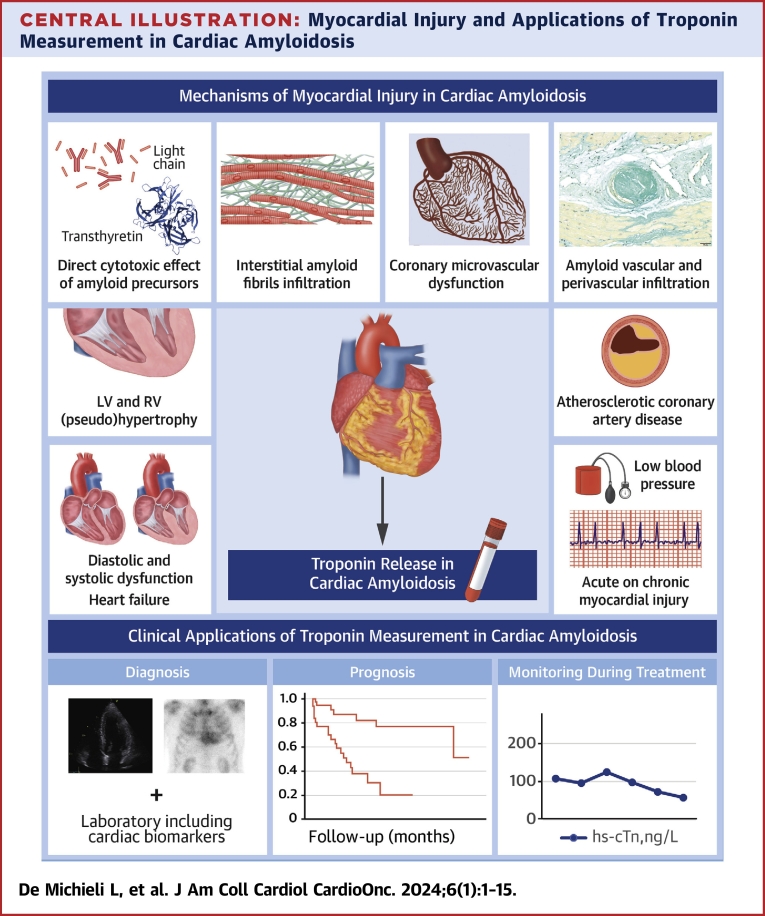
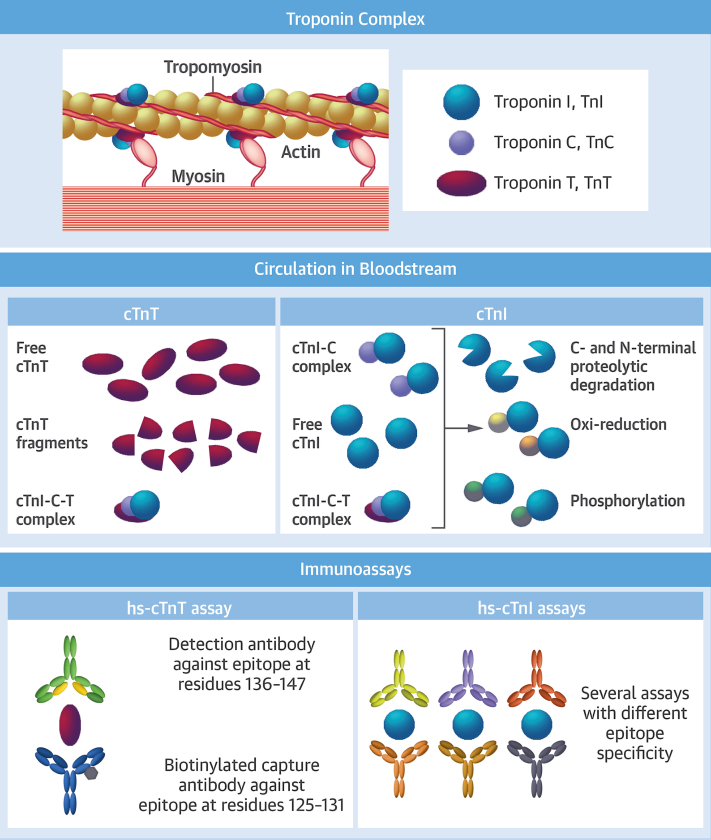
Cardiac amyloidosis (CA) is an infiltrative disease caused by amyloid fibril deposition in the myocardium; the 2 forms that most frequently involve the heart are amyloid light chain (AL) and amyloid transthyretin (ATTR) amyloidosis. Cardiac troponin (cTn) is the biomarker of choice for the detection of myocardial injury and is frequently found to be elevated in patients with CA, particularly with high-sensitivity assays. Multiple mechanisms of myocardial injury in CA have been proposed, including cytotoxic effect of amyloid precursors, interstitial amyloid fibril infiltration, coronary microvascular dysfunction, amyloid- and non-amyloid-related coronary artery disease, diastolic dysfunction, and heart failure. Regardless of the mechanisms, cTn values have relevant prognostic (and potentially diagnostic) implications in both AL and ATTR amyloidosis. In this review, the authors discuss the significant aspects of cTn biology and measurement methods, potential mechanisms of myocardial injury in CA, and the clinical application of cTn in the management of both AL and ATTR amyloidosis.
心脏淀粉样变性(CA)是一种由淀粉样原纤维沉积于心肌引起的浸润性疾病;最常累及心脏的两种类型是轻链(AL)淀粉样变性和转甲状腺素蛋白(ATTR)淀粉样变性。心肌肌钙蛋白(cTn)是检测心肌损伤的首选生物标志物,在CA患者中经常发现其升高,尤其是在采用高灵敏度检测方法时。CA中心肌损伤的多种机制已被提出,包括淀粉样前体的细胞毒性作用、间质淀粉样原纤维浸润、冠状动脉微血管功能障碍、淀粉样和非淀粉样相关的冠状动脉疾病、舒张功能障碍和心力衰竭。无论机制如何,cTn值在AL和ATTR淀粉样变性中均具有重要的预后(以及潜在的诊断)意义。在这篇综述中,作者讨论了cTn生物学和测量方法的重要方面、CA中心肌损伤的潜在机制以及cTn在AL和ATTR淀粉样变性管理中的临床应用。