Kumar Surender, Singh Bishnupati, Mahuli Amit Vasant, Kumar Sanjay, Singh Ankita, Jha Awanindra Kumar
Department of Prosthodontics, Dental Institute, Rajendra Institute of Medical Sciences, Ranchi, Jharkhand, India.
Department of Public Health Dentistry, Dental Institute, Rajendra Institute of Medical Sciences, Ranchi, Jharkhand, India.
Indian J Crit Care Med. 2024 Jan;28(1):48-57. doi: 10.5005/jp-journals-10071-24601.
Oral care is one of the fundamental nursing care procedures used to decrease oral colonization, dental plaque, respiratory infections, patient stay, and cost. The importance of good oral hygiene for patients in intensive care units (ICUs) is well recognized, however, the most effective way to achieve good oral care in the ICU is unclear. Therefore, the aim of this study was to assess the knowledge, attitude, and practice of nursing professionals regarding oral healthcare in ICUs among various medical institutes across India.
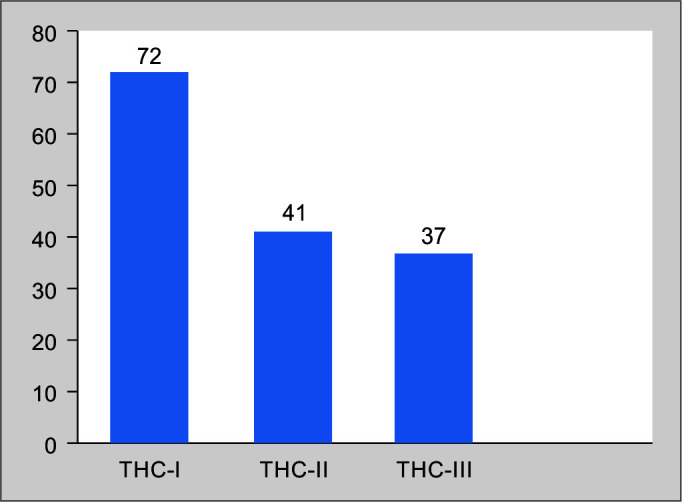
A questionnaire-based multicentric cross-sectional survey was conducted among registered nursing professionals employed at ICUs of three government tertiary healthcare centers (THC) of India: THC-I, THC-II, and THC-III located in the eastern and northern parts of India between February 2022 and July 2022.
A total of 150 nurses completed the questionnaire form (response rate: 62.5%) comprised of 49 (32.7%) males and 101 (67.3%) females with a mean age of 35.69 ± 7.7 years. Nursing officers' knowledge surpassed that of staff nurses regarding the duration of toothbrushing ( = 0.033). Among interinstitutional comparisons, THC-I nurses showed the greatest knowledge regarding the duration of toothbrushing and the mechanism of preventing saliva accumulation to reduce microbial growth ( = 0.013 and = 0.003, respectively). Based on total work experience, participants were segregated into three groups: Group I (<7 years), group II (7.1-13.9 years), and group III (>14 years). Group II surpassed the knowledge of denture removal during sleep, cleaning after every meal, and storing in personalized air-tight containers ( = 0.001 and = 0.036, respectively). The majority from group II recommended plain saline as the material for oral hygiene maintenance in ICU patients ( = 0.008). Group III predominantly practiced the ideal handwashing technique pre- and post-patient contact which was statistically significant ( = 0.001).
This study observed that a knowledge gap exists among the nurses of the three institutes across India pertaining to the oral hygiene care of ICU patients. Nurse's education and implementation of the proper oral hygiene measures for intubated patients in ICU setup is an essential need.
Kumar S, Singh B, Mahuli AV, Kumar S, Singh A, Jha AK. Assessment of Nursing Staff's Knowledge, Attitude and Practice Regarding Oral Hygiene Care in Intensive Care Unit Patients: A Multicenter Cross-sectional Study. Indian J Crit Care Med 2024;28(1):48-57.
口腔护理是用于减少口腔定植、牙菌斑、呼吸道感染、患者住院时间和成本的基本护理程序之一。重症监护病房(ICU)患者保持良好口腔卫生的重要性已得到充分认可,然而,在ICU实现良好口腔护理的最有效方法尚不清楚。因此,本研究的目的是评估印度各医疗机构护理专业人员对ICU口腔保健的知识、态度和实践情况。
2022年2月至2022年7月期间,对印度东部和北部的三家政府三级医疗中心(THC):THC-I、THC-II和THC-III的ICU中注册的护理专业人员进行了一项基于问卷的多中心横断面调查。
共有150名护士完成了问卷(回复率:62.5%),其中男性49名(32.7%),女性101名(67.3%),平均年龄为35.69±7.7岁。在刷牙时长方面,护士长的知识水平超过了护士(P = 0.033)。在机构间比较中,THC-I的护士在刷牙时长和防止唾液积聚以减少微生物生长的机制方面表现出最丰富的知识(分别为P = 0.013和P = 0.003)。根据总工作经验,参与者被分为三组:第一组(<7年)、第二组(7.1 - 13.9年)和第三组(>14年)。第二组在睡眠期间取下假牙、每餐饭后清洁以及储存在个性化密封容器方面的知识超过其他组(分别为P = 0.001和P = 0.036)。第二组中的大多数人推荐用生理盐水作为ICU患者口腔卫生维护的材料(P = 0.008)。第三组在接触患者前后主要采用理想的洗手技术,这具有统计学意义(P = 0.001)。
本研究观察到,印度这三家机构的护士在ICU患者口腔卫生护理方面存在知识差距。对ICU中插管患者进行护士教育并实施适当的口腔卫生措施是一项基本需求。
Kumar S, Singh B, Mahuli AV, Kumar S, Singh A, Jha AK. Assessment of Nursing Staff's Knowledge, Attitude and Practice Regarding Oral Hygiene Care in Intensive Care Unit Patients: A Multicenter Cross-sectional Study. Indian J Crit Care Med 2024;28(1):48 - 57.