Center for Translational Immunology, Columbia University Irving Medical Center, New York, New York, USA.
Herbert Irving Comprehensive Cancer Center, Columbia University Irving Medical Center, New York, New York, USA.
J Immunother Cancer. 2024 Mar 21;12(3):e008482. doi: 10.1136/jitc-2023-008482.
Immune checkpoint inhibitors (ICIs) have improved outcomes and extended patient survival in several tumor types. However, ICIs often induce immune-related adverse events (irAEs) that warrant therapy cessation, thereby limiting the overall effectiveness of this class of therapeutic agents. Currently, available therapies used to treat irAEs might also blunt the antitumor activity of the ICI themselves. Therefore, there is an urgent need to identify treatments that have the potential to be administered alongside ICI to optimize their use.
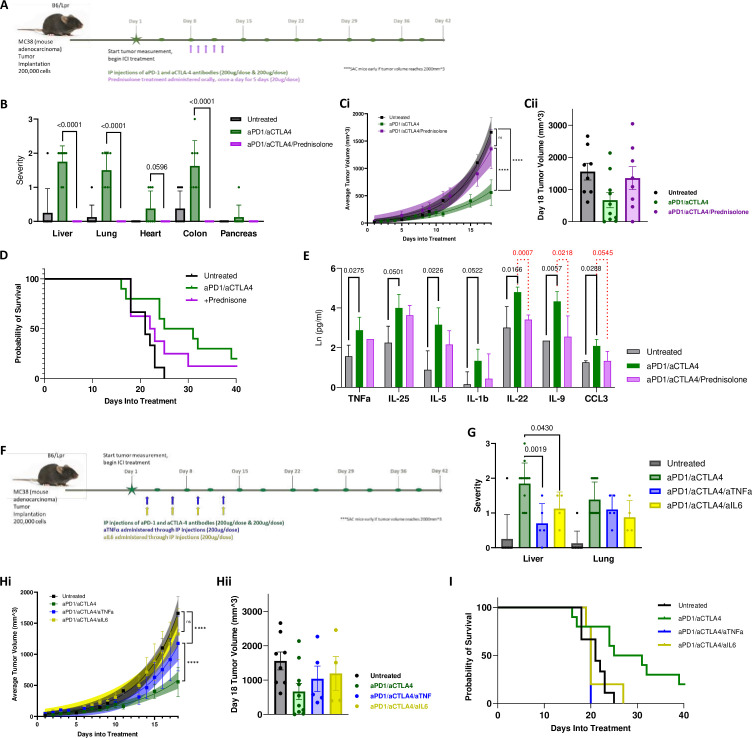
Using a translationally relevant murine model of anti-PD-1 and anti-CTLA-4 antibodies-induced irAEs, we compared the safety and efficacy of prednisolone, anti-IL-6, anti-TNFɑ, anti-IL-25 (IL-17E), and anti-IL-17RA (the receptor for IL-25) administration to prevent irAEs and to reduce tumor size.
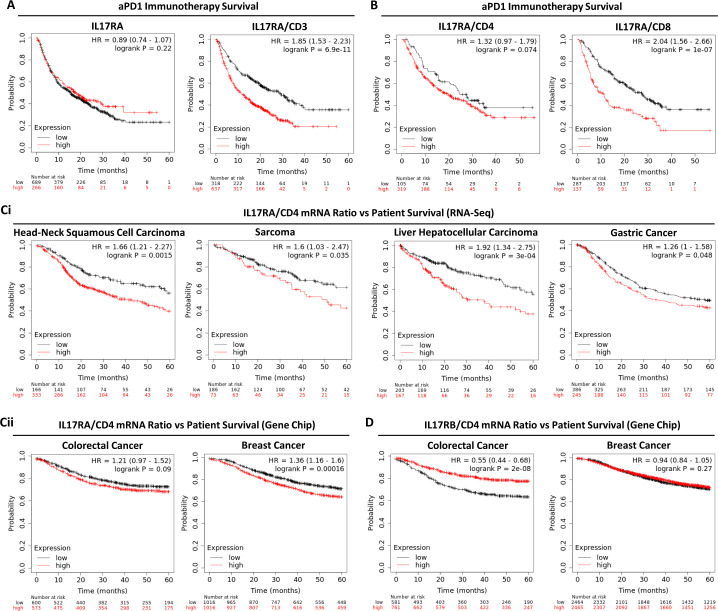
While all interventions were adequate to inhibit the onset of irAEs pneumonitis and hepatitis, treatment with anti-IL-25 or anti-IL-17RA antibodies also exerted additional antitumor activity. Mechanistically, IL-25/IL-17RA blockade reduced the number of organ-infiltrating lymphocytes.
These findings suggest that IL-25/IL-17RA may serve as an additional target when treating ICI-responsive tumors, allowing for better tumor control while suppressing immune-related toxicities.
免疫检查点抑制剂(ICIs)已改善了多种肿瘤类型的预后并延长了患者的生存期。然而,ICI 常引起免疫相关不良反应(irAEs),需要停药,从而限制了此类治疗药物的总体疗效。目前,用于治疗 irAEs 的可用疗法也可能会削弱 ICI 的抗肿瘤活性。因此,迫切需要确定具有与 ICI 联合使用潜力的治疗方法,以优化其应用。
我们使用一种具有转化相关性的抗 PD-1 和抗 CTLA-4 抗体诱导的 irAEs 小鼠模型,比较了泼尼松龙、抗 IL-6、抗 TNFɑ、抗 IL-25(IL-17E)和抗 IL-17RA(IL-25 的受体)给药预防 irAEs 和缩小肿瘤体积的安全性和疗效。
虽然所有干预措施都足以抑制 irAEs 性肺炎和肝炎的发生,但抗 IL-25 或抗 IL-17RA 抗体治疗也发挥了额外的抗肿瘤活性。从机制上讲,IL-25/IL-17RA 阻断减少了器官浸润淋巴细胞的数量。
这些发现表明,IL-25/IL-17RA 可能成为治疗 ICI 反应性肿瘤的另一个靶点,在抑制免疫相关毒性的同时,更好地控制肿瘤。