Parra-Perez Alberto M, Gallego-Martinez Alvaro, Lopez-Escamez Jose A
Division of Otolaryngology, Department of Surgery, Instituto de Investigación Biosanitaria, Ibs.GRANADA, Universidad de Granada, Granada, Spain.
Sensorineural Pathology Programme, Centro de Investigación Biomédica en Red en Enfermedades Raras (CIBERER),, Madrid, Spain.
Hum Genet. 2024 Mar;143(3):423-435. doi: 10.1007/s00439-024-02643-8. Epub 2024 Mar 22.
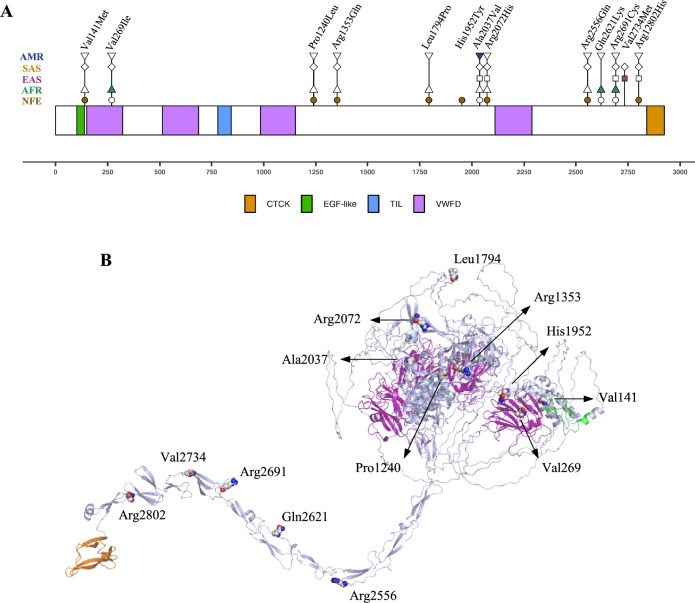
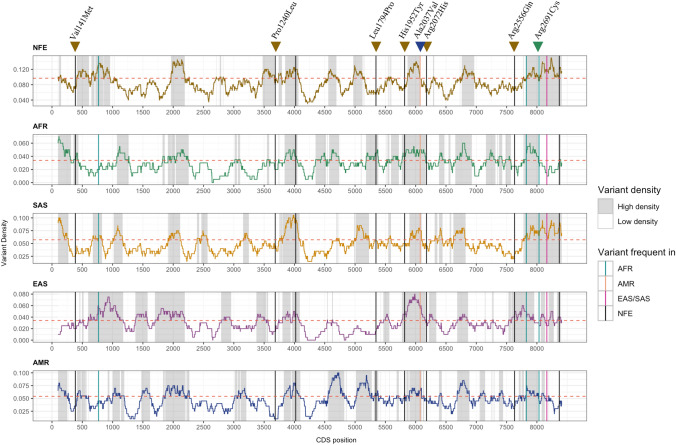
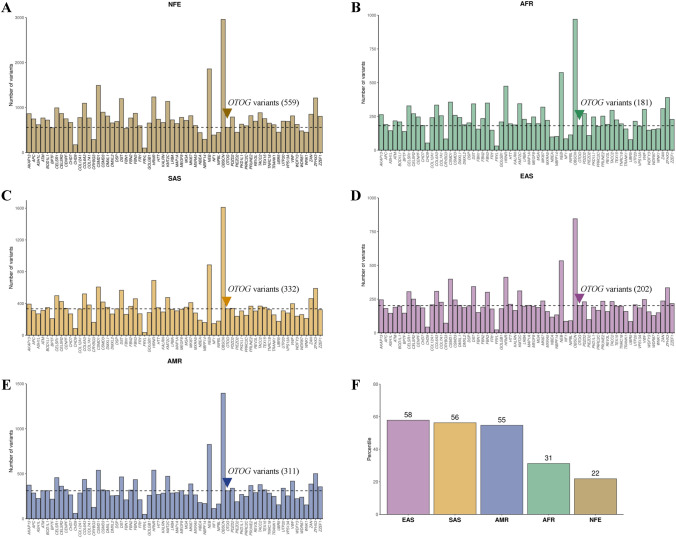
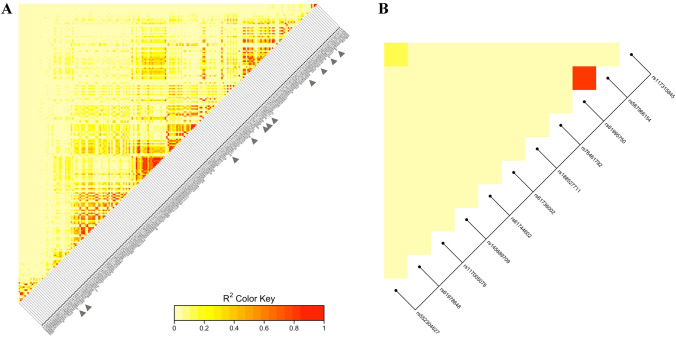
Meniere disease is a complex inner ear disorder with significant familial aggregation. A differential prevalence of familial MD (FMD) has been reported, being 9-10% in Europeans compared to 6% in East Asians. A broad genetic heterogeneity in FMD has been described, OTOG being the most common mutated gene, with a compound heterozygous recessive inheritance. We hypothesize that an OTOG-related founder effect may explain the higher prevalence of FMD in the European population. Therefore, the present study aimed to compare the allele frequency (AF) and distribution of OTOG rare variants across different populations. For this purpose, the coding regions with high constraint (low density of rare variants) were retrieved in the OTOG coding sequence in Non-Finnish European (NFE).. Missense variants (AF < 0.01) were selected from a 100 FMD patient cohort, and their population AF was annotated using gnomAD v2.1. A linkage analysis was performed, and odds ratios were calculated to compare AF between NFE and other populations. Thirteen rare missense variants were observed in 13 FMD patients, with 2 variants (rs61978648 and rs61736002) shared by 5 individuals and another variant (rs117315845) shared by two individuals. The results confirm the observed enrichment of OTOG rare missense variants in FMD. Furthermore, eight variants were enriched in the NFE population, and six of them were in constrained regions. Structural modeling predicts five missense variants that could alter the otogelin stability. We conclude that several variants reported in FMD are in constraint regions, and they may have a founder effect and explain the burden of FMD in the European population.
梅尼埃病是一种复杂的内耳疾病,具有显著的家族聚集性。已有报道称家族性梅尼埃病(FMD)的患病率存在差异,欧洲人为9 - 10%,而东亚人为6%。FMD存在广泛的遗传异质性,OTOG是最常见的突变基因,呈复合杂合隐性遗传。我们推测与OTOG相关的奠基者效应可能解释了欧洲人群中FMD患病率较高的原因。因此,本研究旨在比较不同人群中OTOG罕见变异的等位基因频率(AF)和分布情况。为此,在非芬兰欧洲人(NFE)的OTOG编码序列中检索了具有高约束性(罕见变异低密度)的编码区域。从100例FMD患者队列中选择错义变异(AF < 0.01),并使用gnomAD v2.1注释其人群AF。进行连锁分析,并计算优势比以比较NFE与其他人群之间的AF。在13例FMD患者中观察到13个罕见错义变异,其中2个变异(rs61978648和rs61736002)由5个人共享,另一个变异(rs117315845)由2个人共享。结果证实了在FMD中观察到的OTOG罕见错义变异的富集。此外,8个变异在NFE人群中富集,其中6个位于约束区域。结构建模预测5个错义变异可能会改变耳胶蛋白的稳定性。我们得出结论,FMD中报道的几个变异位于约束区域,它们可能具有奠基者效应,并解释了欧洲人群中FMD的负担。