Cho Jinmyoung, Sands Laura P, Stevens Alan B, Allore Heather G, Horstman Molly J
Department of Family and Community Medicine, Saint Louis University School of Medicine, Saint Louis, Missouri, USA.
Center for Applied Health Research, Baylor Scott & White Research Institute, Temple, Texas, USA.
Innov Aging. 2024 Feb 15;8(3):igae017. doi: 10.1093/geroni/igae017. eCollection 2024.
This study aims to identify patterns of caregiving intensity and assess associations between caregiving intensity and multidimensional physical health indicators and health behaviors among spousal caregivers of persons with Alzheimer's disease and related dementia.
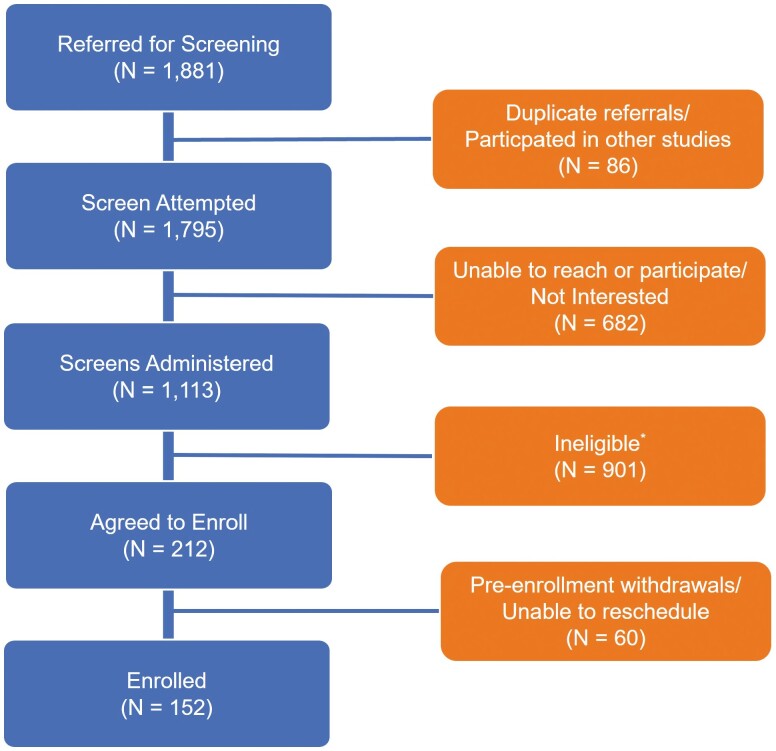
Using data from 152 spousal caregivers aged 65 and older, the intensity of their caregiving experience was measured as the number and frequency of health- and medical-related helping activities for their care recipient. Multidimensional health indicators included self-reported fatigue, sleep disturbance, physical functioning, pain interference, general health, and the number of chronic conditions from the electronic health records. Self-reported health promotion behaviors were assessed as health responsibility, physical activity, nutrition, interpersonal relations, and stress management.
Two distinct caregiving intensity patterns, high-intensity (37.5%) and low-intensity (62.5%) caregiving, were identified with cluster analysis. Caregivers in the high-intensity caregiving cluster reported feeling more tired ( = 2.25, < .05), experiencing more sleep disturbance ( = 3.06, < .01), and performing less physical activity ( = 2.05, < .05) compared with caregivers in the low-intensity group.
Future studies are needed to develop effective interventions to address caregiving intensity and its consequences on the health of spousal caregivers of persons with dementia.
本研究旨在确定照护强度模式,并评估阿尔茨海默病及相关痴呆症患者的配偶照护者的照护强度与多维身体健康指标及健康行为之间的关联。
利用152名65岁及以上配偶照护者的数据,将他们的照护经历强度衡量为针对其照护对象的与健康和医疗相关的帮助活动的数量和频率。多维健康指标包括自我报告的疲劳、睡眠障碍、身体功能、疼痛干扰、总体健康状况以及电子健康记录中的慢性病数量。自我报告的健康促进行为评估为健康责任、体育活动、营养、人际关系和压力管理。
通过聚类分析确定了两种不同的照护强度模式,即高强度(37.5%)和低强度(62.5%)照护。与低强度照护组的照护者相比,高强度照护组的照护者报告感觉更疲惫(t = 2.25,p <.05),经历更多睡眠障碍(t = 3.06,p <.01),且体育活动更少(t = 2.05,p <.05)。
未来需要开展研究,以制定有效的干预措施,解决照护强度及其对痴呆症患者配偶照护者健康的影响。