Yan Yin-Fang, Feng Yue, Wang Si-Min, Fang Fei, Chen Hong-Yan, Zhen Ming-Xia, Ji Yu-Qiang, Wu Song-Di
Department of Central Laboratory, The First Affiliated Hospital of Northwestern University, The First Hospital of Xi'an, Xi'an, 710069, Shaanxi Province, China.
Xi'an Key Laboratory for Innovation and Translation of Neuroimmunological Diseases, Xi'an, Shaanxi Province, China.
Heliyon. 2024 Mar 12;10(6):e28021. doi: 10.1016/j.heliyon.2024.e28021. eCollection 2024 Mar 30.
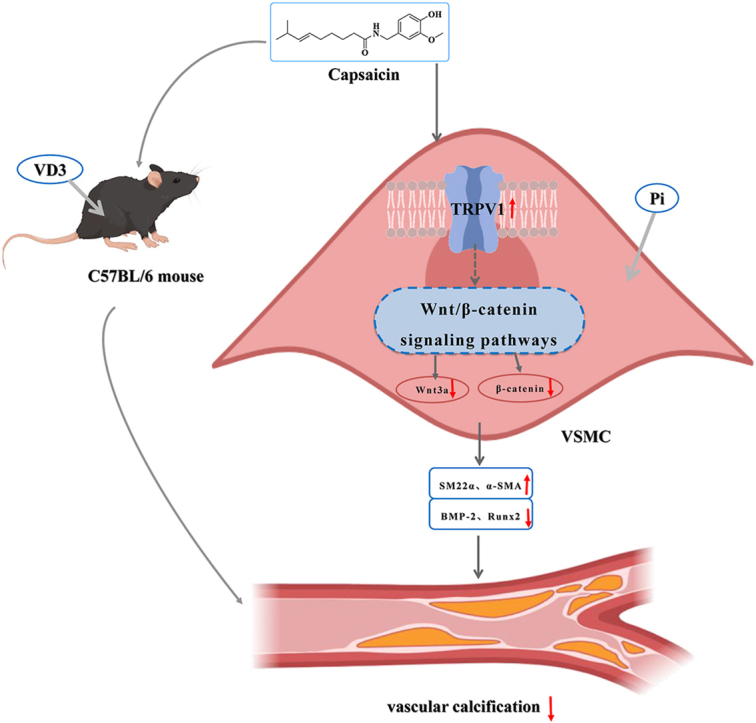
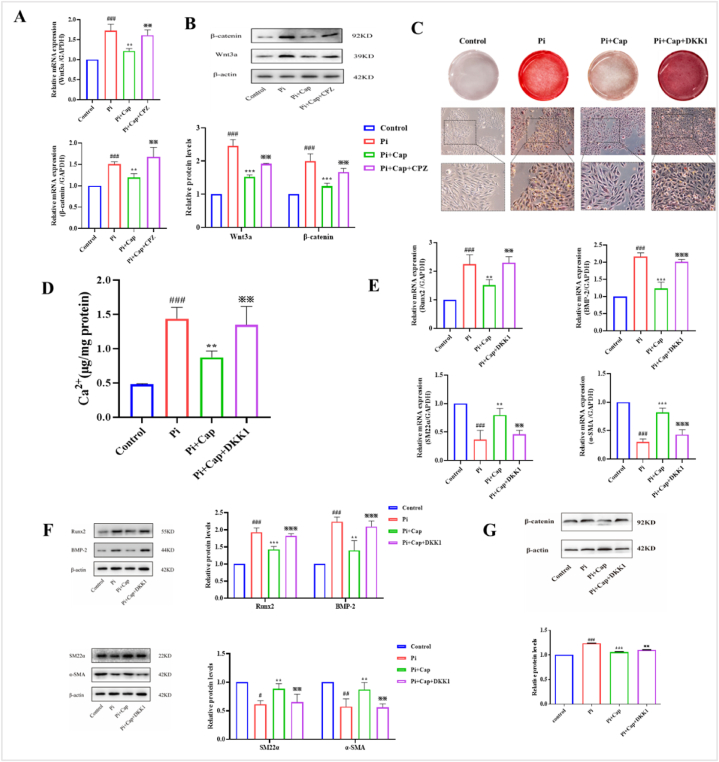
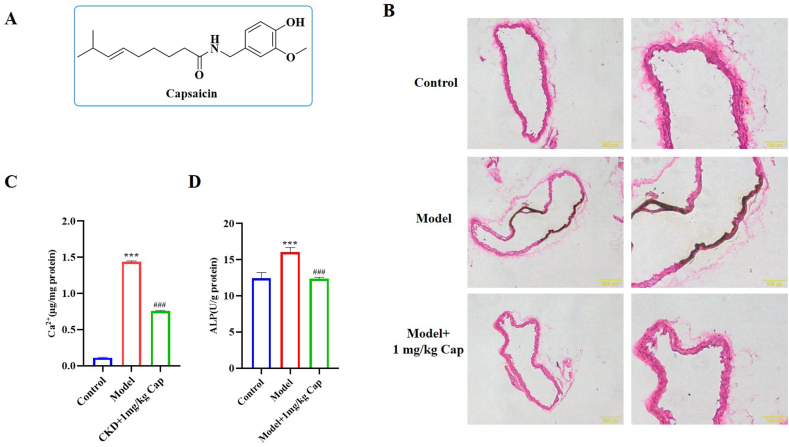
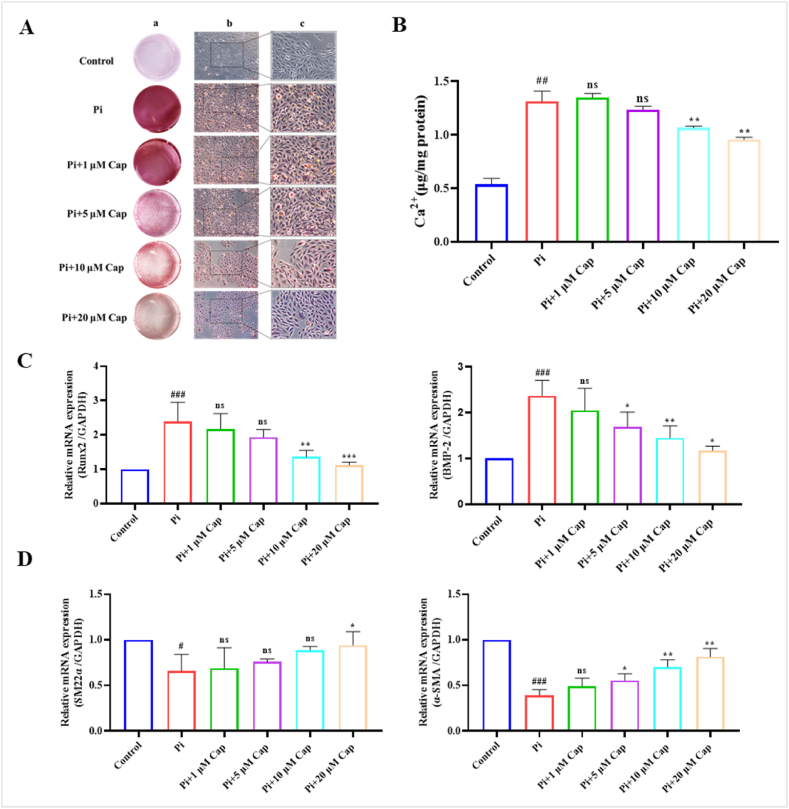
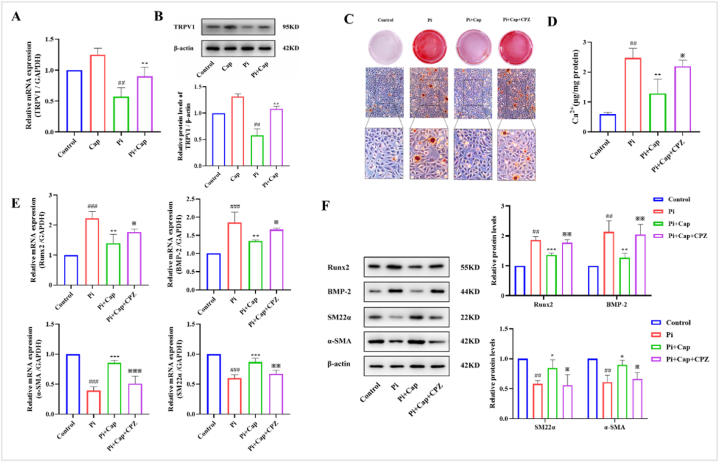
Vascular calcification (VC) is an accurate risk factor and predictor of adverse cardiovascular events; however, there is currently no effective therapy to specifically prevent VC progression. Capsaicin (Cap) is a bioactive alkaloid isolated from L., a traditional medicinal and edible plant that is beneficial for preventing cardiovascular diseases. However, the effect of Cap on VC remains unclear. This study aimed to explore the effects and related mechanisms of Cap on aortic calcification in a mouse and on Pi-induced calcification in vascular smooth muscle cells (VSMCs). First, we established a calcification mouse model with vitamin D3 and evaluated the effects of Cap on calcification mice using von Kossa staining, calcium content, and alkaline phosphatase activity tests. The results showed that Cap significantly improved calcification in mice. VSMCs were then cultured in 2.6 mM NaHPO and 50 μg/mL ascorbic acid for 7 days to obtain a calcification model, and we investigated the effects and mechanisms of Cap on VSMCs calcification by assessing the changes of calcium deposition, calcium content, and subsequent VC biomarkers. These results showed that Cap alleviated VSMCs calcification by upregulating the expressions of TRPV1. Moreover, Cap reduced the expression of Wnt3a and β-catenin, whereas DKK1 antagonised the inhibitory effect of Cap on VSMC calcification. This study is the first to offer direct evidence that Cap inhibits the Wnt/β-catenin signaling pathway by upregulating the expression of the TRPV1 receptor, resulting in the decreased expression of Runx2 and BMP-2, thereby reducing VSMC calcification. Our study may provide novel strategies for preventing the progression of VC. This could serve as a theoretical basis for clinically treating VC with spicy foods.
血管钙化(VC)是不良心血管事件的准确风险因素和预测指标;然而,目前尚无有效的疗法来特异性预防VC进展。辣椒素(Cap)是从一种传统药用和食用植物辣椒中分离出的生物活性生物碱,对预防心血管疾病有益。然而,Cap对VC的影响仍不清楚。本研究旨在探讨Cap对小鼠主动脉钙化以及对血管平滑肌细胞(VSMC)中磷酸盐诱导钙化的影响及相关机制。首先,我们用维生素D3建立了钙化小鼠模型,并使用冯·科萨染色、钙含量和碱性磷酸酶活性测试评估Cap对钙化小鼠的影响。结果表明,Cap显著改善了小鼠的钙化情况。然后将VSMC在2.6 mM磷酸氢二钠和50μg/mL抗坏血酸中培养7天以获得钙化模型,我们通过评估钙沉积、钙含量及后续VC生物标志物的变化来研究Cap对VSMC钙化的影响及机制。这些结果表明,Cap通过上调瞬时受体电位香草酸亚型1(TRPV1)的表达减轻了VSMC钙化。此外,Cap降低了Wnt3a和β-连环蛋白的表达,而 Dickkopf相关蛋白1(DKK1)拮抗了Cap对VSMC钙化的抑制作用。本研究首次提供了直接证据,表明Cap通过上调TRPV1受体的表达抑制Wnt/β-连环蛋白信号通路,导致Runx2和骨形态发生蛋白2(BMP-2)表达降低,从而减少VSMC钙化。我们的研究可能为预防VC进展提供新策略。这可为临床上用辛辣食物治疗VC提供理论依据。