Department of Pathology, Dalhousie University, 5850 College Street, Room 7-C, PO BOX 15000, Halifax, NS, B3H 4R2, Canada.
Department of Microbiology and Immunology, Dalhousie University, Halifax, Canada.
Sci Rep. 2024 Mar 25;14(1):7076. doi: 10.1038/s41598-024-57776-7.
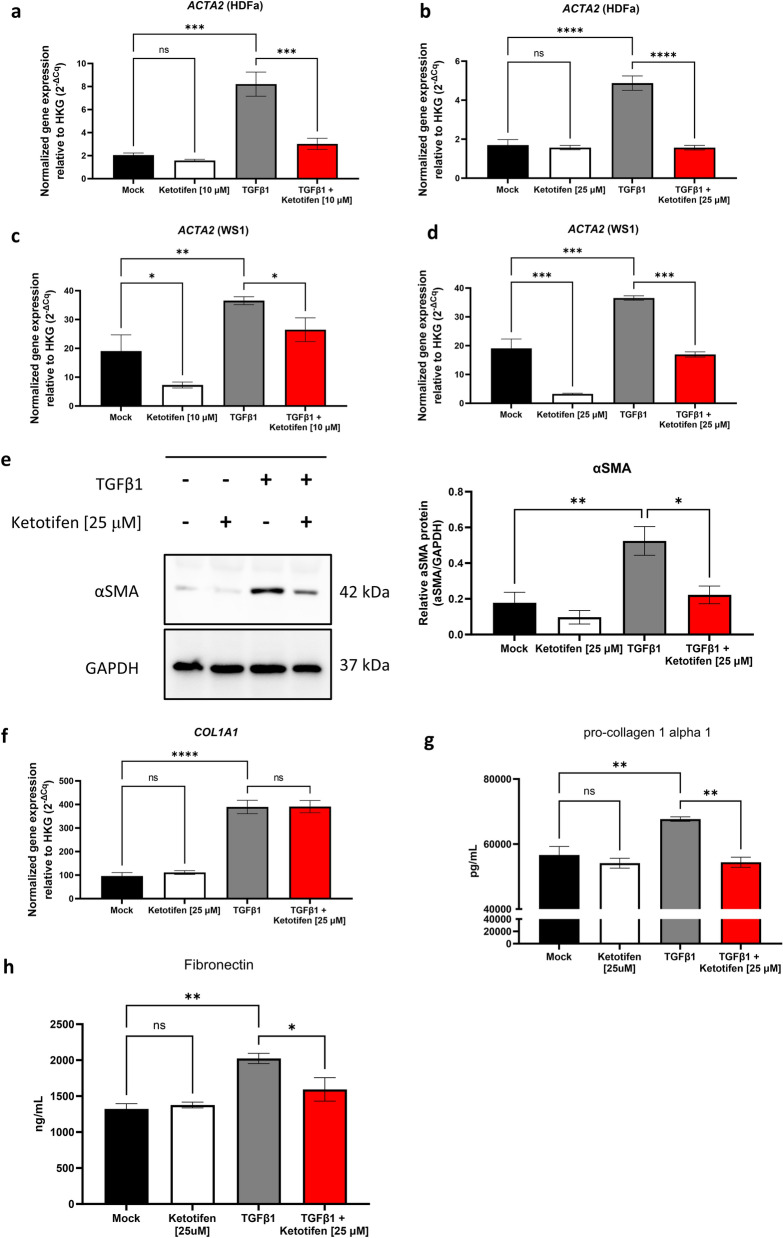
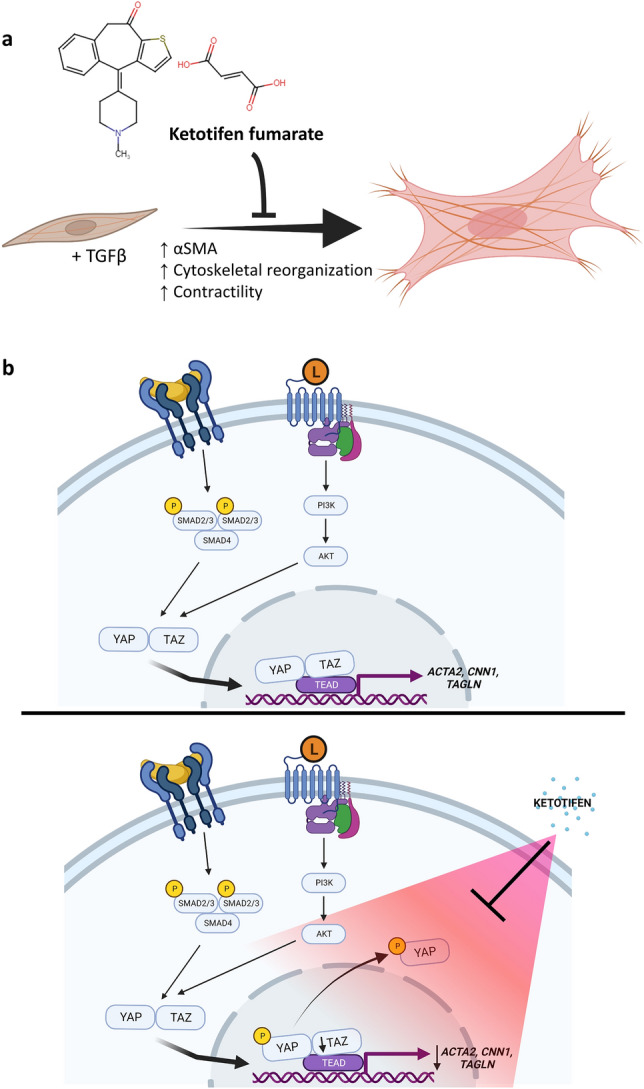
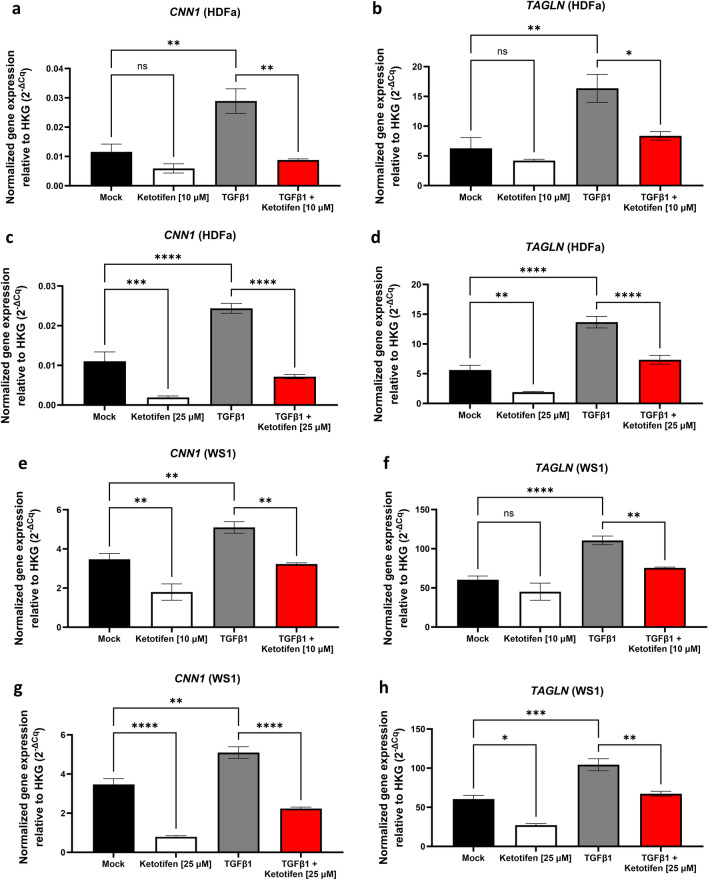
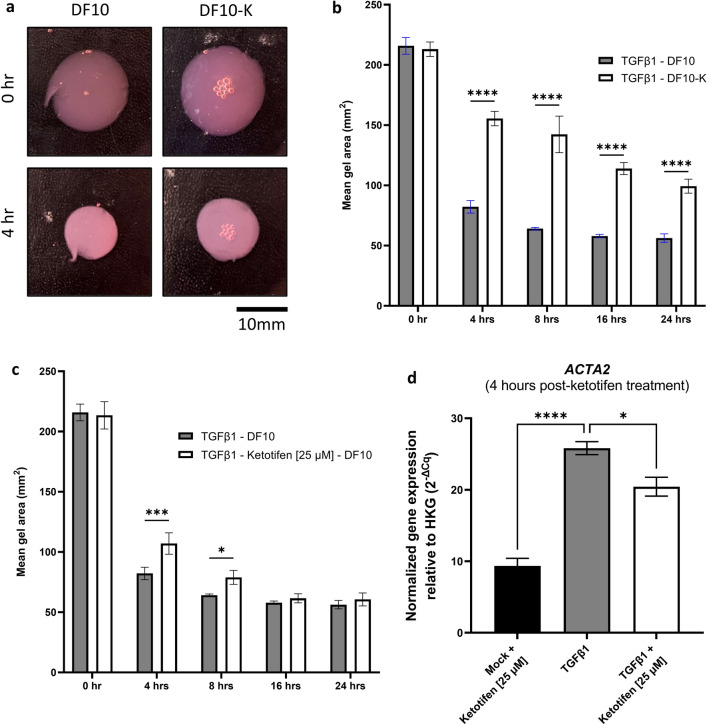
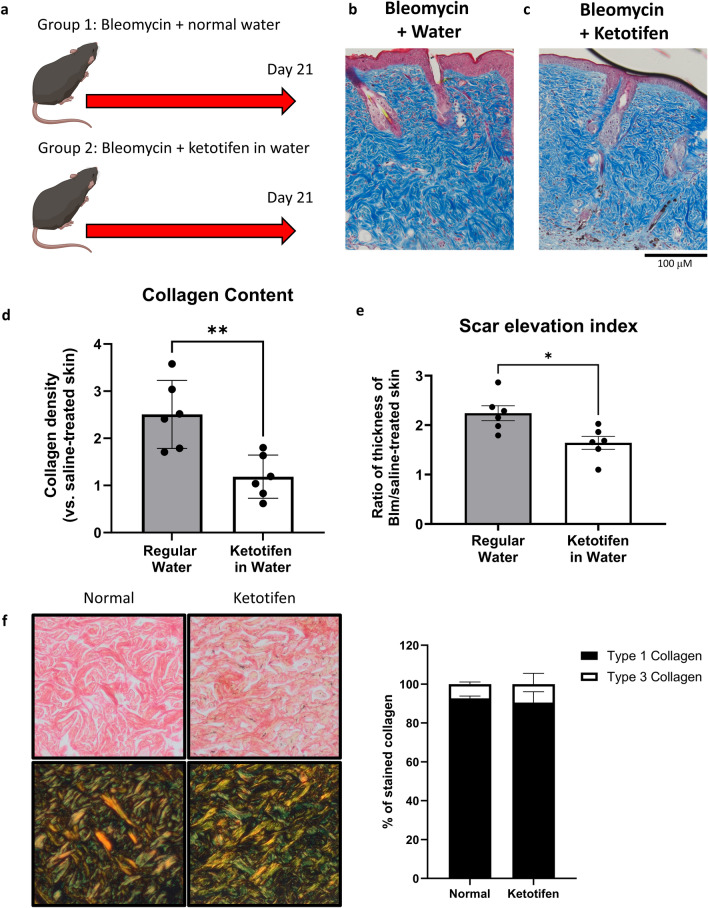
Fibrosis is a destructive, end-stage disease process. In the skin, it is associated with systemic sclerosis and scarring with considerable health burden. Ketotifen is a clinical antihistamine and mast cell stabilizer. Studies have demonstrated mast cell-dependent anti-fibrotic effects of ketotifen but direct effects on fibroblasts have not been determined. Human dermal fibroblasts were treated with pro-fibrotic transforming growth factor-β1 (TGFβ) followed by ketotifen or control treatments to determine direct effects on fibrotic fibroblasts. Ketotifen impaired TGFβ-induced α-smooth muscle actin gene and protein responses and decreased cytoskeletal- and contractility-associated gene responses associated with fibrosis. Ketotifen reduced Yes-associated protein phosphorylation, transcriptional coactivator with PDZ binding motif transcript and protein levels, and phosphorylation of protein kinase B. In a fibroblast-populated collagen gel contraction assay, ketotifen reduced the contractile activity of TGFβ-activated fibroblasts. In a murine model of bleomycin-induced skin fibrosis, collagen density and dermal thickness were significantly decreased in ketotifen-treated mice supporting in vitro findings. These results support a novel, direct anti-fibrotic activity of ketotifen, reducing pro-fibrotic phenotypic changes in fibroblasts and reducing collagen fibres in fibrotic mouse skin. Together, these findings suggest novel therapeutic potential and a novel mechanism of action for ketotifen in the context of fibrosis.
纤维化是一种破坏性的终末期疾病过程。在皮肤中,它与全身性硬皮病和瘢痕有关,给健康带来了相当大的负担。酮替芬是一种临床抗组胺药和肥大细胞稳定剂。研究表明酮替芬具有依赖肥大细胞的抗纤维化作用,但对成纤维细胞的直接作用尚未确定。用促纤维化转化生长因子-β1(TGFβ)处理人真皮成纤维细胞,然后用酮替芬或对照处理,以确定对纤维化成纤维细胞的直接作用。酮替芬损害 TGFβ诱导的α-平滑肌肌动蛋白基因和蛋白反应,并降低与纤维化相关的细胞骨架和收缩相关基因反应。酮替芬降低了 Yes 相关蛋白磷酸化、具有 PDZ 结合基序转录物和蛋白水平的转录共激活因子以及蛋白激酶 B 的磷酸化。在成纤维细胞填充的胶原凝胶收缩测定中,酮替芬降低了 TGFβ 激活的成纤维细胞的收缩活性。在博来霉素诱导的皮肤纤维化小鼠模型中,酮替芬治疗的小鼠皮肤中的胶原密度和真皮厚度显著降低,支持体外研究结果。这些结果支持酮替芬具有新型的直接抗纤维化活性,可减少成纤维细胞的促纤维化表型变化,并减少纤维化小鼠皮肤中的胶原纤维。总之,这些发现表明酮替芬在纤维化方面具有新的治疗潜力和新的作用机制。