Laboratory of Medical Genetics, Harbin Medical University, Harbin, Heilongjiang, China.
Key Laboratory of Preservation of Human Genetic Resources and Disease Control in China (Harbin Medical University), Ministry of Education, Harbin, Heilongjiang, China.
Front Immunol. 2024 Mar 11;15:1356075. doi: 10.3389/fimmu.2024.1356075. eCollection 2024.
During aging, chronic inflammation can promote tumor development and metastasis. Patients with chronic inflammatory bowel diseases (IBD) are at an increased risk of developing colorectal cancer (CRC). However, the molecular mechanism underlying is still unclear.
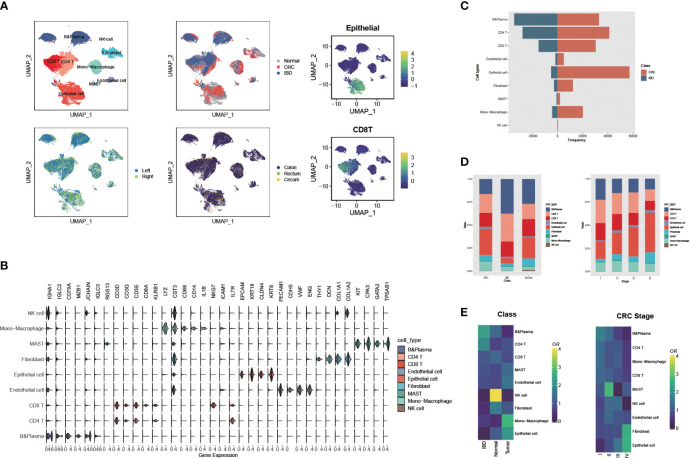
We conducted a large-scale single-cell sequencing analysis comprising 432,314 single cells from 92 CRC and 24 IBD patients. The analysis focused on the heterogeneity and commonality of CRC and IBD with respect to immune cell landscape, cellular communication, aging and inflammatory response, and Meta programs.
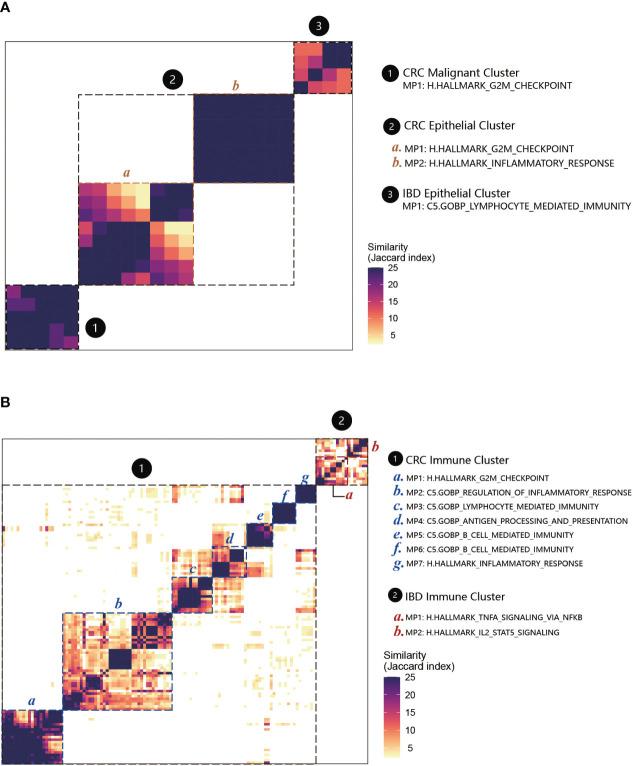
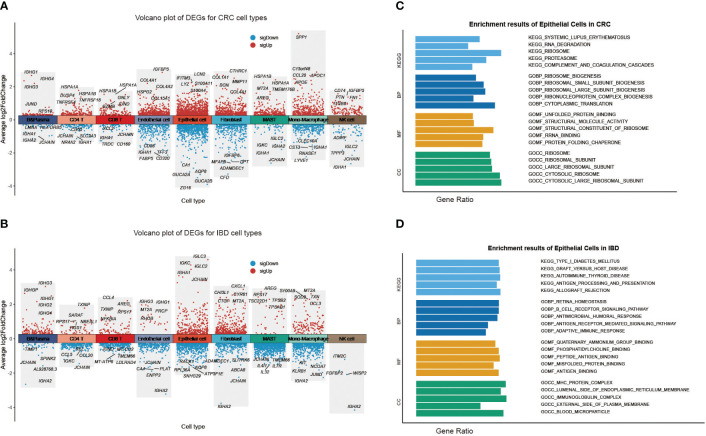
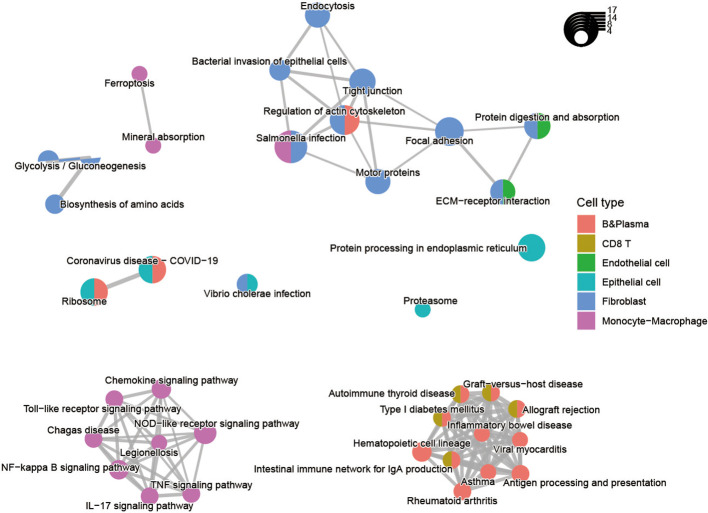
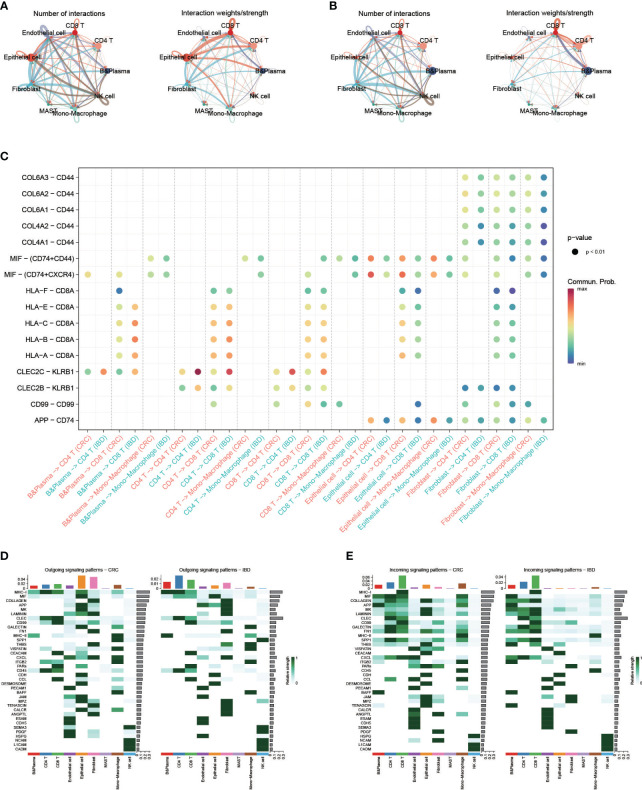
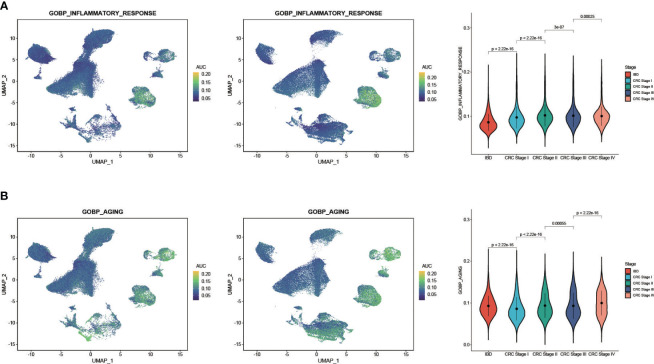
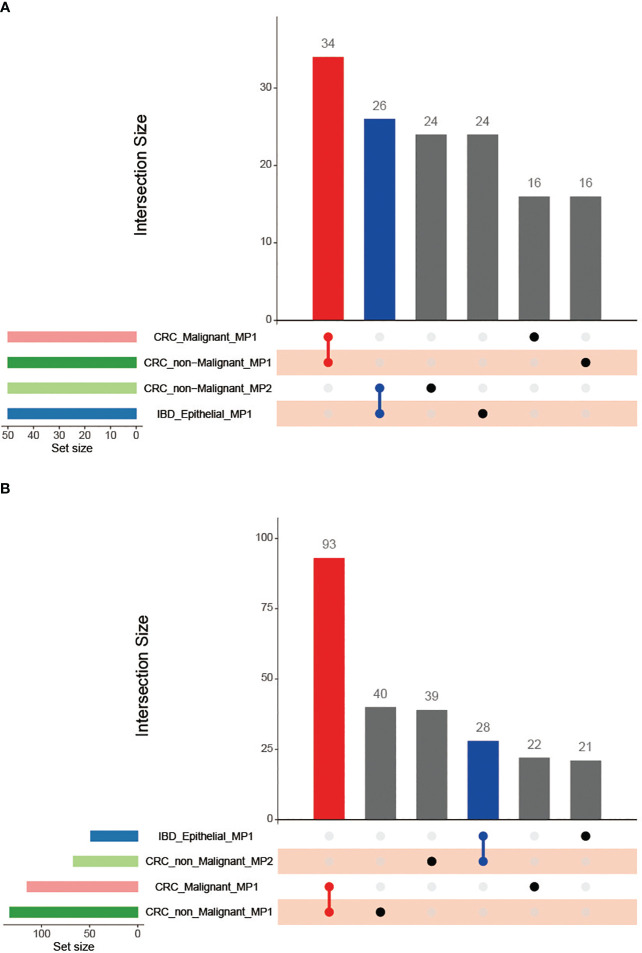
The CRC and IBD had significantly different propensities in terms of cell proportions, differential genes and their functions, and cellular communication. The progression of CRC was mainly associated with epithelial cells, fibroblasts, and monocyte-macrophages, which displayed pronounced metabolic functions. In particular, monocyte-macrophages were enriched for the aging and inflammation-associated NF-κB pathway. And IBD was enriched in immune-related functions with B cells and T cells. Cellular communication analysis in CRC samples displayed an increase in MIF signaling from epithelial cells to T cells, and an increase in the efferent signal of senescence-associated SPP1 signaling from monocyte-macrophages. Notably, we also found some commonalities between CRC and IBD. The efferent and afferent signals showed that the pro-inflammatory cytokine played an important role. And the activity of aging and inflammatory response with AUCell analysis also showed a high degree of commonality. Furthermore, using the Meta programs (MPs) with the NMF algorithm, we found that the CRC non-malignant cells shared a substantial proportion of the MP genes with CRC malignant cells (68% overlap) and IBD epithelial cells (52% overlap), respectively. And it was extensively involved in functions of cell cycle and immune response, revealing its dual properties of inflammation and cancer. In addition, CRC malignant and non-malignant cells were enriched for the senescence-related cell cycle G2M phase transition and the p53 signaling pathway.
Our study highlights the characteristics of aging, inflammation and tumor in CRC and IBD at the single-cell level, and the dual property of inflammation-cancer in CRC non-malignant cells may provide a more up-to-date understanding of disease transformation.
随着年龄的增长,慢性炎症会促进肿瘤的发生和转移。患有慢性炎症性肠病(IBD)的患者罹患结直肠癌(CRC)的风险增加。然而,其潜在的分子机制尚不清楚。
我们进行了一项大规模的单细胞测序分析,该分析共包含了 92 例 CRC 和 24 例 IBD 患者的 432,314 个单细胞。该分析主要集中在 CRC 和 IBD 的免疫细胞景观、细胞间通讯、衰老和炎症反应以及 Meta 程序的异质性和共性方面。
CRC 和 IBD 在细胞比例、差异基因及其功能以及细胞间通讯方面存在显著差异。CRC 的进展主要与上皮细胞、成纤维细胞和单核-巨噬细胞有关,这些细胞表现出明显的代谢功能。特别是单核-巨噬细胞富含与衰老和炎症相关的 NF-κB 通路。而 IBD 则富含与 B 细胞和 T 细胞相关的免疫功能。CRC 样本中的细胞间通讯分析显示,上皮细胞向 T 细胞的 MIF 信号增加,单核-巨噬细胞中衰老相关 SPP1 信号的传出信号增加。值得注意的是,我们还发现 CRC 和 IBD 之间存在一些共性。传出和传入信号表明,促炎细胞因子发挥了重要作用。并且 AUCell 分析的衰老和炎症反应活性也表现出高度的共性。此外,使用 NMF 算法的 Meta 程序(MPs),我们发现 CRC 非恶性细胞与 CRC 恶性细胞(68%重叠)和 IBD 上皮细胞(52%重叠)分别共享大量的 MP 基因。并且它广泛涉及细胞周期和免疫反应的功能,揭示了其炎症和癌症的双重特性。此外,CRC 恶性和非恶性细胞均富含与衰老相关的细胞周期 G2M 期过渡和 p53 信号通路。
本研究在单细胞水平上强调了 CRC 和 IBD 中衰老、炎症和肿瘤的特征,CRC 非恶性细胞的炎症-癌症双重特性可能为疾病转化提供了更及时的认识。