Amaral Luísa M P F, Rangel Maria, Bastos Margarida
REQUIMTE, LAQV, Department of Chemistry and Biochemistry, Faculty of Sciences, University of Porto, R. do Campo Alegre, 4169-007 Porto, Portugal.
REQUIMTE, LAQV, Institute of Biomedical Sciences Abel Salazar, ICBAS, University of Porto, Rua Jorge Viterbo Ferreira, 228, 4050-313 Porto, Portugal.
J Funct Biomater. 2024 Mar 10;15(3):67. doi: 10.3390/jfb15030067.
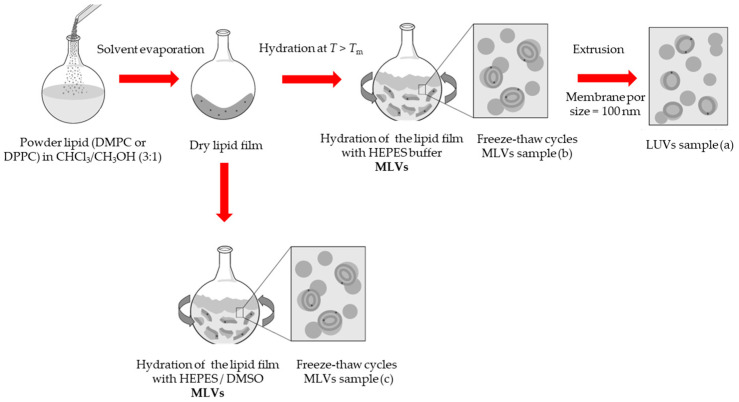
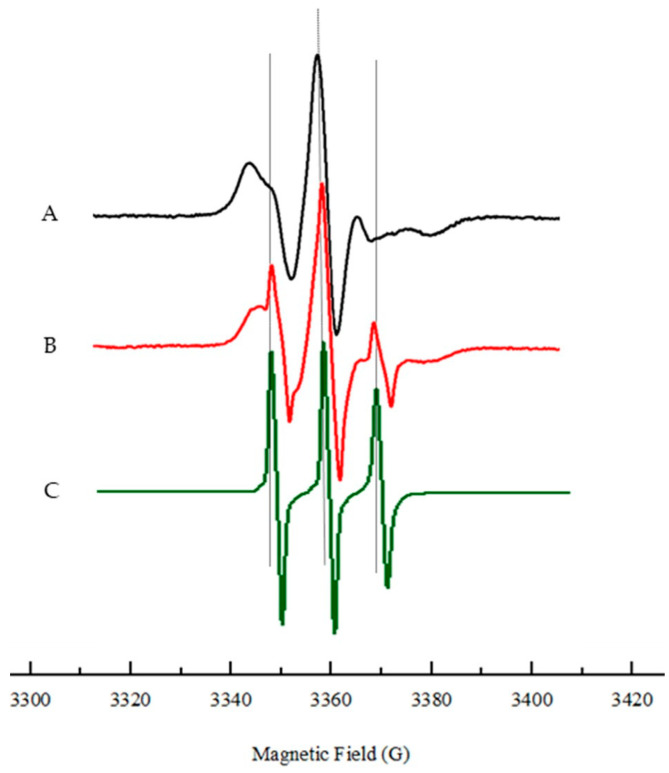
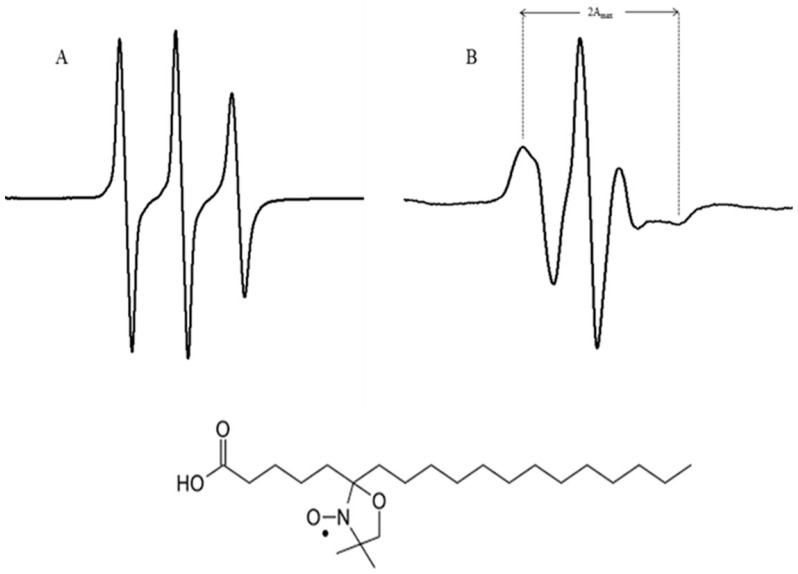
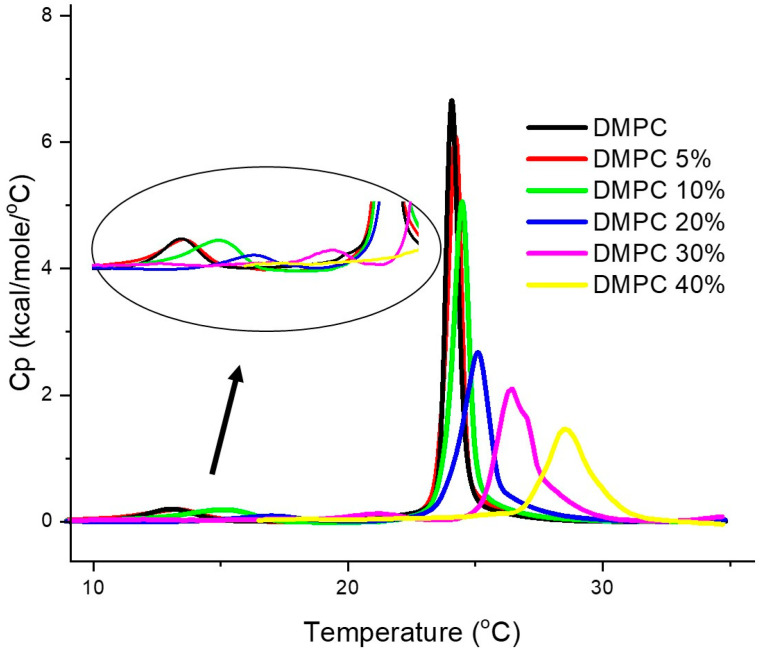
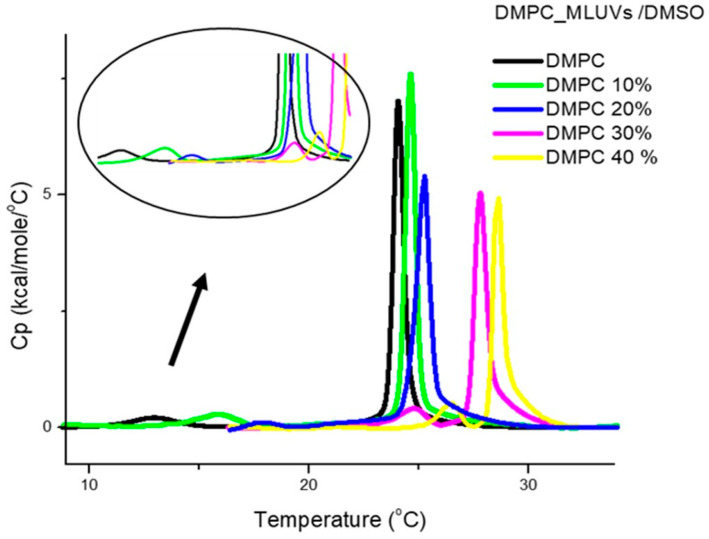
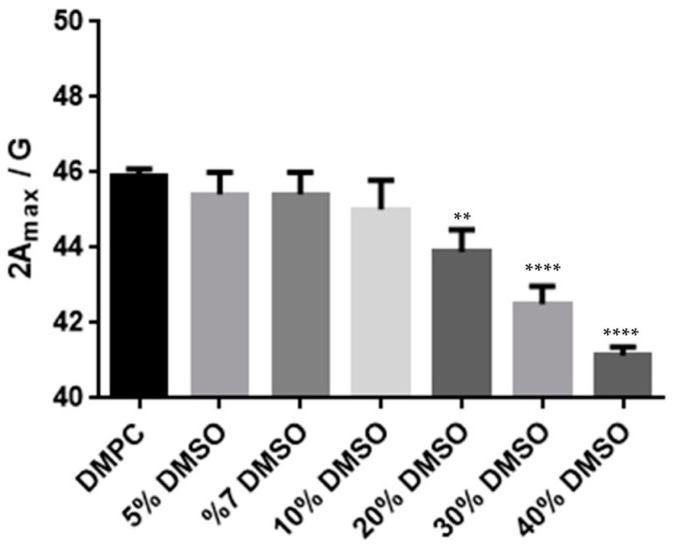
The study and characterization of the biophysical properties of membranes and drug-membrane interactions represent a critical step in drug development, as biological membranes act as a barrier that the drug must overcome to reach its active site. Liposomes are widely used in drug delivery to circumvent the poor aqueous solubility of most drugs, improving systemic bioavailability and pharmacokinetics. Further, they can be targeted to deliver to specific disease sites, thus decreasing drug load, and reducing side effects and poor adherence to treatment. To improve drug solubility during liposome preparation, DMSO is the most widely used solvent. This raises concern about the potential effect of DMSO on membranes and leads us to investigate, using DSC and EPR, the influence of DMSO on the behavior of lipid model membranes of DMPC and DPPC. In addition, we tested the influence of DMSO on drug-membrane interaction, using compounds with different hydrophobicity and varying DMSO content, using the same experimental techniques. Overall, it was found that with up to 10% DMSO, changes in the bilayer fluidity or the thermotropic properties of the studied liposomes were not significant, within the experimental uncertainty. For higher concentrations of DMSO, there is a stabilization of both the gel and the rippled gel phases, and increased bilayer fluidity of DMPC and DPPC liposomes leading to an increase in membrane permeability.
膜的生物物理性质以及药物 - 膜相互作用的研究与表征是药物研发中的关键步骤,因为生物膜充当了药物到达其活性位点必须克服的屏障。脂质体在药物递送中被广泛应用,以解决大多数药物水溶性差的问题,提高全身生物利用度和药代动力学。此外,它们可以靶向递送至特定疾病部位,从而降低药物负荷,减少副作用以及治疗依从性差的问题。为了在脂质体制备过程中提高药物溶解度,二甲基亚砜(DMSO)是使用最广泛的溶剂。这引发了人们对DMSO对膜潜在影响的关注,并促使我们使用差示扫描量热法(DSC)和电子顺磁共振(EPR)来研究DMSO对二肉豆蔻酰磷脂酰胆碱(DMPC)和二棕榈酰磷脂酰胆碱(DPPC)脂质模型膜行为的影响。此外,我们使用相同的实验技术,通过具有不同疏水性和不同DMSO含量的化合物,测试了DMSO对药物 - 膜相互作用的影响。总体而言,发现在实验不确定性范围内,DMSO含量高达10%时,所研究脂质体的双层流动性或热致性质变化并不显著。对于更高浓度的DMSO,凝胶相和波纹凝胶相都会稳定,并且DMPC和DPPC脂质体的双层流动性增加,导致膜通透性增加。