Nardone Michele, Di Stasio Dario, Lucchese Alberta, Gentili Daniele, Cattabianchi Giulia, Signorelli Carlo, Sarchi Pierangelo, Pulcrano Giovanna, Lembo Valentino, Pirola Paola Maria, Lauritano Dorina, Carinci Francesco
Azienda Socio-Sanitaria Territoriale Melegnano Martesana, Regione Lombardia, 20077 Milan, Italy.
Multidisciplinary Department of Medical-Surgical and Dental Specialties, University of Campania "Luigi Vanvitelli", 80138 Naples, Italy.
Pathogens. 2024 Feb 28;13(3):215. doi: 10.3390/pathogens13030215.
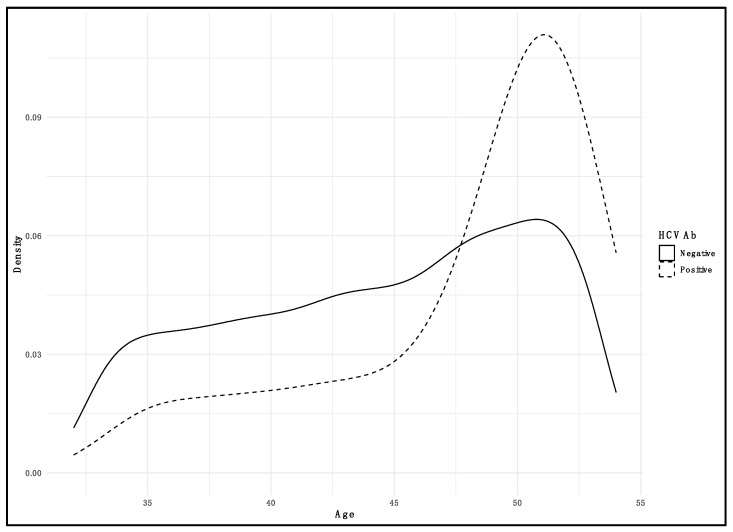
Hepatitis C virus (HCV) infection is a significant public health problem affecting 58 million people worldwide, including 3.9 million in Europe. Many of these infections go undiagnosed because chronic infection is often asymptomatic. This observational cohort study presents a detailed examination of hepatitis C virus epidemiology in Lombardia (Italy) and was conducted within the ASST "Melegnano e della Martesana". The study involved comprehensive HCV screening of 3290 patients accessing the collection points and/or hospitalized in the facilities of the ASST from 20 May 2022 to 13 April 2023. Screening was conducted using serological assays. The prevalence of anti-HCV-positive patients (HCV-Ab) and then HCV-positive patients (RNA) was calculated. Chi-square tests examined the associations between continuous and categorical variables. Logistic regression was used to evaluate the influence of demographic and geographic variables as predictors of HCV positivity. The study revealed an overall HCV-Ab prevalence of 0.912% (CI (0.59-1.24%)) in the examined cohort, of whom 15.15% (two females and three males) were positive for HCV RNA. The prevalence of HCV RNA positivity was 0.152% (CI (0.05-0.35%)). Sex disparity was evident, with male patients exhibiting a higher prevalence compared to females, confirmed by logistic regression (0.0147 vs. 0.0061-OR = 2.44; CI (0.0059-0.0124)). Age stratification indicated an ascending trend in prevalence with age, peaking at 1.35% in individuals aged over 50. These findings underscore the critical need for targeted HCV screening, contributing valuable insights to the global epidemiology of HCV in the era of DAAs.
丙型肝炎病毒(HCV)感染是一个重大的公共卫生问题,全球有5800万人受其影响,其中欧洲有390万人。许多此类感染未被诊断出来,因为慢性感染往往没有症状。这项观察性队列研究对意大利伦巴第大区的丙型肝炎病毒流行病学进行了详细调查,研究在“梅莱尼亚诺与马尔泰萨纳”地方卫生当局开展。该研究对2022年5月20日至2023年4月13日期间前往该地方卫生当局收集点就诊和/或在其设施住院的3290名患者进行了全面的HCV筛查。筛查采用血清学检测方法。计算了抗-HCV阳性患者(HCV-Ab)以及随后的HCV阳性患者(RNA)的患病率。卡方检验用于检验连续变量和分类变量之间的关联。逻辑回归用于评估人口统计学和地理变量作为HCV阳性预测因素的影响。研究显示,在所检查的队列中,HCV-Ab总体患病率为0.912%(CI(0.59 - 1.24%)),其中15.15%(两名女性和三名男性)HCV RNA呈阳性。HCV RNA阳性患病率为0.152%(CI(0.05 - 0.35%))。性别差异明显,男性患者的患病率高于女性,逻辑回归证实了这一点(0.0147对0.0061,OR = 2.44;CI(0.0059 - 0.0124))。年龄分层显示患病率随年龄呈上升趋势,在50岁以上人群中达到峰值1.35%。这些发现强调了针对性HCV筛查的迫切需求,为直接抗病毒药物时代全球HCV流行病学提供了有价值的见解。