Center for Genetic Epidemiology, Department of Population and Public Health Sciences, University of Southern California Keck School of Medicine, Los Angeles, CA 90033, USA; USC Norris Comprehensive Cancer Center, University of Southern California, Los Angeles, CA 90033, USA.
Division of Hematology/Oncology, Boston Children's Hospital and Department of Pediatric Oncology, Dana-Farber Cancer Institute, Harvard Medical School, Boston, MA 02115, USA; Broad Institute of MIT and Harvard, Cambridge, MA 02142, USA.
Cell Genom. 2024 Apr 10;4(4):100526. doi: 10.1016/j.xgen.2024.100526. Epub 2024 Mar 26.
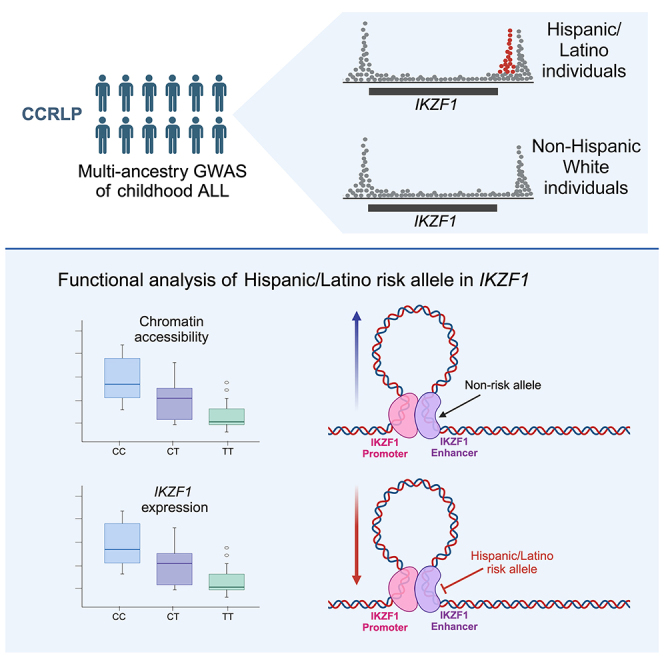
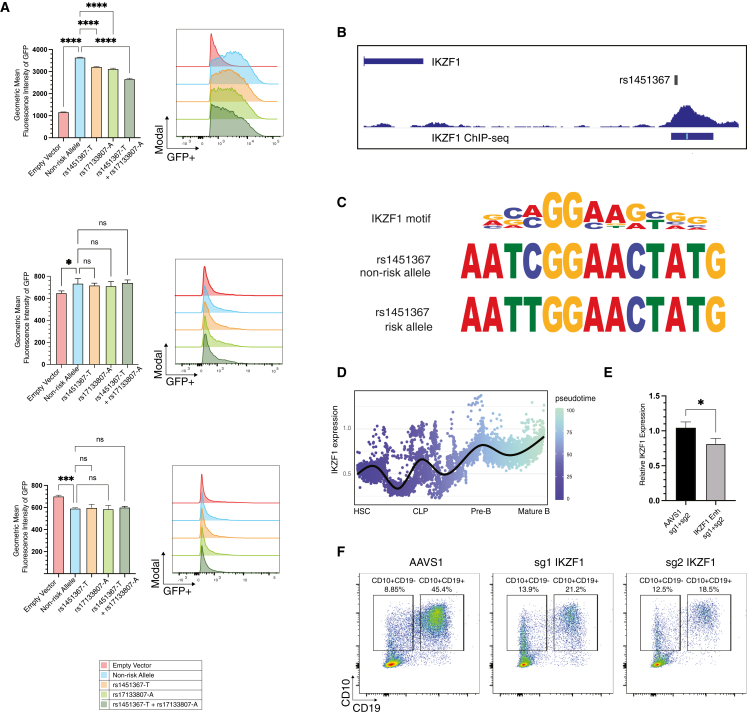
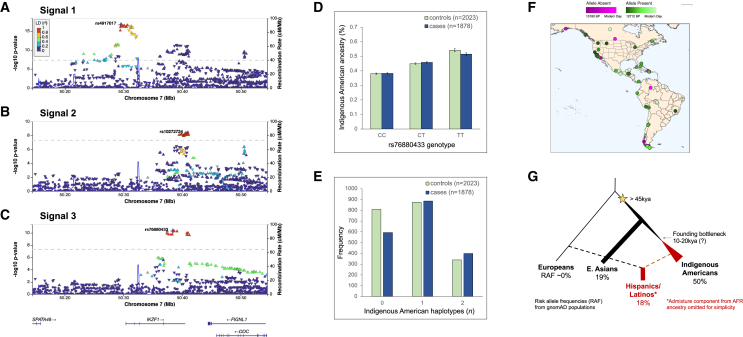
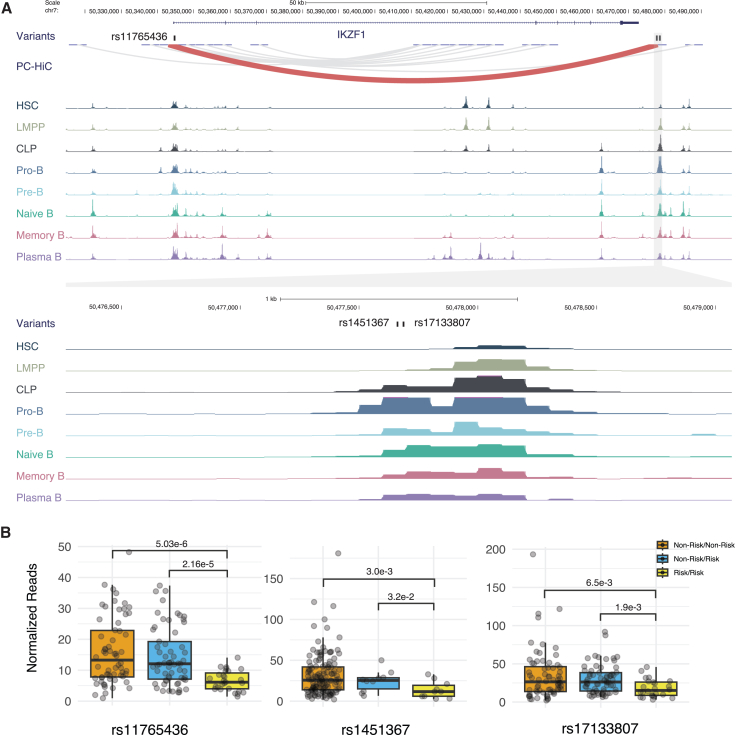
Hispanic/Latino children have the highest risk of acute lymphoblastic leukemia (ALL) in the US compared to other racial/ethnic groups, yet the basis of this remains incompletely understood. Through genetic fine-mapping analyses, we identified a new independent childhood ALL risk signal near IKZF1 in self-reported Hispanic/Latino individuals, but not in non-Hispanic White individuals, with an effect size of ∼1.44 (95% confidence interval = 1.33-1.55) and a risk allele frequency of ∼18% in Hispanic/Latino populations and <0.5% in European populations. This risk allele was positively associated with Indigenous American ancestry, showed evidence of selection in human history, and was associated with reduced IKZF1 expression. We identified a putative causal variant in a downstream enhancer that is most active in pro-B cells and interacts with the IKZF1 promoter. This variant disrupts IKZF1 autoregulation at this enhancer and results in reduced enhancer activity in B cell progenitors. Our study reveals a genetic basis for the increased ALL risk in Hispanic/Latino children.
与其他种族/族裔群体相比,西班牙裔/拉丁裔儿童患急性淋巴细胞白血病 (ALL) 的风险最高,但这一现象的根本原因仍不完全清楚。通过遗传精细图谱分析,我们在自我报告的西班牙裔/拉丁裔个体中发现了一个新的、独立的 IKZF1 附近的儿童 ALL 风险信号,但在非西班牙裔白人个体中没有发现,其效应大小约为 1.44(95%置信区间为 1.33-1.55),风险等位基因频率在西班牙裔/拉丁裔人群中约为 18%,而在欧洲人群中<0.5%。该风险等位基因与美洲原住民血统呈正相关,在人类历史上有选择的证据,与 IKZF1 表达降低有关。我们在一个下游增强子中鉴定出一个假定的因果变异体,该变异体在原 B 细胞中活性最高,并与 IKZF1 启动子相互作用。该变体破坏了该增强子处的 IKZF1 自身调控,导致 B 细胞前体中的增强子活性降低。我们的研究揭示了西班牙裔/拉丁裔儿童 ALL 风险增加的遗传基础。