Department of Medicine, LKS Faculty of Medicine, The University of Hong Kong, Queen Mary Hospital, 4/F, Professorial Block, 102 Pokfulam Road, Hong Kong, Special Administrative Region, China.
Neuroimmunology and Neuroinflammation Research Laboratory, LKS Faculty of Medicine, The University of Hong Kong, Hong Kong, China.
J Neuroinflammation. 2024 Mar 27;21(1):77. doi: 10.1186/s12974-024-03066-y.
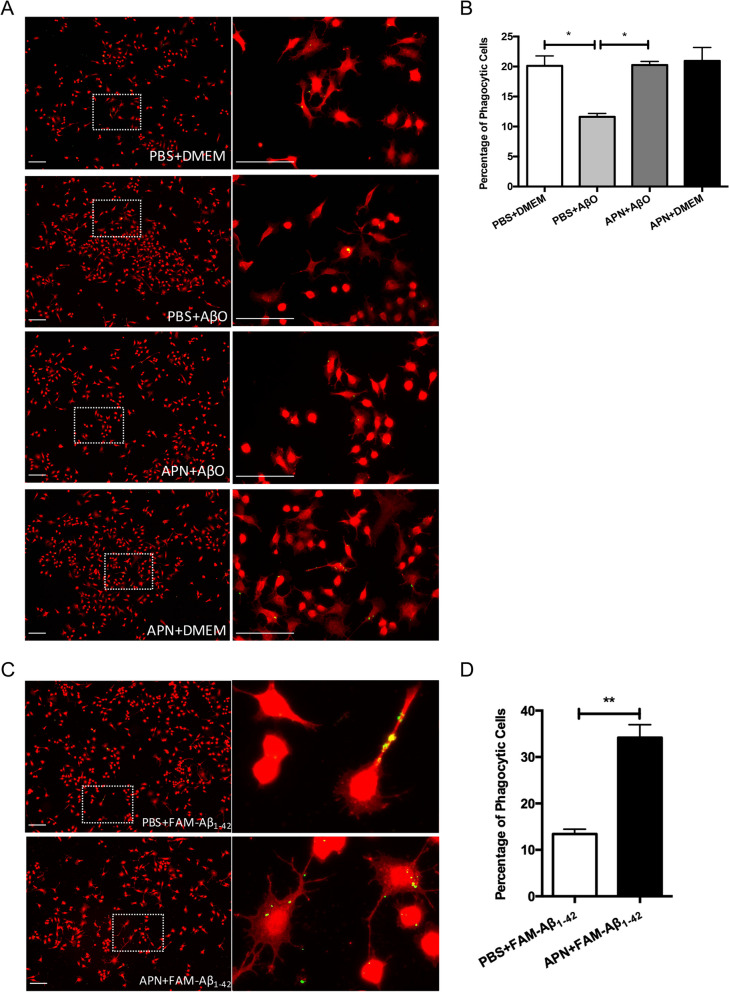
Adiponectin (APN) is an adipokine which predominantly expresses in adipocytes with neuroprotective and anti-inflammatory effects. We have recently indicated that circulatory trimeric APN can enter the brain by crossing the blood-brain barrier (BBB) and modulate microglia-mediated neuroinflammation. Here, we found that the microglial NLR family pyrin domain containing 3 (NLRP3)-inflammasome activation was exacerbated in APN5xFAD mice in age-dependent manner. The focus of this study was to develop a new and tractable therapeutic approach for treating Alzheimer's disease (AD)-related pathology in 5xFAD mice using peripheral APN gene therapy. We have generated and transduced adeno-associated virus (AAV2/8) expressing the mouse mutated APN gene (APN) into the liver of 5xFAD mice that generated only low-molecular-weight trimeric APN (APN). Single dose of AAV2/8-APN in the liver increased circulatory and cerebral APN levels indicating the overexpressed APN was able to cross the BBB. Overexpression of APN decreased both the soluble and fibrillar Aβ in the brains of 5xFAD mice. AAV2/8-APN treatment reduced Aβ-induced IL-1β and IL-18 secretion by suppressing microglial NLRP3-inflammasome activation. The memory functions improved significantly in AAV-APN-treated 5xFAD mice with reduction of dystrophic neurites. These findings demonstrate that peripheral gene delivery to overexpress trimeric APN can be a potential therapy for AD.
脂联素(APN)是一种主要在脂肪细胞中表达的脂肪因子,具有神经保护和抗炎作用。我们最近表明,循环三聚体 APN 可以通过穿过血脑屏障(BBB)进入大脑,并调节小胶质细胞介导的神经炎症。在这里,我们发现 APN5xFAD 小鼠中,小胶质细胞 NOD 样受体家族 pyrin 结构域包含 3(NLRP3)-炎症小体的激活随着年龄的增长而加剧。本研究的重点是开发一种新的、可行的治疗方法,通过外周 APN 基因治疗来治疗 5xFAD 小鼠的阿尔茨海默病(AD)相关病理。我们已经生成并转导了表达小鼠突变 APN 基因(APN)的腺相关病毒(AAV2/8)进入 5xFAD 小鼠的肝脏,该病毒仅产生低分子量三聚体 APN(APN)。单次肝内注射 AAV2/8-APN 可增加循环和脑内 APN 水平,表明过表达的 APN 能够穿过 BBB。APN 的过表达降低了 5xFAD 小鼠大脑中的可溶性和纤维状 Aβ。AAV2/8-APN 治疗通过抑制小胶质细胞 NLRP3-炎症小体的激活,降低了 Aβ诱导的 IL-1β 和 IL-18 的分泌。AAV-APN 治疗的 5xFAD 小鼠的记忆功能显著改善,神经突营养不良减少。这些发现表明,外周基因传递以过表达三聚体 APN 可能是 AD 的一种潜在治疗方法。