Vallabhaneni Esha, Kareff Samuel A, Barnett Reagan M, Drusbosky Leylah M, Dalal Shivani, Raez Luis E, Santos Edgardo S, Albrecht Federico, Cusnir Mike, Rodriguez Estelamari
Mount Sinai Comprehensive Cancer Center, Miami Beach, FL 33140, USA.
University of Miami Sylvester Comprehensive Cancer Center, Jackson Memorial Hospital, Miami, FL 33136, USA.
Cancers (Basel). 2024 Mar 14;16(6):1150. doi: 10.3390/cancers16061150.
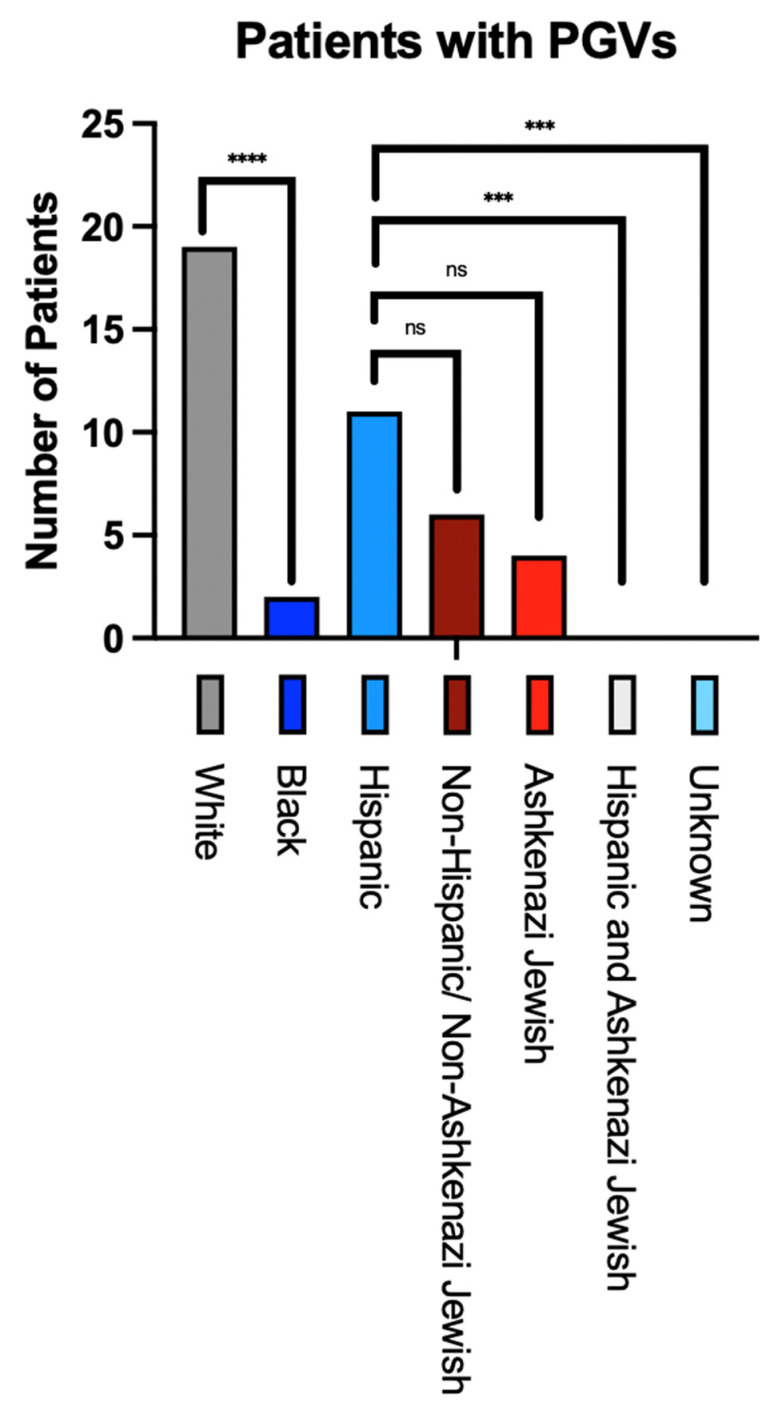
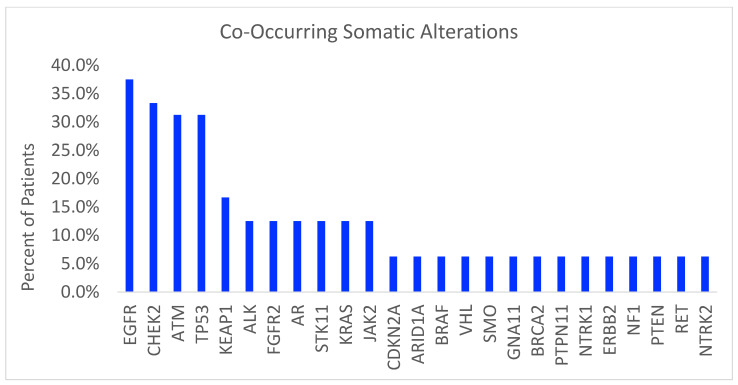
Pathogenic germline variants (PGVs) may be under-detected as causative etiologies in patients with non-small cell lung cancer (NSCLC). The prevalence of PGVs has been reported between 1 and 15% of patients, depending on the patient population. The rate within Hispanic/Latinx populations remains unknown. We retrospectively analyzed the genomic results (Guardant360, Redwood City, CA, USA) of 878 patients with advanced or metastatic NSCLC at five centers in South Florida, USA, from 2019 to 2022 to analyze the rate of incidental PGVs (iPGVs) identified via circulating cell-free tumor DNA (ctDNA). We then stratified the results by tumor histology, age, gender, race, ethnicity, genetic pathway, and co-mutations. Twenty-one iPGVs were identified (21/878 = 2.4%). Among the 21 iPGVs identified, 14 patients were female (66.7%) and 7 were male (33.3%), with a median age of 67 years and tobacco history of 2.5 pack-years. In total, 52.4% of patients identified as Hispanic/Latinx ( = 11) of any race; 19.0% as Ashkenazi Jewish ( = 4), 9.5% as non-Hispanic/Latinx black ( = 2), and 19.0% as non-Hispanic/Latinx white ( = 4). iPGVs in the homologous recombination repair pathway were solely expressed in this cohort (10 , 8 , and 3 ). In total, 76% (16/21) of patients with iPGVs co-expressed somatic alterations, with 56% (9/16) demonstrating alterations in targetable genes. Overall, our real-world findings offer a point prevalence of iPGVs in patients with NSCLC of diverse populations, such as patients who report Hispanic/Latinx ethnicity.
在非小细胞肺癌(NSCLC)患者中,致病种系变异(PGV)作为病因可能未被充分检测到。根据患者群体的不同,PGV的患病率在患者中的报告范围为1%至15%。西班牙裔/拉丁裔人群中的患病率仍然未知。我们回顾性分析了2019年至2022年在美国南佛罗里达州五个中心的878例晚期或转移性NSCLC患者的基因组结果(Guardant360,美国加利福尼亚州红木城),以分析通过循环游离肿瘤DNA(ctDNA)鉴定的偶然PGV(iPGV)的发生率。然后,我们根据肿瘤组织学、年龄、性别、种族、民族、遗传途径和共突变对结果进行分层。共鉴定出21个iPGV(21/878 = 2.4%)。在鉴定出的21个iPGV中,14例患者为女性(66.7%),7例为男性(33.3%),中位年龄为67岁,吸烟史为2.5包年。总共有52.4%的患者被确定为任何种族的西班牙裔/拉丁裔(n = 11);19.0%为阿什肯纳兹犹太人(n = 4),9.5%为非西班牙裔/拉丁裔黑人(n = 2),19.0%为非西班牙裔/拉丁裔白人(n = 4)。同源重组修复途径中的iPGV仅在该队列中表达(分别为10个、8个和3个)。总共有76%(16/21)的iPGV患者共表达体细胞改变,其中56%(9/16)显示可靶向基因的改变。总体而言,我们的真实世界研究结果提供了不同人群(如报告为西班牙裔/拉丁裔的患者)NSCLC患者中iPGV的现患率。