Schmid Sebastian, Russell Zachary R, Yamashita Alex Shimura, West Madeline E, Parrish Abigail G, Walker Julia, Rudoy Dmytro, Yan James Z, Quist David C, Gessesse Betemariyam N, Alvinez Neriah, Cimino Patrick J, Kumasaka Debra K, Parchment Ralph E, Holland Eric C, Szulzewsky Frank
Human Biology Division, Fred Hutchinson Cancer Center, Seattle, WA 98109, USA.
Clinical Pharmacodynamic Biomarkers Program, Applied/Developmental Research Directorate, Frederick National Laboratory for Cancer Research, Leidos Biomedical Research, Inc., Frederick, MD 21701, USA.
bioRxiv. 2024 Mar 26:2024.03.13.584849. doi: 10.1101/2024.03.13.584849.
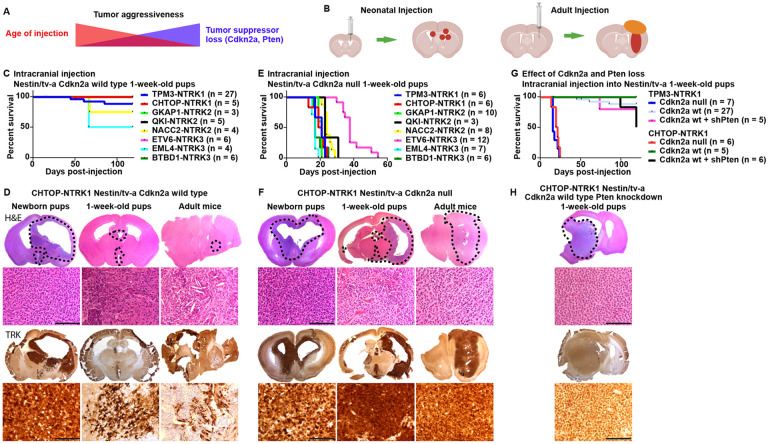
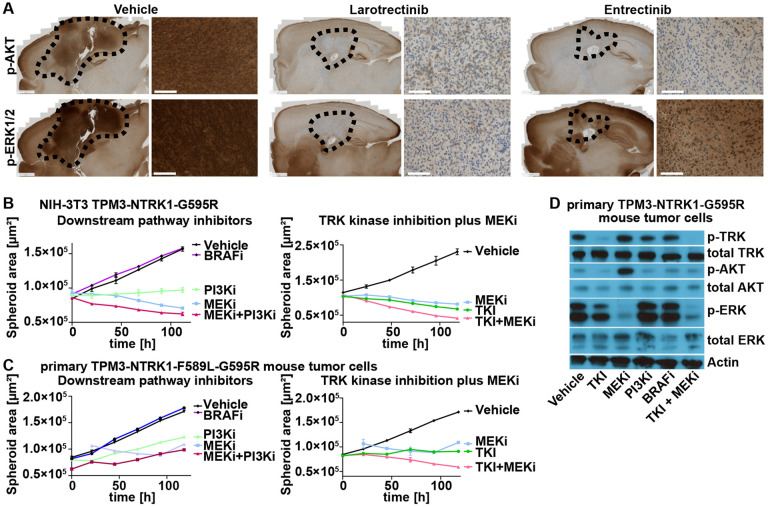
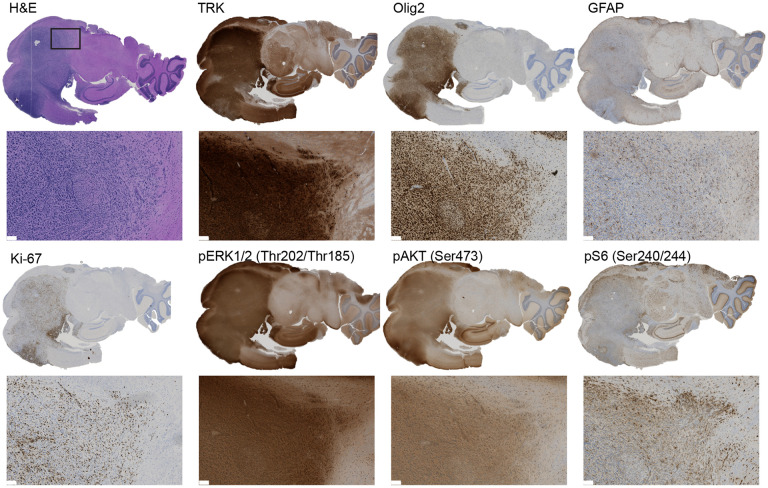
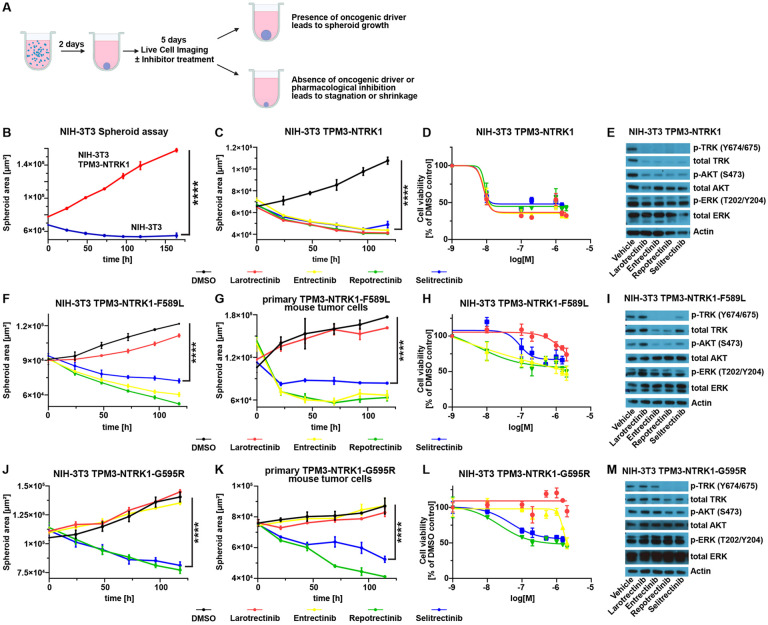
Pediatric-type high-grade gliomas frequently harbor gene fusions involving receptor tyrosine kinase genes, including neurotrophic tyrosine kinase receptor (NTRK) fusions. Clinically, these tumors show high initial response rates to tyrosine kinase inhibition but ultimately recur due to the accumulation of additional resistance-conferring mutations. Here, we developed a series of genetically engineered mouse models of treatment-naïve and -experienced NTRK1/2/3 fusion-driven gliomas. Both the TRK kinase domain and the N-terminal fusion partners influenced tumor histology and aggressiveness. Treatment with TRK kinase inhibitors significantly extended survival of NTRK fusion-driven glioma mice in a fusion- and inhibitor-dependent manner, but tumors ultimately recurred due to the presence of treatment-resistant persister cells. Finally, we show that ERK activation promotes resistance to TRK kinase inhibition and identify MEK inhibition as a potential combination therapy. These models will be invaluable tools for preclinical testing of novel inhibitors and to study the cellular responses of NTRK fusion-driven gliomas to therapy.
儿童型高级别胶质瘤经常存在涉及受体酪氨酸激酶基因的基因融合,包括神经营养性酪氨酸激酶受体(NTRK)融合。临床上,这些肿瘤对酪氨酸激酶抑制表现出较高的初始反应率,但最终会因额外的耐药性突变积累而复发。在此,我们构建了一系列未经治疗和经过治疗的由NTRK1/2/3融合驱动的胶质瘤的基因工程小鼠模型。TRK激酶结构域和N端融合伴侣均影响肿瘤组织学和侵袭性。用TRK激酶抑制剂治疗以融合和抑制剂依赖的方式显著延长了NTRK融合驱动的胶质瘤小鼠的生存期,但由于存在耐药性持久细胞,肿瘤最终复发。最后,我们表明ERK激活促进对TRK激酶抑制的耐药性,并确定MEK抑制作为一种潜在的联合治疗方法。这些模型将成为新型抑制剂临床前测试以及研究NTRK融合驱动的胶质瘤对治疗的细胞反应的宝贵工具。