
添加羊肉和鱼肝的鸡肉块配方:来自抗氧化和质地研究的见解
Formulation of Chicken Nuggets Supplemented with Mutton and Fish Livers: Insights from Antioxidant and Textural Studies.
作者信息
Mehmood Liaqat, Asghar Sawera, Mujahid Syeda Afnan, Ubaid Ur Rahman Hafiz, Khalid Nauman
机构信息
Department of Food Science and Technology, School of Food and Agricultural Sciences, University of Management and Technology, Lahore 54000, Pakistan.
College of Health Sciences, Abu Dhabi University, Abu Dhabi 59911, United Arab Emirates.
出版信息
Prev Nutr Food Sci. 2024 Mar 31;29(1):70-79. doi: 10.3746/pnf.2024.29.1.70.
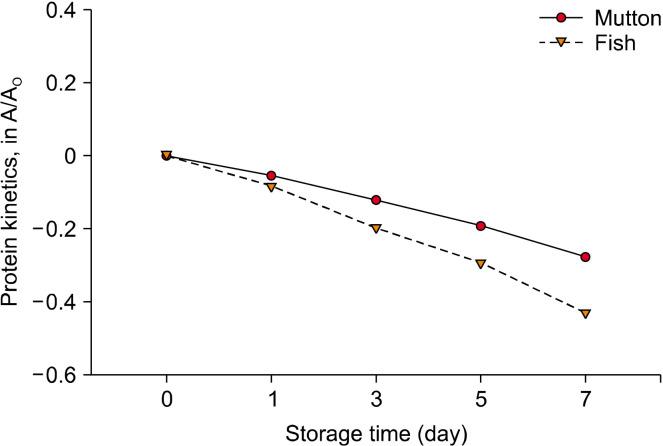
The use of byproducts from the food industry and the investigation of substitute sources are becoming progressively significant in fulfilling the consumer demand for animal-based protein. This study aimed to investigate the nutritional value of mutton and fish livers and their future application as a source of high-added-value proteins for supplement formulation. We performed compositional analysis (moisture, ash, crude protein, crude fat), free fatty acid (FFA) analysis, and 2,2-diphenyl-1-picrylhydrazyl (DPPH) assay, and the color, peroxide value (POV), and total phenolic composition (TPC) were assessed to evaluate the nutritional value and shelf stability of mutton and fish livers. The optimized proximate and kinetics were later used to develop chicken nuggets with different percentages of mutton and fish liver added. The formulation was tested for the textural and organoleptic properties of value-added chicken nuggets that predict consumer acceptability. Comparative analysis of the variance between mutton and fish liver showed a highly significant (<0.01) decrease in moisture, ash, protein, fat, DPPH, and TPC at different days and hours. The mutton liver had relatively high antioxidant potential (25.9% DPPH and 154-mg GAE/100 g TPC) compared with the fish liver. However, the fish liver's FFA and POV (2.4% for both) were higher than those of the mutton liver. The results showed that, after formulation, an increase in the amount of liver led to a highly significant (<0.01) rise in the nutritional value of the nuggets, including a 1.5%∼2.0% increase in protein content. This research indicates that valuing mutton and fish liver as a protein replacer in processed foods can be useful in developing healthy food products.
在满足消费者对动物源蛋白质的需求方面,食品工业副产品的利用以及替代来源的研究正变得日益重要。本研究旨在调查羊肉和鱼肝的营养价值及其作为高附加值蛋白质来源在补充剂配方中的未来应用。我们进行了成分分析(水分、灰分、粗蛋白、粗脂肪)、游离脂肪酸(FFA)分析和2,2-二苯基-1-苦基肼(DPPH)测定,并评估了颜色、过氧化值(POV)和总酚含量(TPC),以评估羊肉和鱼肝的营养价值和货架稳定性。随后,利用优化的近似值和动力学方法,开发了添加不同比例羊肉和鱼肝的鸡肉块。对增值鸡肉块的质地和感官特性进行了测试,以预测消费者的接受度。羊肉和鱼肝之间的方差比较分析表明,在不同天数和小时数时,水分、灰分、蛋白质、脂肪、DPPH和TPC均有极显著(<0.01)下降。与鱼肝相比,羊肝具有相对较高的抗氧化潜力(25.9% DPPH和154 mg GAE/100 g TPC)。然而,鱼肝的FFA和POV(两者均为2.4%)高于羊肝。结果表明,配方后,肝脏用量的增加导致鸡块的营养价值极显著(<0.01)提高,包括蛋白质含量增加1.5%∼2.0%。本研究表明,将羊肉和鱼肝视为加工食品中的蛋白质替代品,有助于开发健康食品。



 Zotero 插件