Centre de Recherche Des Cordeliers, INSERM, Sorbonne Université, Université Paris Cité, 75006, Paris, France.
Equipe Labellisée Ligue Nationale Contre Le Cancer, Paris, France.
J Transl Med. 2024 Apr 8;22(1):337. doi: 10.1186/s12967-024-05164-0.
The mesenchymal subtype of colorectal cancer (CRC), associated with poor prognosis, is characterized by abundant expression of the cellular prion protein PrP, which represents a candidate therapeutic target. How PrP is induced in CRC remains elusive. This study aims to elucidate the signaling pathways governing PrP expression and to shed light on the gene regulatory networks linked to PrP.
We performed in silico analyses on diverse datasets of in vitro, ex vivo and in vivo models of mouse CRC and patient cohorts. We mined ChIPseq studies and performed promoter analysis. CRC cell lines were manipulated through genetic and pharmacological approaches. We created mice combining conditional inactivation of Apc in intestinal epithelial cells and overexpression of the human prion protein gene PRNP. Bio-informatic analyses were carried out in two randomized control trials totalizing over 3000 CRC patients.
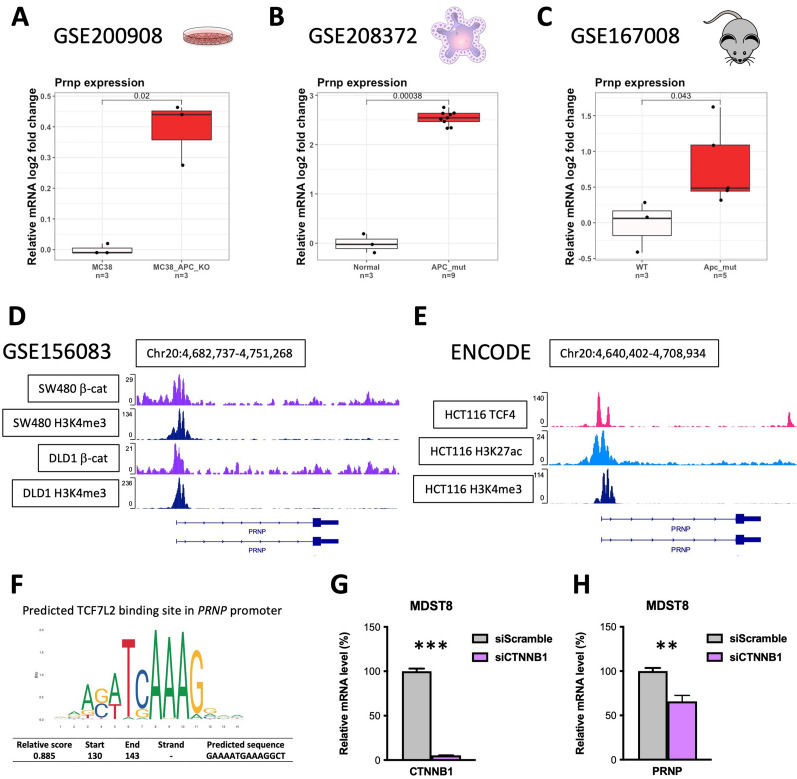
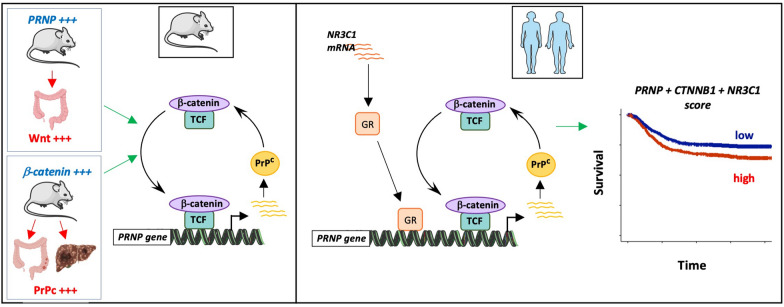
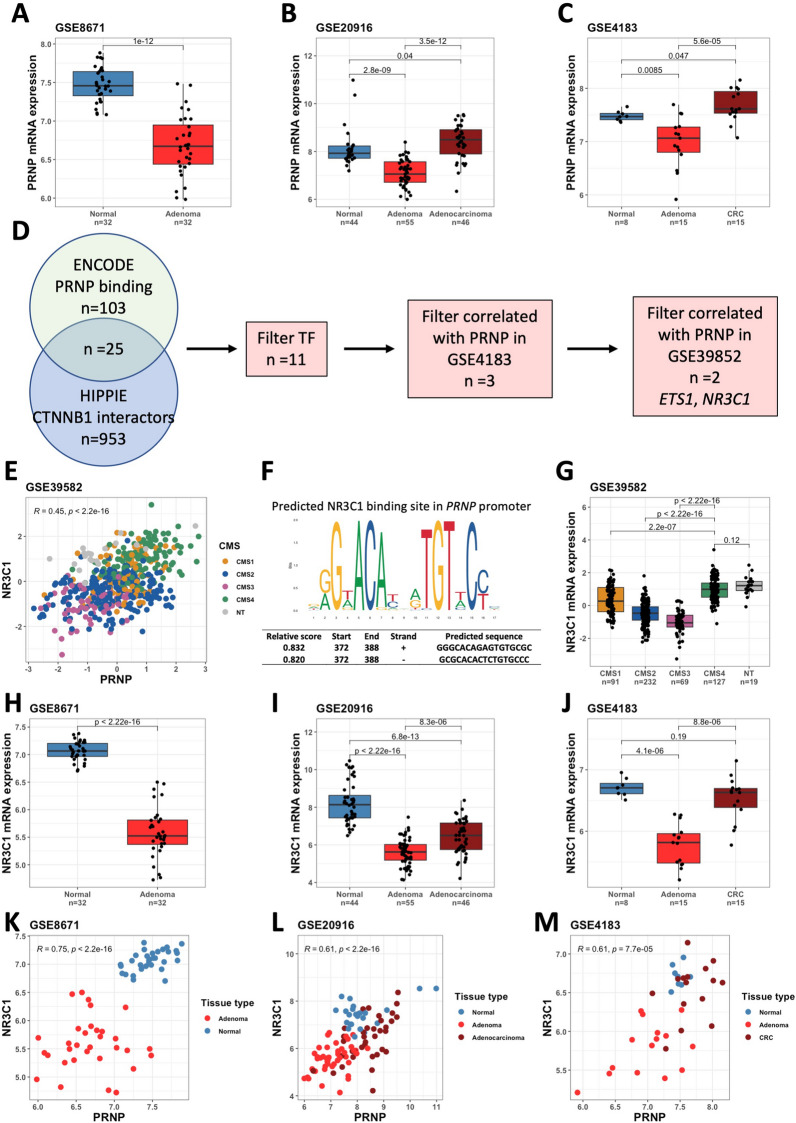
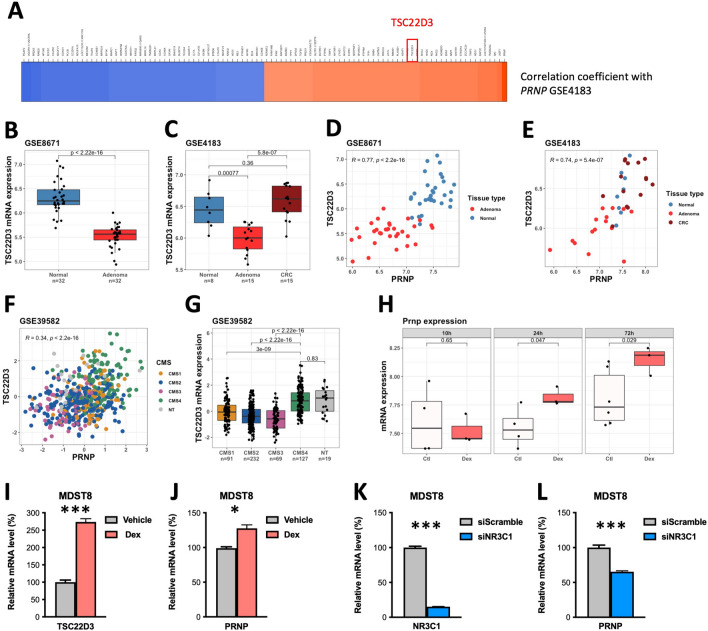
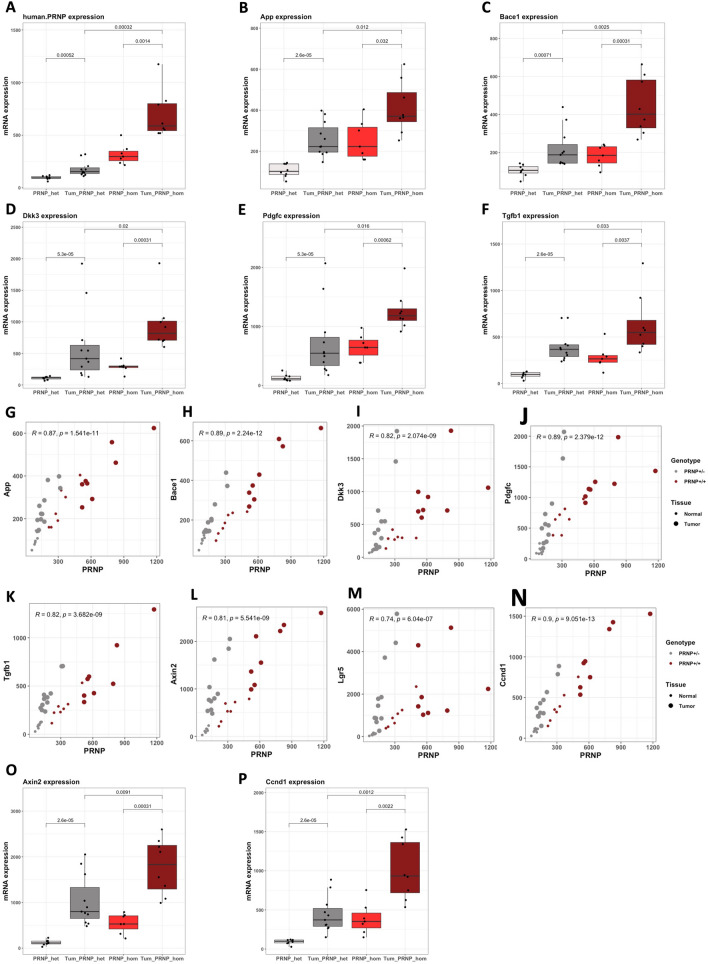
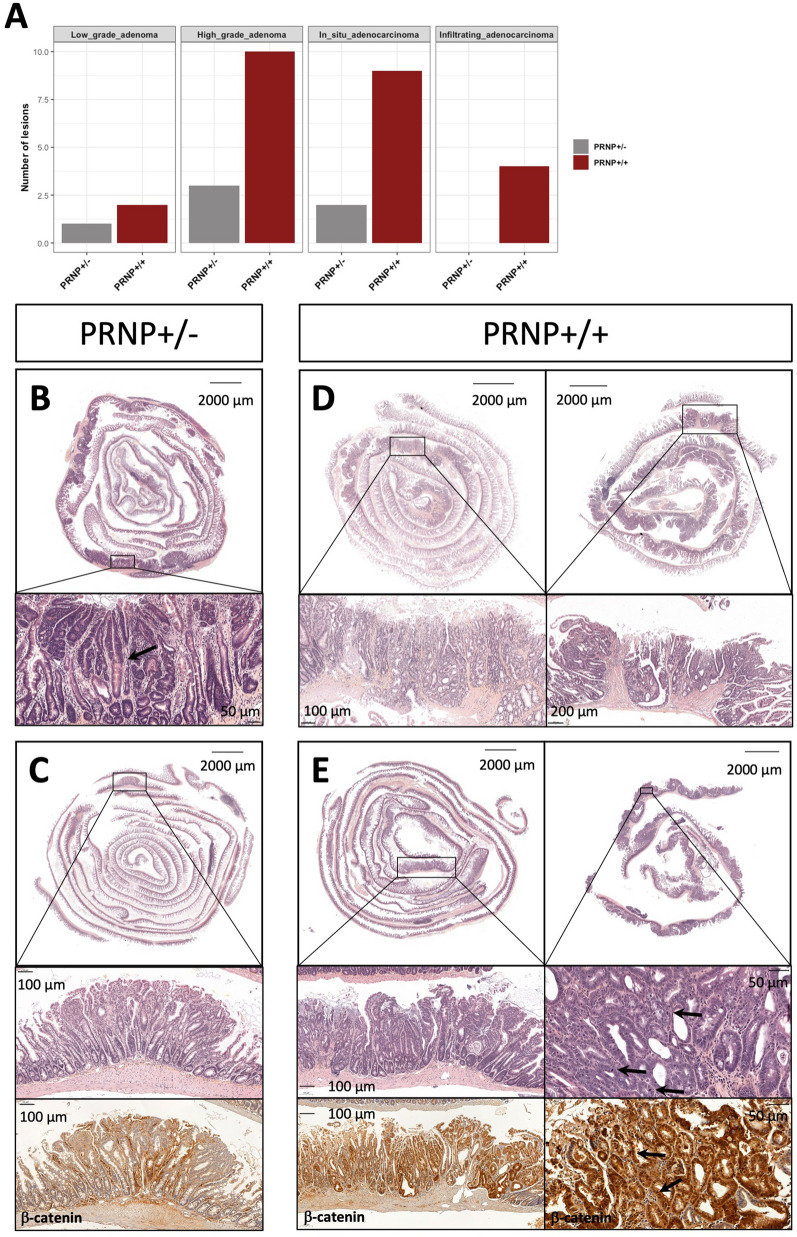
In silico analyses combined with cell-based assays identified the Wnt-β-catenin and glucocorticoid pathways as upstream regulators of PRNP expression, with subtle differences between mouse and human. We uncover multiple feedback loops between PrP and these two pathways, which translate into an aggravation of CRC pathogenesis in mouse. In stage III CRC patients, the signature defined by PRNP-CTNNB1-NR3C1, encoding PrP, β-catenin and the glucocorticoid receptor respectively, is overrepresented in the poor-prognosis, mesenchymal subtype and associates with reduced time to recurrence.
An unleashed PrP-dependent vicious circle is pathognomonic of poor prognosis, mesenchymal CRC. Patients from this aggressive subtype of CRC may benefit from therapies targeting the PRNP-CTNNB1-NR3C1 axis.
结直肠癌(CRC)的间质亚型与预后不良相关,其特征是大量表达细胞朊蛋白 PrP,这代表了一个潜在的治疗靶点。CRC 中 PrP 的诱导机制仍不清楚。本研究旨在阐明调控 PrP 表达的信号通路,并阐明与 PrP 相关的基因调控网络。
我们对来自不同体外、离体和体内 CRC 模型以及患者队列的大量数据集进行了计算分析。我们挖掘了 ChIPseq 研究并进行了启动子分析。通过遗传和药理学方法操纵 CRC 细胞系。我们构建了在肠上皮细胞中条件性敲除 Apc 并过表达人朊蛋白基因 PRNP 的小鼠。在两个总计超过 3000 例 CRC 患者的随机对照试验中进行了生物信息学分析。
计算分析结合细胞实验确定 Wnt-β-catenin 和糖皮质激素通路是 PRNP 表达的上游调控因子,在小鼠和人类之间存在细微差异。我们揭示了 PrP 与这两个通路之间的多个反馈回路,这在小鼠中转化为 CRC 发病机制的加重。在 III 期 CRC 患者中,分别编码 PrP、β-catenin 和糖皮质激素受体的 PRNP-CTNNB1-NR3C1 特征在预后不良、间质型和与复发时间缩短相关的不良预后亚组中过度表达。
失控的 PrP 依赖性恶性循环是预后不良、间质型 CRC 的特征。来自这种侵袭性 CRC 亚型的患者可能受益于针对 PRNP-CTNNB1-NR3C1 轴的治疗。