Peking University People's Hospital, Peking University Institute of Hematology, National Clinical Research Center for Hematologic Disease, Beijing Key Laboratory of Hematopoietic Stem Cell Transplantation, Beijing 100044, China.
Chin Med J (Engl). 2024 Nov 5;137(21):2540-2551. doi: 10.1097/CM9.0000000000003099. Epub 2024 Apr 9.
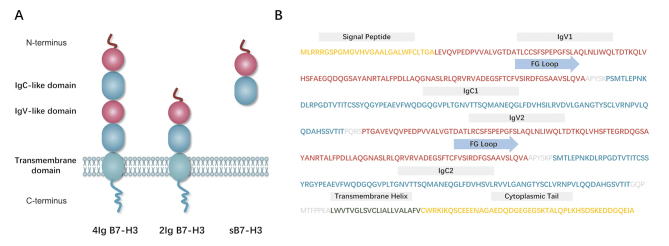
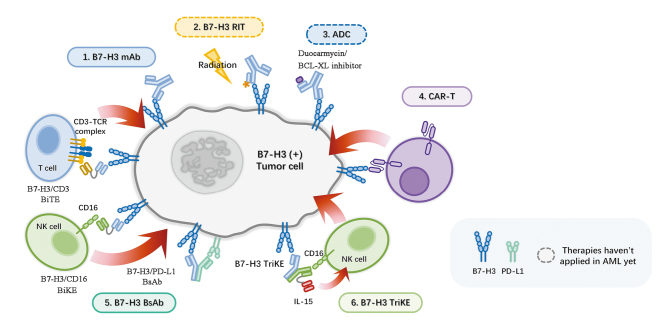
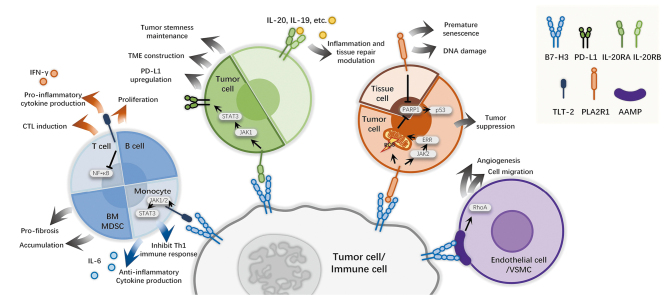
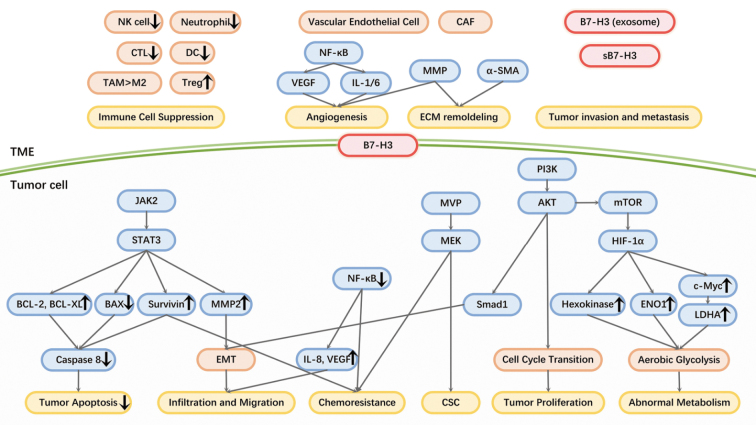
B7-H3 (CD276), an immune checkpoint protein of the B7 family, exhibits significant upregulation in solid tumors and hematologic malignancies, exerting a crucial role in their pathophysiology. The distinct differential expression of B7-H3 between tumors and normal tissues and its multifaceted involvement in tumor pathogenesis position it as a promising therapeutic target for tumors. In the context of acute myeloid leukemia (AML), B7-H3 is prominently overexpressed and closely associated with unfavorable prognoses, yet it has remained understudied. Despite various ongoing clinical trials demonstrating the potential efficacy of immunotherapies targeting B7-H3, the precise underlying mechanisms responsible for B7-H3-mediated proliferation and immune evasion in AML remain enigmatic. In view of this, we comprehensively outline the current research progress concerning B7-H3 in AML, encompassing in-depth discussions on its structural attributes, receptor interactions, expression profiles, and biological significance in normal tissues and AML. Moreover, we delve into the protumor effects of B7-H3 in AML, examine the intricate mechanisms that underlie its function, and discuss the emerging application of B7-H3-targeted therapy in AML treatment. By juxtaposing B7-H3 with other molecules within the B7 family, this review emphasizes the distinctive advantages of B7-H3, not only as a valuable prognostic biomarker but also as a highly promising immunotherapeutic target in AML.
B7-H3(CD276)是 B7 家族的一种免疫检查点蛋白,在实体瘤和血液恶性肿瘤中显著上调,在其病理生理学中发挥关键作用。B7-H3 在肿瘤和正常组织之间的独特差异表达及其在肿瘤发病机制中的多方面参与使其成为肿瘤有前途的治疗靶点。在急性髓系白血病(AML)中,B7-H3 过表达明显且与不良预后密切相关,但研究较少。尽管有许多正在进行的临床试验表明针对 B7-H3 的免疫疗法具有潜在疗效,但 B7-H3 介导的 AML 增殖和免疫逃逸的确切潜在机制仍不清楚。有鉴于此,我们全面概述了 AML 中 B7-H3 的当前研究进展,深入讨论了其结构属性、受体相互作用、表达谱以及在正常组织和 AML 中的生物学意义。此外,我们探讨了 B7-H3 在 AML 中的促肿瘤作用,研究了其功能背后的复杂机制,并讨论了 B7-H3 靶向治疗在 AML 治疗中的新应用。通过将 B7-H3 与 B7 家族中的其他分子进行对比,本综述强调了 B7-H3 的独特优势,不仅作为有价值的预后生物标志物,而且作为 AML 中极有前途的免疫治疗靶点。