Wei Tianli, Shan Shuguang, Jia Zhaojun, Ding Yingxue
Pediatric, Beijing Friendship Hospital, Capital Medical University, Beijing, 100050, China.
Jiute (Beijing) Medical Technology Co., Ltd, Beijing, 100080, China.
Heliyon. 2024 Mar 29;10(7):e28678. doi: 10.1016/j.heliyon.2024.e28678. eCollection 2024 Apr 15.
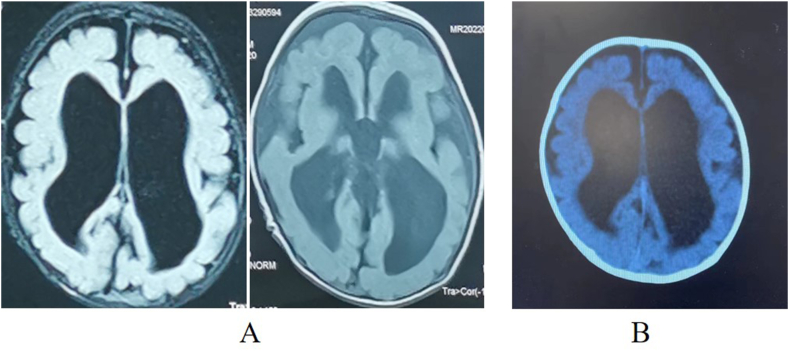
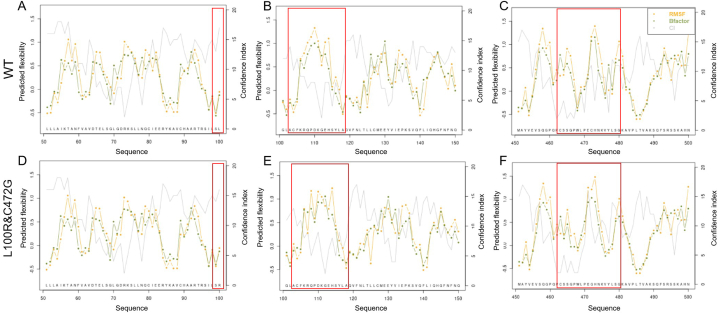
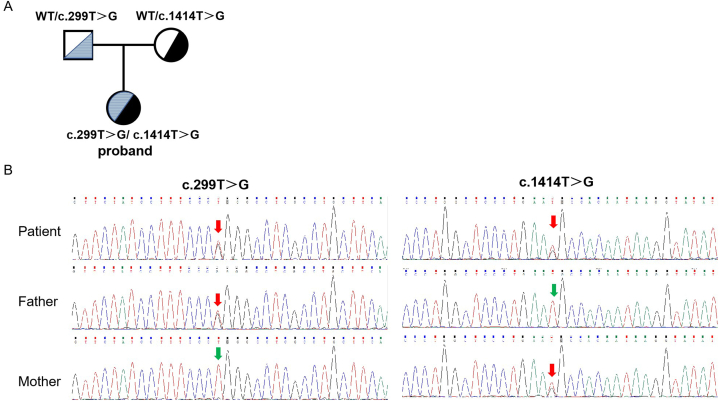
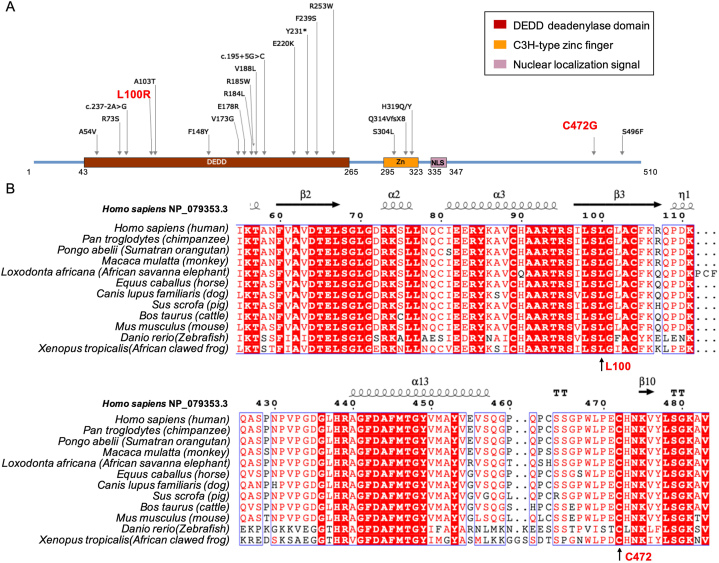
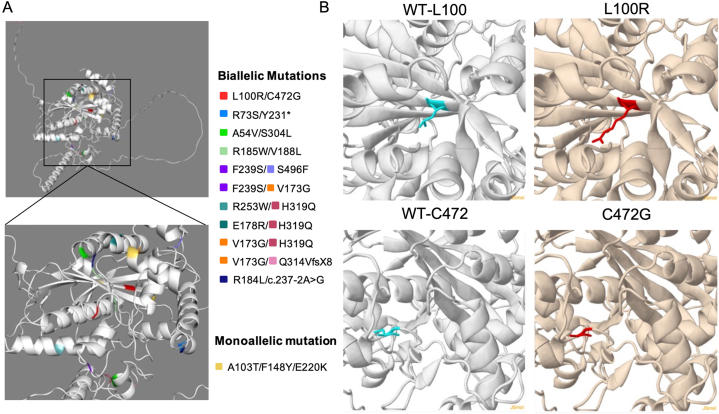
Pontocerebellar Hypoplasia (PCH) is a rare autosomal recessive hereditary neurological degenerative disease. To elaborate upon the clinical phenotypes of PCH and explore the correlation between gene mutations and clinical phenotype, we analyze the clinical and genetic features of a Chinese infant afflicted with pontocerebellar dysplasia accompanied by gender reversal with bioinformatics methods. The main clinical features of this infant with gene mutation included progressive lateral ventricle widening, hydrocephalus, severe postnatal growth retardation, and hypotonia, and simultaneously being accompanied by 46, XY female sex reversal. Whole exome sequencing revealed a compound heterozygous mutation in the gene (c.299T > G, c.1414T > G), with the protein homology modeling-generated structure predicting a pathogenic variation, which is closely related to the clinical manifestations in the patient. The new mutation sites, c.299T > G and c.1414T > G, in the gene are pathogenic variants of pontocerebellar hypoplasia type 7.
脑桥小脑发育不全(PCH)是一种罕见的常染色体隐性遗传性神经退行性疾病。为详细阐述PCH的临床表型并探索基因突变与临床表型之间的相关性,我们采用生物信息学方法分析了一名患有脑桥小脑发育异常并伴有性别反转的中国婴儿的临床和遗传特征。该基因突变婴儿的主要临床特征包括进行性侧脑室增宽、脑积水、严重的出生后生长发育迟缓以及肌张力减退,同时伴有46, XY女性性别反转。全外显子组测序揭示该基因存在复合杂合突变(c.299T>G,c.1414T>G),蛋白质同源建模生成的结构预测这是一个致病性变异,与患者的临床表现密切相关。该基因中的新突变位点c.299T>G和c.1414T>G是7型脑桥小脑发育不全的致病性变异。