Yusuf Oyindamola B, Akinyemi Joshua O, Fagbamigbe Adeniyi F, Ajayi IkeOluwapo O, Bamgboye Elijah A, Ngige Evelyn, Issa Kawu, Abatta Emmanuel, Ezire Onoride, Amida Perpertual, Bashorun Adebobola
Epidemiology and Medical Statistics Unit, Institute of Advanced Medical Research and Training, College of Medicine, University of Ibadan, Nigeria.
Department of Epidemiology and Medical Statistics, College of Medicine, University of Ibadan, Nigeria.
Malariaworld J. 2016 Jul 8;7:7. doi: 10.5281/zenodo.10798318. eCollection 2016.
The Roll Back Malaria (RBM) initiative recommended that all pregnant women receive Inter mittent Preventive Treatment (IPTp) and that by 2010 at least 80% of people at risk of malaria (including pregnant women) use insecticide-treated bednets (ITN) in areas with stable transmission. We evaluated ITN/IPTp coverage, explored its associated factors, and estimated the number of pregnancies protected from malaria.
This analysis was based on data from the 2012 National HIV/AIDS and Reproductive Health Survey (NARHS Plus). To assess ITN coverage, we used the population of women that was pregnant (n=22,438) at the time of the survey. For IPTp coverage, we used women that had a live birth in the 5 years preceding the survey (n= 118,187) and extracted the population of pregnant women that, during their last pregnancy, received drugs for protection against malaria. We estimated the number of live births using the projected population of females in each state, population of women of child -bearing age and the total fertility rate. The estimated number of pregnancies covered/protected by ITN and IPTp was obtained from a product of the estimated live births and the reported coverage. Multivariate logistic regression was used to determine factors associated with ITN and IPTp use.
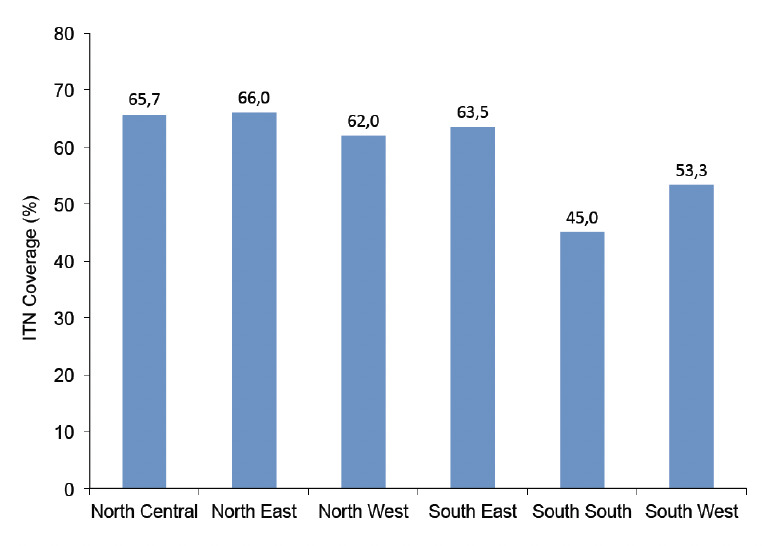
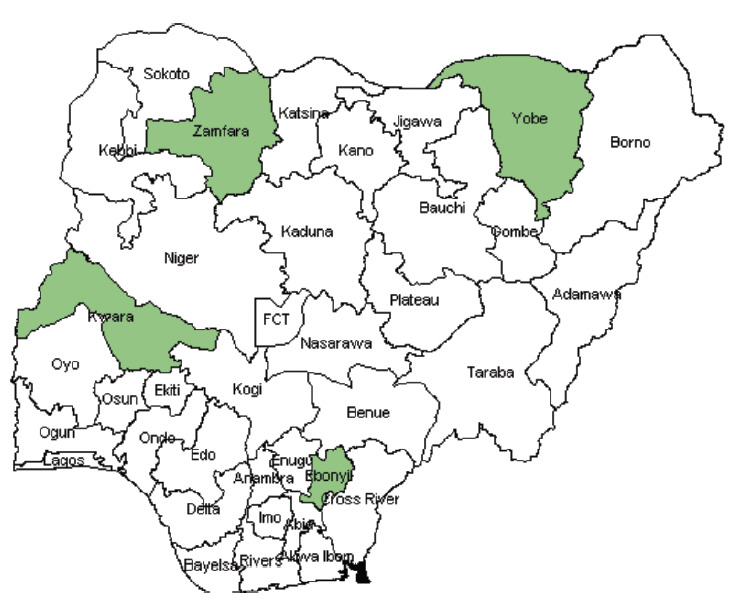
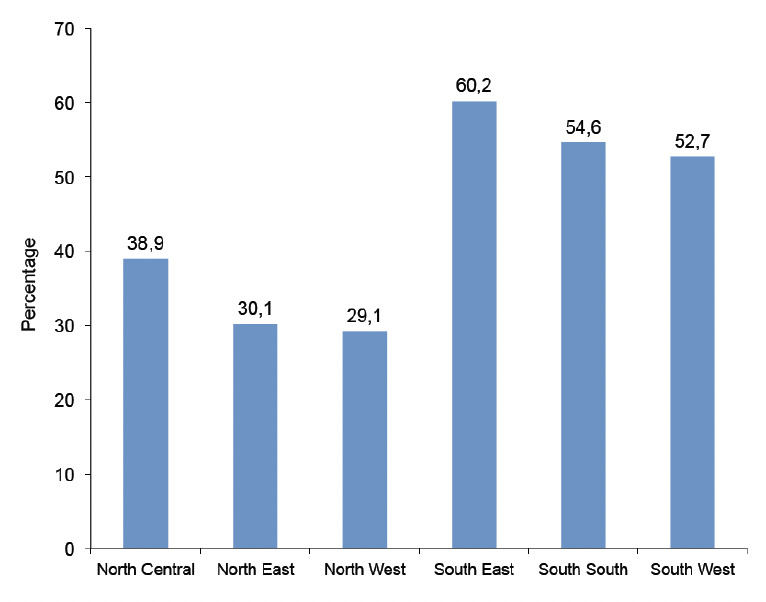
We estimated that there were 5,798,897 live births in Nigeria in 2012, of which 3,537,327 and 2,302,162 pregnancies were protected by ITN and IPTp, respectively. Four of 36 states achieved the 80% RBM target for ITN coverage. No state achieved the 100% target for IPTp. Education and socio-economic status were associated with IPTp use.
ITN cover age was higher than in previous estimates even though it is still below the RBM targets. However, IPTp coverage remained low in 2012 and was not likely to increase to match the 2015 target coverage of 100%.
“击退疟疾”(RBM)倡议建议所有孕妇接受间歇性预防治疗(IPTp),并到2010年,在疟疾稳定传播地区,至少80%的疟疾高危人群(包括孕妇)使用经杀虫剂处理的蚊帐(ITN)。我们评估了ITN/IPTp的覆盖率,探究其相关因素,并估计了免受疟疾侵害的妊娠数。
本分析基于2012年全国艾滋病毒/艾滋病和生殖健康调查(NARHS Plus)的数据。为评估ITN覆盖率,我们使用了调查时怀孕的女性群体(n = 22,438)。对于IPTp覆盖率,我们使用了在调查前5年内有活产的女性(n = 118,187),并提取了在其最后一次怀孕期间接受预防疟疾药物的孕妇群体。我们使用每个州的女性预计人口、育龄妇女数量和总生育率来估计活产数。ITN和IPTp覆盖/保护的妊娠估计数通过估计活产数与报告覆盖率的乘积获得。采用多因素逻辑回归确定与ITN和IPTp使用相关的因素。
我们估计2012年尼日利亚有5,798,897例活产,其中分别有3,537,327例和2,302,162例妊娠通过ITN和IPTp得到保护。36个州中有4个州实现了ITN覆盖率的80%的RBM目标。没有一个州实现IPTp的100%目标。教育和社会经济地位与IPTp的使用相关。
尽管ITN覆盖率仍低于RBM目标,但高于先前估计。然而,2012年IPTp覆盖率仍然很低,且不太可能提高到与2015年100%的目标覆盖率相匹配。