Department of Integrated Traditional Chinese and Western Medicine, Union Hospital, Tongji Medical College, Huazhong University of Science and Technology, Wuhan 430022, China.
Wuhan Central Hospital, Tongji Medical College, Huazhong University of Science and Technology, Wuhan 430022, China.
Aging (Albany NY). 2024 Apr 10;16(8):6921-6936. doi: 10.18632/aging.205734.
Ulcerative colitis (UC) is a refractory disease with complex pathogenesis, and its pathogenesis is not clear. The present study aimed to investigate the potential target and related mechanism of Compound Sophora Decoction (CSD) in treating UC.
A network pharmacology approach predicted the components and targets of CSD to treat UC, and cell and animal experiments confirmed the findings of the approach and a new target for CSD treatment of UC.
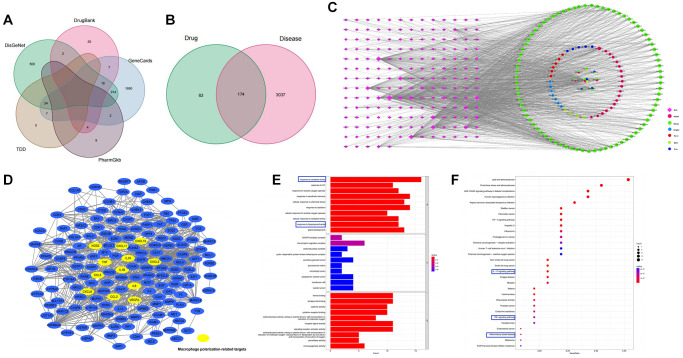
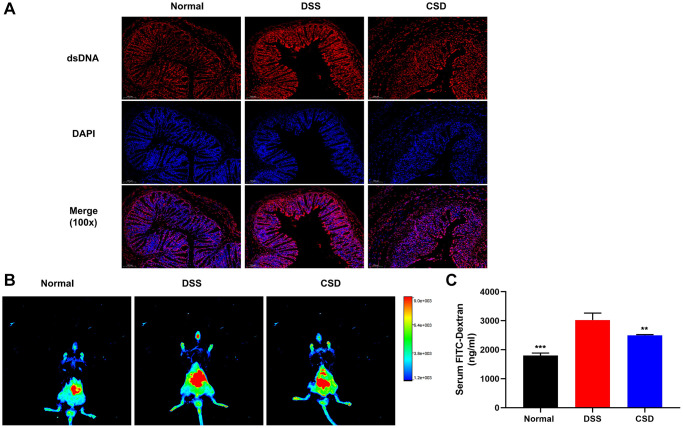
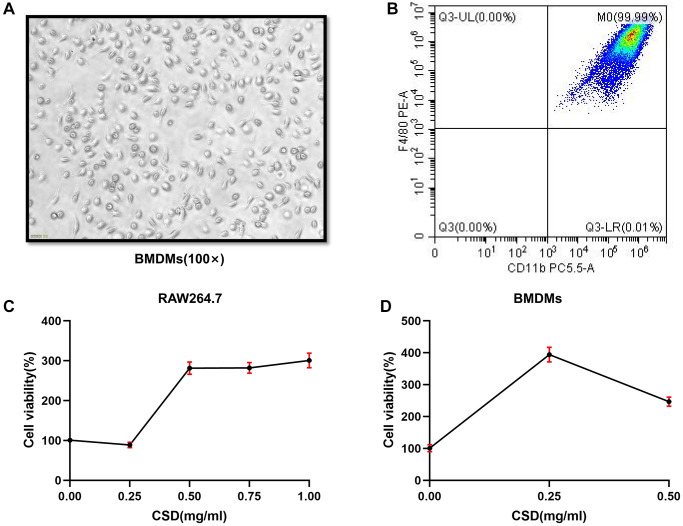
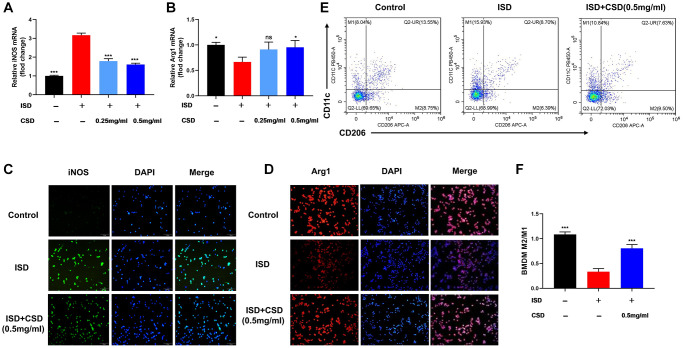
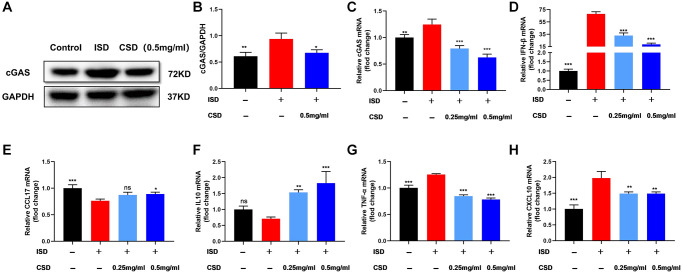
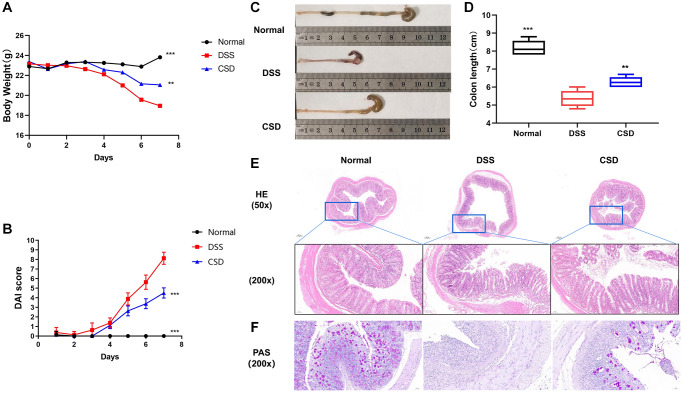
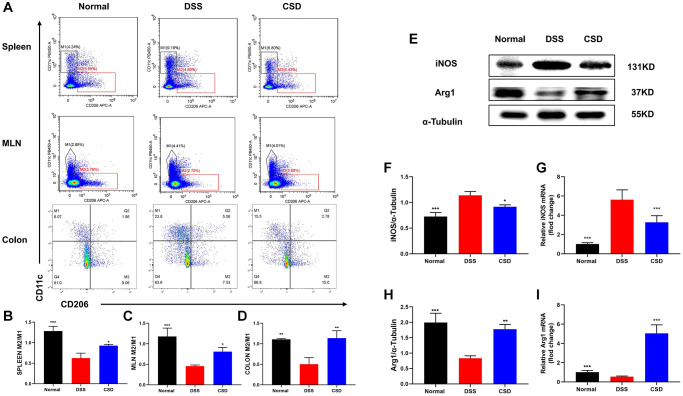
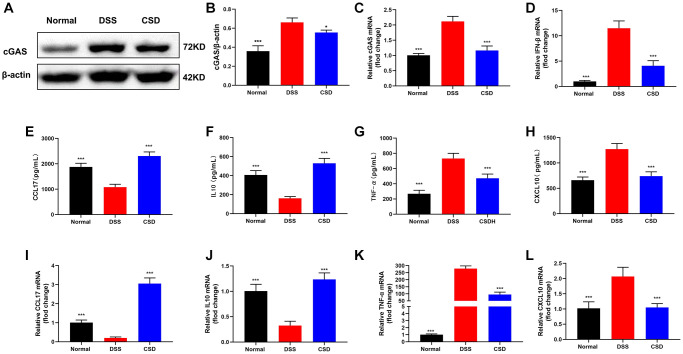
A total of 155 potential targets were identified for CSD treatment of UC, with some related to macrophage polarization, such as nitric oxide synthase (NOS2), also known as inducible nitric oxide synthase (iNOS). GO and KEGG enrichment analysis indicated that oxidative stress response and multiple inflammatory signaling pathways such as TNF-α may play a significant role. experiments revealed that Interferon-stimulated DNA (ISD) interference can cause polarization imbalances in Raw 264.7 and bone marrow-derived macrophages (BMDMs). Flow cytometry demonstrated that polarization of macrophages in the intestine, spleen, and lymph nodes was also unbalanced after dextran sulfate sodium (DSS) modeling with pathological intestinal injury. Both and studies indicated that after inducing inflammation, the levels of macrophage polarization-related markers (iNOS and Arg1) and inflammation-related factors (CCL17, IL10, TNF-α, and CXCL10) changed, accompanied by increased expression of cGAS. However, CSD treatment based on inflammation can inhibit the expression of cGAS protein and mRNA, lower the level of inflammatory factors, promote the expression of anti-inflammatory factors, and regulate macrophage polarization.
We concluded that CSD alleviated DSS-induced UC by inhibiting cGAS, thus regulating macrophage polarization.
溃疡性结肠炎(UC)是一种发病机制复杂的难治性疾病,其发病机制尚不清楚。本研究旨在探讨复方苦参汤(CSD)治疗 UC 的潜在靶点及相关机制。
采用网络药理学方法预测 CSD 治疗 UC 的成分和靶点,通过细胞和动物实验验证该方法的发现,并确定 CSD 治疗 UC 的新靶点。
共鉴定出 155 个 CSD 治疗 UC 的潜在靶点,其中一些与巨噬细胞极化有关,如一氧化氮合酶(NOS2),也称为诱导型一氧化氮合酶(iNOS)。GO 和 KEGG 富集分析表明,氧化应激反应和 TNF-α等多种炎症信号通路可能发挥重要作用。实验发现,干扰素刺激 DNA(ISD)干扰可导致 Raw 264.7 和骨髓来源巨噬细胞(BMDMs)的极化失衡。流式细胞术表明,在葡聚糖硫酸钠(DSS)建模后,肠道、脾脏和淋巴结中的巨噬细胞极化也出现失衡,伴有病理性肠道损伤。和实验均表明,在诱导炎症后,巨噬细胞极化相关标志物(iNOS 和 Arg1)和炎症相关因子(CCL17、IL10、TNF-α和 CXCL10)的水平发生变化,同时 cGAS 的表达增加。然而,基于炎症的 CSD 治疗可以抑制 cGAS 蛋白和 mRNA 的表达,降低炎症因子水平,促进抗炎因子的表达,并调节巨噬细胞极化。
我们得出结论,CSD 通过抑制 cGAS 缓解 DSS 诱导的 UC,从而调节巨噬细胞极化。