Lee Chia-Yen, Yang Shu-Huei
Department of Information Management, National Taiwan University, Taipei 106, Taiwan.
Institute of Manufacturing Information and Systems, National Cheng Kung University, Tainan City 701, Taiwan.
Comput Ind Eng. 2023 Jun 27:109413. doi: 10.1016/j.cie.2023.109413.
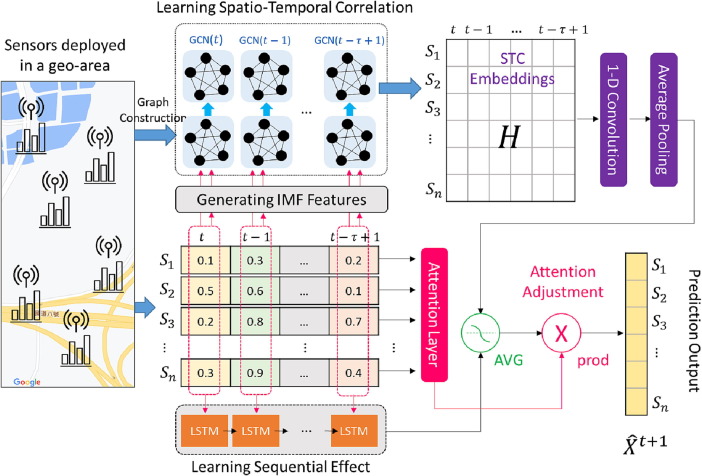
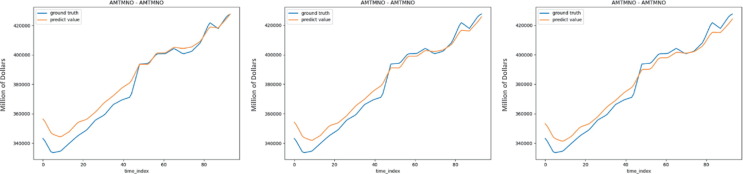
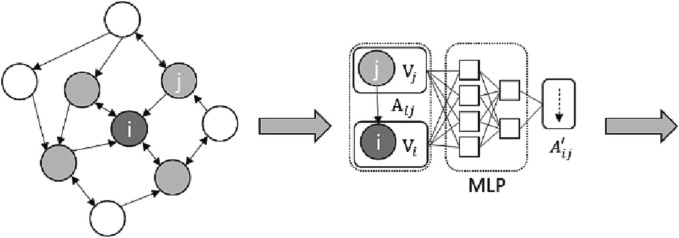
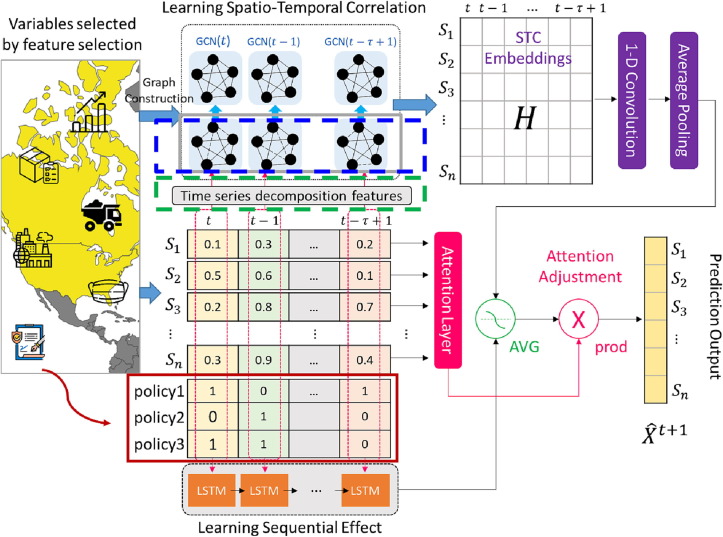
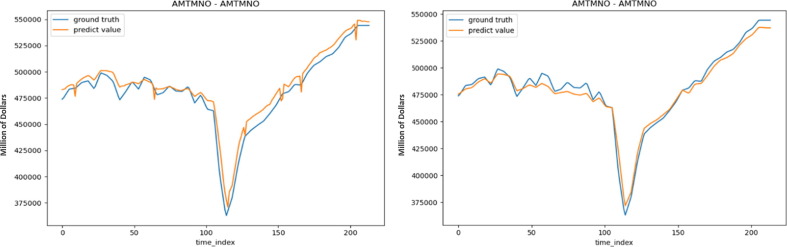
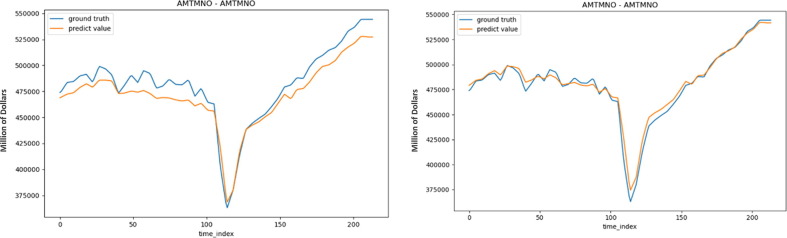
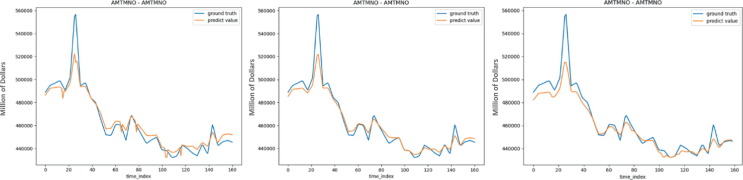
Worldwide manufacturing industries are significantly affected by COVID-19 pandemic because of their production characteristics with low-cost country sourcing, globalization, and inventory level. To analyze the correlated time series, spatial-temporal model becomes more attractive, and the graph convolution network (GCN) is also commonly used to provide more information to the nodes and its neighbors in the graph. Recently, attention-adjusted graph spatio-temporal network (AGSTN) was proposed to address the problem of pre-defined graph in GCN by combining multi-graph convolution and attention adjustment to learn spatial and temporal correlations over time. However, AGSTN may show potential problem with limited small non-sensor data; particularly, convergence issue. This study proposes several variants of AGSTN and applies them to non-sensor data. We suggest data augmentation and regularization techniques such as edge selection, time series decomposition, prevention policies to improve AGSTN. An empirical study of worldwide manufacturing industries in pandemic era was conducted to validate the proposed variants. The results show that the proposed variants significantly improve the prediction performance at least around 20% on mean squared error (MSE) and convergence problem.
由于其具有从低成本国家采购、全球化和库存水平等生产特点,全球制造业受到新冠疫情的显著影响。为了分析相关时间序列,时空模型变得更具吸引力,并且图卷积网络(GCN)也通常用于为图中的节点及其邻居提供更多信息。最近,通过结合多图卷积和注意力调整以随时间学习空间和时间相关性,提出了注意力调整图时空网络(AGSTN)来解决GCN中预定义图的问题。然而,AGSTN在处理有限的少量非传感器数据时可能会出现潜在问题;特别是收敛问题。本研究提出了AGSTN的几种变体并将它们应用于非传感器数据。我们建议采用数据增强和正则化技术,如边选择、时间序列分解、预防策略来改进AGSTN。对疫情时代的全球制造业进行了实证研究,以验证所提出的变体。结果表明,所提出的变体在均方误差(MSE)和收敛问题上至少显著提高了约20%的预测性能。