Lababidi Hossam, Lababidi Ghena, Rifai Mahmoud Al, Nasir Khurram, Al-Kindi Sadeer
Houston Methodist DeBakey Heart and Vascular Institute, Houston Methodist Hospital, 6550 Fannin St, Houston, TX 77030, United States.
Medical program, American University of Beirut, United States.
Am J Prev Cardiol. 2024 Apr 5;18:100665. doi: 10.1016/j.ajpc.2024.100665. eCollection 2024 Jun.
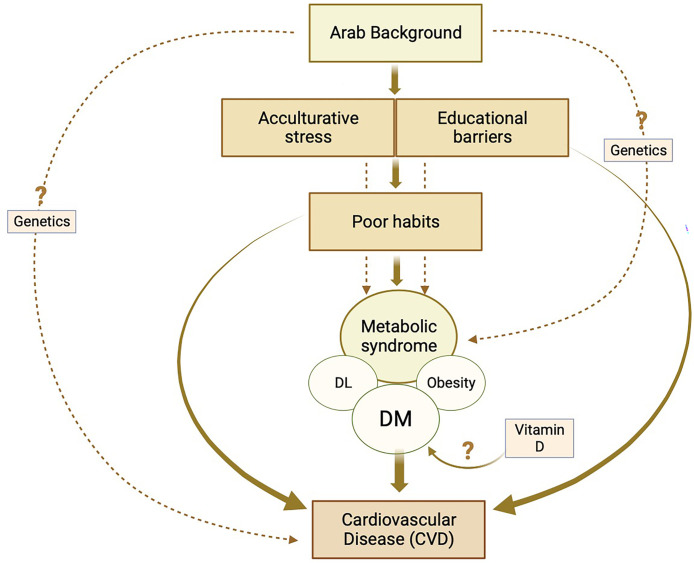
Cardiovascular disease (CVD) is the leading cause of mortality worldwide. Recent evidence suggests Arab Americans, individuals with ancestry from Arabic-speaking countries, have an elevated risk for CVD compared to other ethnicities in the US. However, research focusing specifically on CVD in this population is limited. This literature review synthesizes studies investigating CVD prevalence, risk factors, and outcomes in Arab Americans. Multiple studies found higher rates of coronary heart disease, cerebrovascular disease, and hypertension compared to non-Hispanic White participants. The prevalence of type 2 diabetes, a major CVD risk factor, was also markedly higher, ranging from 16 % to 41 % in Arab Americans based on objective measures. Possible explanations include high rates of vitamin D deficiency, genetic factors, and poor diabetes control. Other metabolic factors like dyslipidemia and obesity did not consistently differ from general population estimates. Psychosocial factors may further increase CVD risk, including acculturative stress, discrimination, low health literacy, and barriers to healthcare access. Smoking, especially waterpipe use, was more prevalent in Arab American men. Though heterogenous, Arab Americans overall appear to have elevated CVD risk, warranting tailored screening and management. Culturally appropriate educational initiatives on CVD prevention are greatly needed. Future directions include better characterizing CVD prevalence across Arab American subgroups, delineating genetic and environmental factors underlying increased diabetes susceptibility, and testing culturally tailored interventions to mitigate CVD risks. In summary, this review highlights concerning CVD disparities in Arab Americans and underscores the need for group-specific research and preventive strategies.
心血管疾病(CVD)是全球范围内的主要死因。最近的证据表明,与美国其他种族相比,具有阿拉伯语国家血统的阿拉伯裔美国人患心血管疾病的风险更高。然而,专门针对该人群心血管疾病的研究有限。这篇文献综述综合了有关阿拉伯裔美国人心血管疾病患病率、风险因素和结局的研究。多项研究发现,与非西班牙裔白人参与者相比,阿拉伯裔美国人患冠心病、脑血管疾病和高血压的比例更高。2型糖尿病作为主要的心血管疾病风险因素,其患病率也明显更高,根据客观测量,阿拉伯裔美国人的患病率在16%至41%之间。可能的解释包括维生素D缺乏率高、遗传因素和糖尿病控制不佳。其他代谢因素,如血脂异常和肥胖,与一般人群的估计值并无一致差异。心理社会因素可能会进一步增加心血管疾病风险,包括文化适应压力、歧视、健康素养低以及获得医疗保健的障碍。吸烟,尤其是水烟的使用,在阿拉伯裔美国男性中更为普遍。尽管存在异质性,但阿拉伯裔美国人总体上似乎心血管疾病风险较高,需要进行针对性的筛查和管理。非常需要开展关于心血管疾病预防的文化适宜性教育倡议。未来的方向包括更好地描述阿拉伯裔美国人亚组中的心血管疾病患病率,确定糖尿病易感性增加背后的遗传和环境因素,以及测试文化适宜性干预措施以降低心血管疾病风险。总之,本综述强调了阿拉伯裔美国人中令人担忧的心血管疾病差异,并强调了针对特定群体的研究和预防策略的必要性。