Department of Endocrinology, Sichuan Academy of Medical Sciences and Sichuan Provincial People's Hospital, School of Medicine, University of Electronic Science and Technology of China, Chengdu, China.
Department of Neuroscience, Baylor College of Medicine, Houston, TX, United States.
Front Immunol. 2024 Apr 4;15:1383936. doi: 10.3389/fimmu.2024.1383936. eCollection 2024.
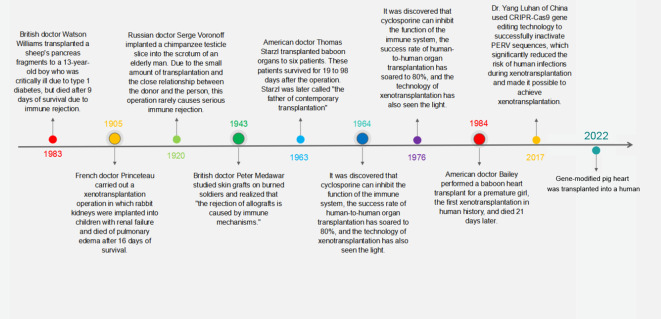
In the quest to address the critical shortage of donor organs for transplantation, xenotransplantation stands out as a promising solution, offering a more abundant supply of donor organs. Yet, its widespread clinical adoption remains hindered by significant challenges, chief among them being immunological rejection. Central to this issue is the role of the complement system, an essential component of innate immunity that frequently triggers acute and chronic rejection through hyperacute immune responses. Such responses can rapidly lead to transplant embolism, compromising the function of the transplanted organ and ultimately causing graft failure. This review delves into three key areas of xenotransplantation research. It begins by examining the mechanisms through which xenotransplantation activates both the classical and alternative complement pathways. It then assesses the current landscape of xenotransplantation from donor pigs, with a particular emphasis on the innovative strides made in genetically engineering pigs to evade complement system activation. These modifications are critical in mitigating the discordance between pig endogenous retroviruses and human immune molecules. Additionally, the review discusses pharmacological interventions designed to support transplantation. By exploring the intricate relationship between the complement system and xenotransplantation, this retrospective analysis not only underscores the scientific and clinical importance of this field but also sheds light on the potential pathways to overcoming one of the major barriers to the success of xenografts. As such, the insights offered here hold significant promise for advancing xenotransplantation from a research concept to a viable clinical reality.
在解决供体器官严重短缺以用于移植的过程中,异种移植作为一种有前途的解决方案脱颖而出,它提供了更丰富的供体器官来源。然而,其广泛的临床应用仍然受到重大挑战的阻碍,其中主要问题是免疫排斥。这一问题的核心是补体系统的作用,补体系统是先天免疫系统的一个重要组成部分,它通过超急性免疫反应频繁引发急性和慢性排斥反应。这种反应会迅速导致移植栓塞,使移植器官功能受损,最终导致移植物失功。本综述深入探讨了异种移植研究的三个关键领域。它首先研究了异种移植激活经典和替代补体途径的机制。然后评估了来自供体猪的异种移植的现状,特别强调了在基因工程猪以避免补体系统激活方面所取得的创新进展。这些修饰对于减轻猪内源性逆转录病毒与人类免疫分子之间的不匹配至关重要。此外,该综述还讨论了旨在支持移植的药物干预措施。通过探索补体系统与异种移植之间的复杂关系,这种回顾性分析不仅强调了该领域的科学和临床重要性,还揭示了克服异种移植物成功的主要障碍之一的潜在途径。因此,这里提供的见解为将异种移植从研究概念推进到可行的临床现实提供了重要的前景。