School of Psychology, Te Herenga Waka, Victoria University of Wellington, Wellington, New Zealand.
Front Public Health. 2024 Apr 4;12:1357965. doi: 10.3389/fpubh.2024.1357965. eCollection 2024.
Positive maternal mental health is associated with improved outcomes for infants, and yet the consideration of maternal mental health is often neglected in breastfeeding interventions. Breastfeeding interventions typically focus on breastfeeding promotion, and do not always include supports for the mother. This may result in isolated perceived pressure to breastfeed, the mental health impacts of which are not well understood.
This mixed-methods, longitudinal study examined whether perceived pressure to breastfeed was associated with depression, suicide ideation, anxiety, birth trauma and stress concurrently and 4 weeks later for postpartum mothers. It also examined qualitative experiences of feeding.
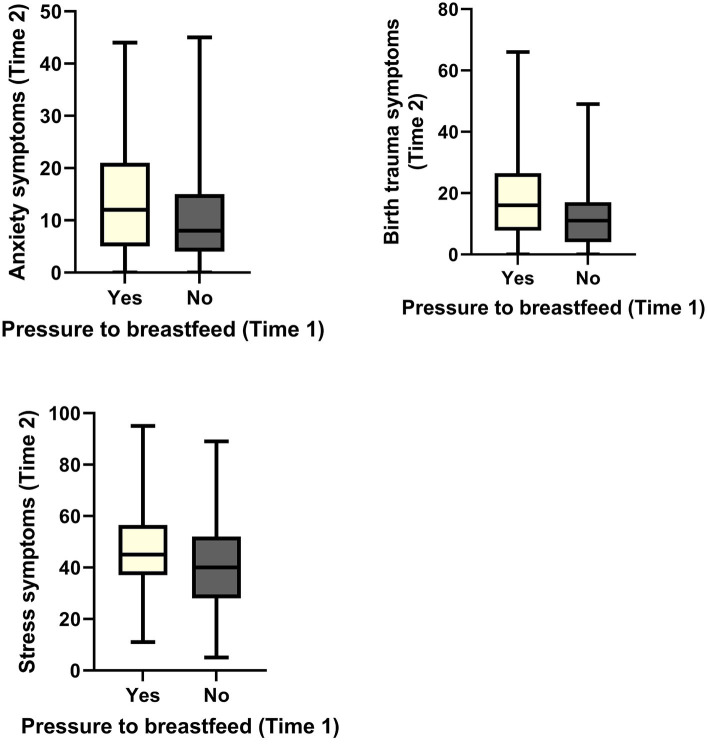
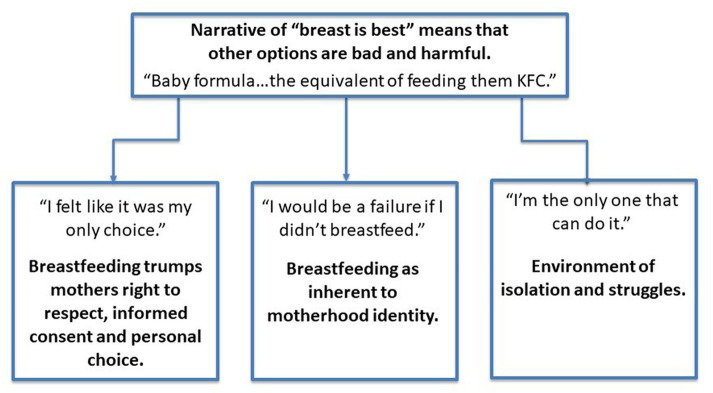
Perceived pressure to breastfeed was associated with increased anxiety, stress and birth trauma symptoms four weeks later. Thematic analysis suggested this may be due to difficulties living up to the "breast is best" ideal, believing breastfeeding was part of success as a mother, lack of choices and autonomy in feeding choices for infants and general lack of support.
As such it appears we may be doing more harm than good by focusing our interventions for breastfeeding primarily on increasing pressure to breastfeed, and interventions should consider strategies for promoting positive maternal mental health alongside breastfeeding.
积极的产妇心理健康与婴儿的改善结果相关,但在母乳喂养干预中往往忽视了产妇心理健康的考虑。母乳喂养干预通常侧重于促进母乳喂养,并不总是包括对母亲的支持。这可能导致孤立的母乳喂养压力感,而这种压力感对心理健康的影响还不太清楚。
本混合方法、纵向研究调查了产后母亲的感知母乳喂养压力是否与抑郁、自杀意念、焦虑、分娩创伤和压力在同期及 4 周后相关。它还检查了喂养的定性经验。
感知母乳喂养的压力与四周后焦虑、压力和分娩创伤症状的增加有关。主题分析表明,这可能是由于难以达到“母乳喂养最好”的理想,认为母乳喂养是作为母亲成功的一部分,在喂养婴儿的选择方面缺乏选择和自主权,以及普遍缺乏支持。
因此,我们似乎通过将母乳喂养的干预主要集中在增加母乳喂养的压力上,而不是关注促进产妇心理健康,可能会造成更多的伤害而不是好处。干预措施应该考虑在促进母乳喂养的同时促进产妇心理健康的策略。