Vanderbilt Genetics Institute, Vanderbilt University Medical Center, Nashville, TN, USA.
National Centre for Register-Based Research, Aarhus University, Aarhus V, Denmark.
Twin Res Hum Genet. 2024 Apr;27(2):69-79. doi: 10.1017/thg.2024.19. Epub 2024 Apr 22.
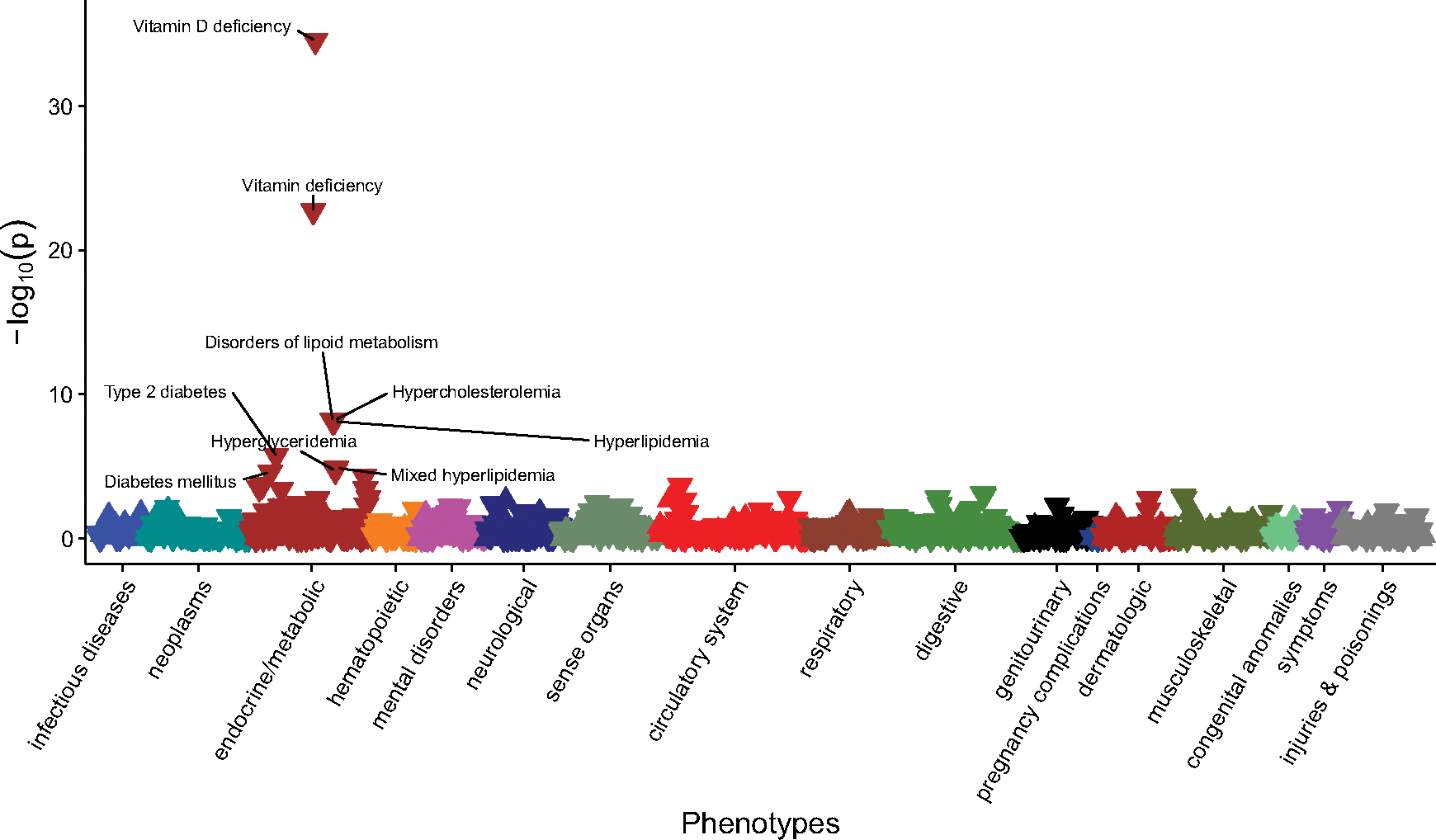
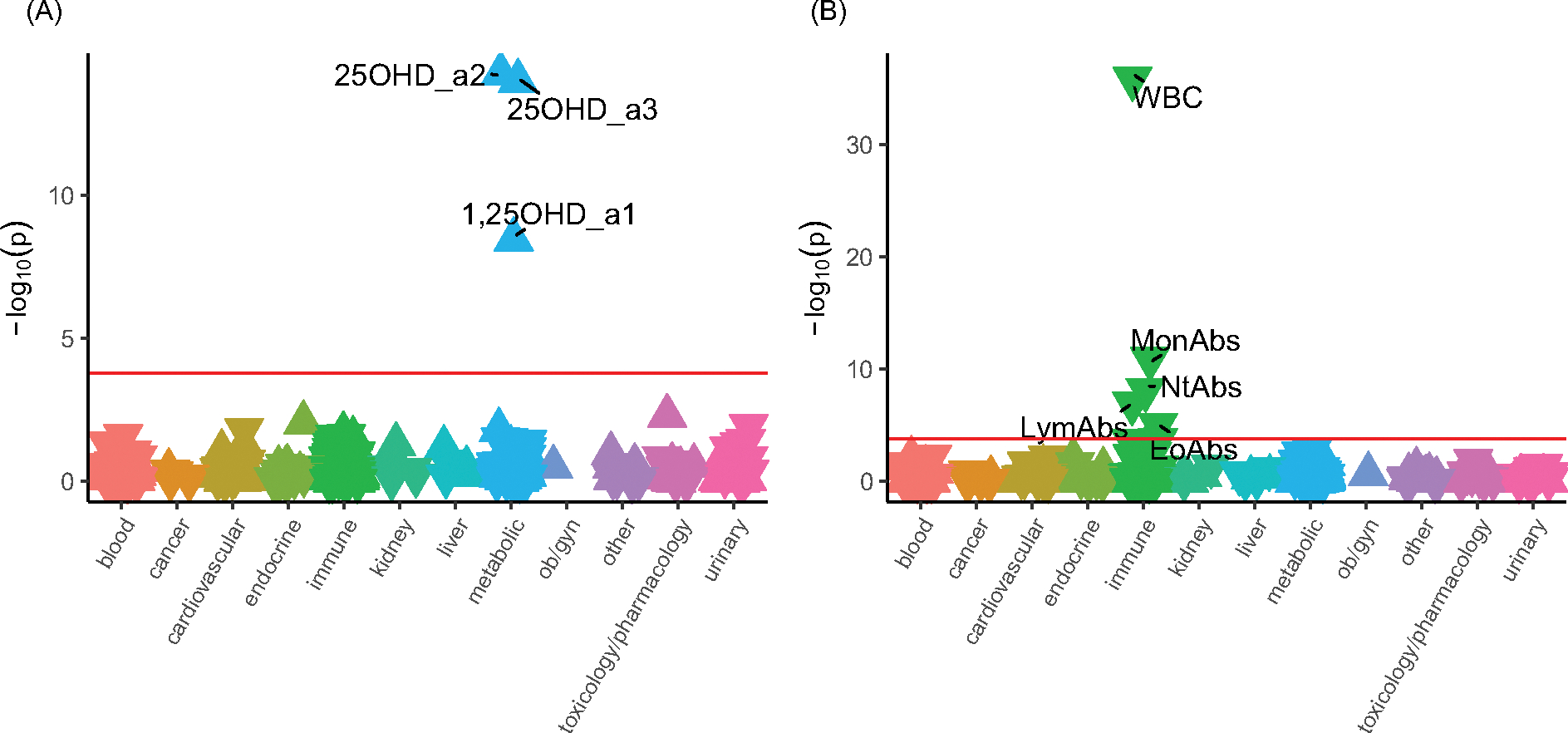
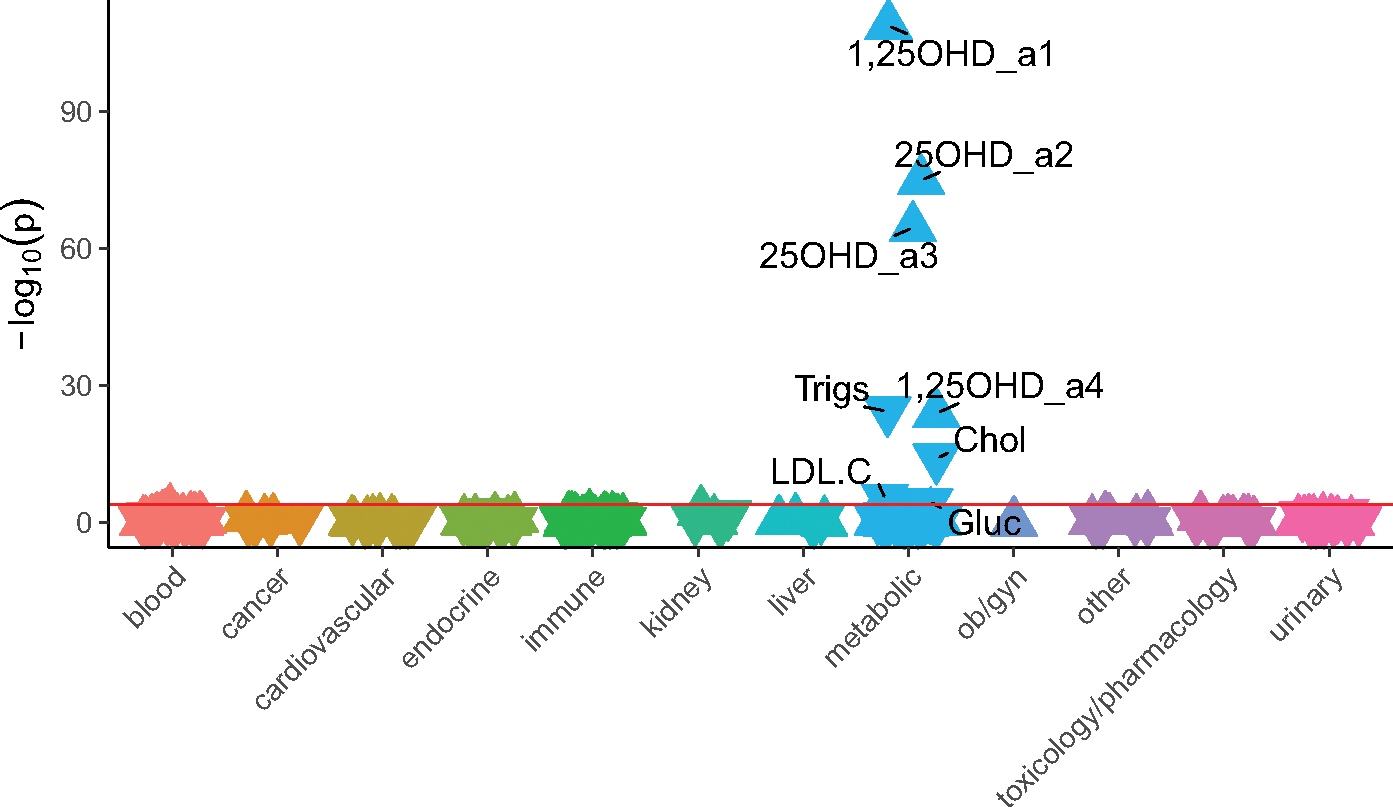
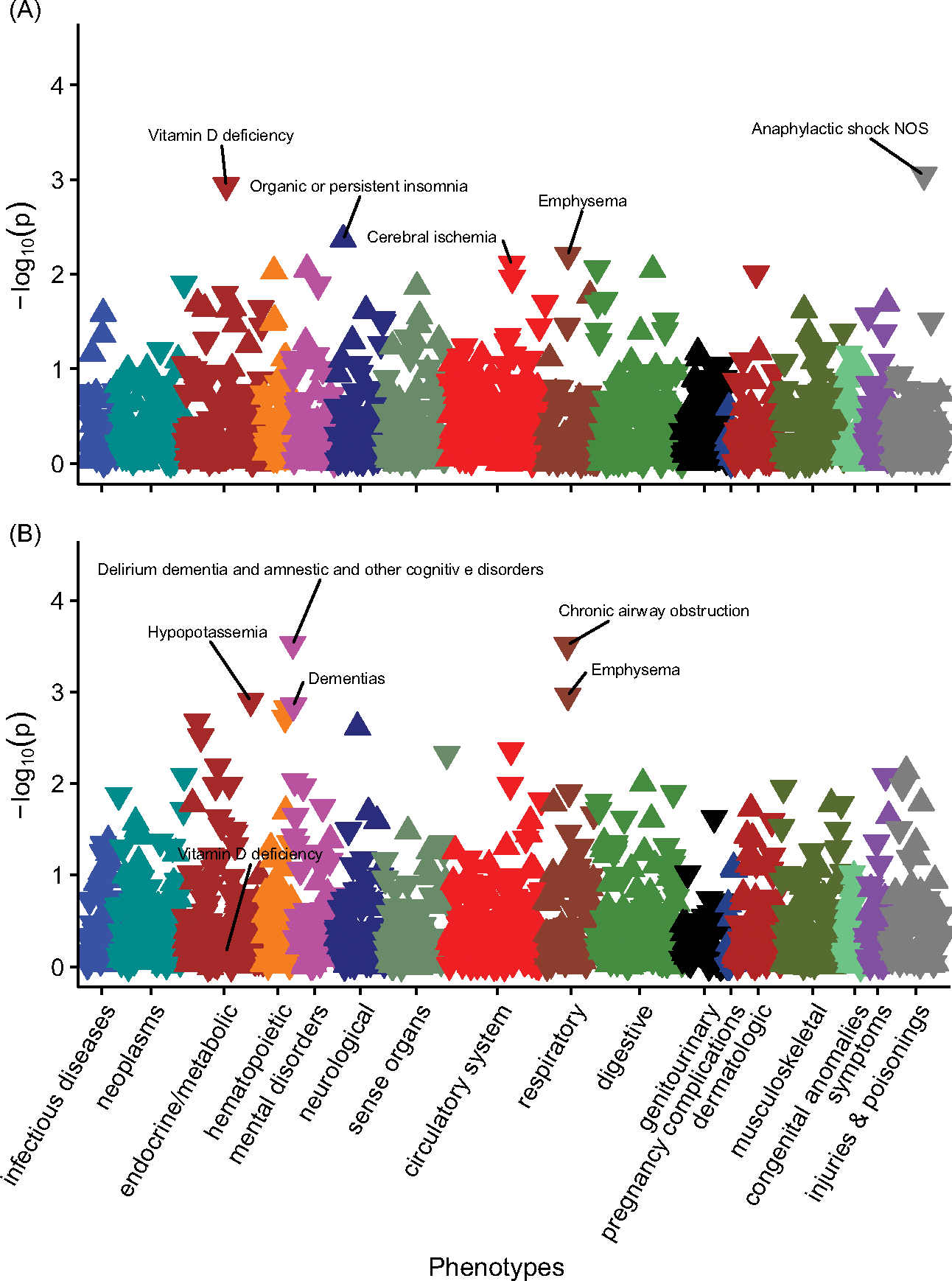
While it is known that vitamin D deficiency is associated with adverse bone outcomes, it remains unclear whether low vitamin D status may increase the risk of a wider range of health outcomes. We had the opportunity to explore the association between common genetic variants associated with both 25 hydroxyvitamin D (25OHD) and the vitamin D binding protein (DBP, encoded by the gene) with a comprehensive range of health disorders and laboratory tests in a large academic medical center. We used summary statistics for 25OHD and DBP to generate polygenic scores (PGS) for 66,482 participants with primarily European ancestry and 13,285 participants with primarily African ancestry from the Vanderbilt University Medical Center Biobank (BioVU). We examined the predictive properties of PGS, and two scores related to DBP concentration with respect to 1322 health-related phenotypes and 315 laboratory-measured phenotypes from electronic health records. In those with European ancestry: (a) the PGS and PGS scores, and individual SNPs rs4588 and rs7041 were associated with both 25OHD concentration and 1,25 dihydroxyvitamin D concentrations; (b) higher PGS was associated with decreased concentrations of triglycerides and cholesterol, and reduced risks of vitamin D deficiency, disorders of lipid metabolism, and diabetes. In general, the findings for the African ancestry group were consistent with findings from the European ancestry analyses. Our study confirms the utility of PGS and two key variants within the gene (rs4588 and rs7041) to predict the risk of vitamin D deficiency in clinical settings and highlights the shared biology between vitamin D-related genetic pathways a range of health outcomes.
虽然已知维生素 D 缺乏与不良骨骼结果有关,但仍不清楚低维生素 D 状态是否会增加更广泛的健康结果的风险。我们有机会在一个大型学术医疗中心探索与 25 羟维生素 D(25OHD)和维生素 D 结合蛋白(DBP,由 基因编码)相关的常见遗传变异与广泛的健康障碍和实验室测试之间的关联。我们使用了来自范德比尔特大学医学中心生物库(BioVU)的主要欧洲血统的 66482 名参与者和主要非洲血统的 13285 名参与者的 25OHD 和 DBP 的汇总统计数据,生成了多基因评分(PGS)。我们检查了 PGS 和与 DBP 浓度相关的两个评分对于来自电子健康记录的 1322 种健康相关表型和 315 种实验室测量表型的预测特性。在那些具有欧洲血统的人中:(a)PGS 和 PGS 评分以及单个 SNP rs4588 和 rs7041 与 25OHD 浓度和 1,25 二羟维生素 D 浓度均相关;(b)较高的 PGS 与甘油三酯和胆固醇浓度降低以及维生素 D 缺乏症,脂质代谢紊乱和糖尿病的风险降低有关。一般来说,非洲血统组的发现与欧洲血统分析的发现一致。我们的研究证实了 PGS 和 基因内两个关键变异(rs4588 和 rs7041)在临床环境中预测维生素 D 缺乏风险的效用,并强调了维生素 D 相关遗传途径与一系列健康结果之间的共同生物学。