Tekucheva Daria N, Nikolayeva Vera M, Karpov Mikhail V, Timakova Tatiana A, Shutov Andrey V, Donova Marina V
G.K. Skryabin Institute of Biochemistry and Physiology of Microorganisms, Federal Research Center "Pushchino Center for Biological Research of the Russian Academy of Sciences", Prospect Nauki 5, Pushchino, Moscow Region, 142290, Russia.
Bioresour Bioprocess. 2022 Nov 4;9(1):116. doi: 10.1186/s40643-022-00602-7.
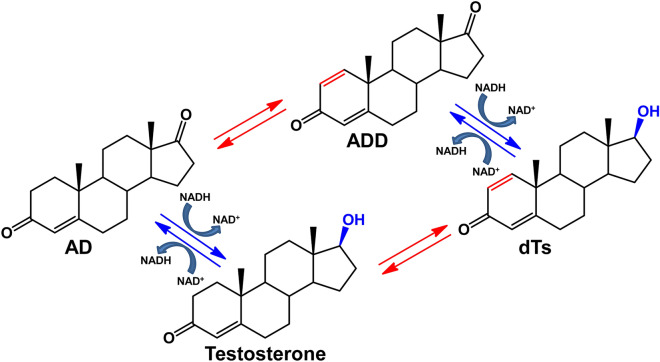
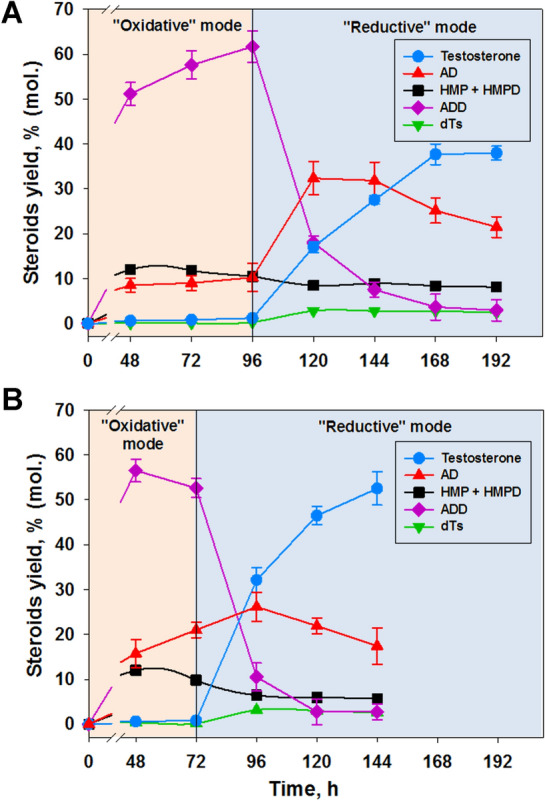
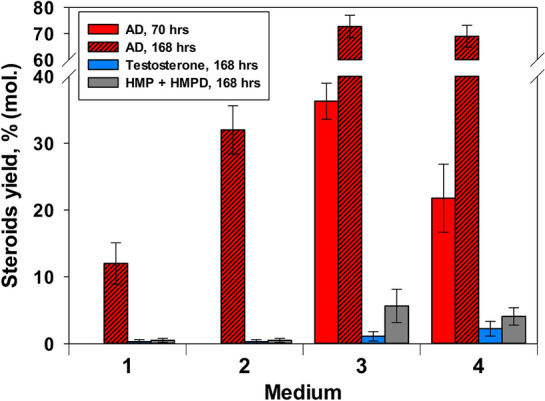
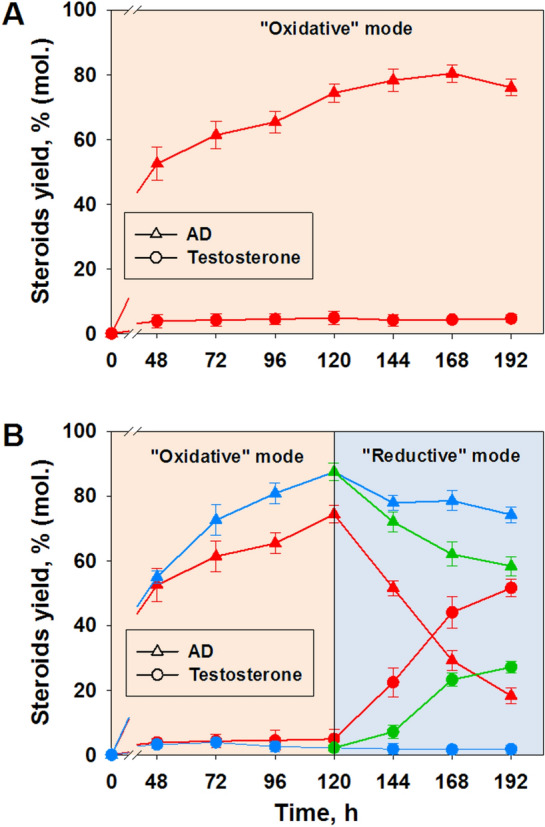
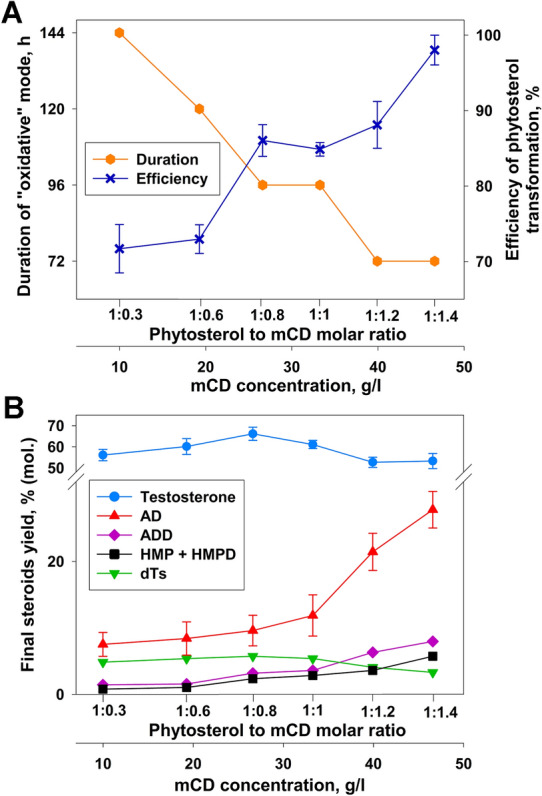
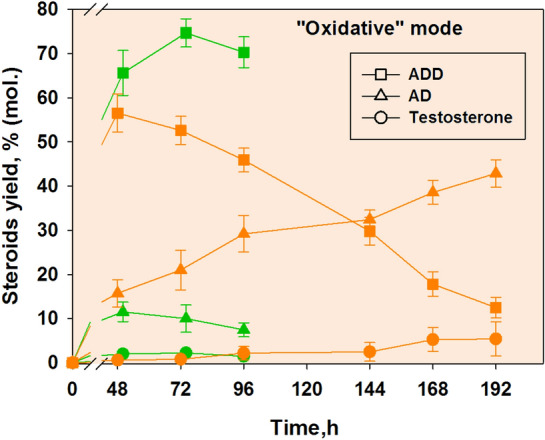
The main male hormone, testosterone is obtained from cheap and readily available phytosterol using the strains of Mycolicibacterium neoaurum VKM Ac-1815D, or Ac-1816D. During the first "oxidative" stage, phytosterol (5-10 g/L) was aerobically converted by Ac-1815D, or Ac-1816D to form 17-ketoandrostanes: androstenedione, or androstadienedione, respectively. At the same bioreactor, the 17-ketoandrostanes were further transformed to testosterone due to the presence of 17β-hydroxysteroid dehydrogenase activity in the strains ("reductive" mode). The conditions favorable for "oxidative" and "reductive" stages have been revealed to increase the final testosterone yield. Glucose supplement and microaerophilic conditions during the "reductive" mode ensured increased testosterone production by mycolicibacteria cells. Both strains effectively produced testosterone from phytosterol, but highest ever reported testosterone yield was achieved using M. neoaurum VKM Ac-1815D: 4.59 g/l testosterone was reached from 10 g/l phytosterol thus corresponding to the molar yield of over 66%. The results contribute to the knowledge on phytosterol bioconversion by mycolicibacteria, and are of significance for one-pot testosterone bioproduction from phytosterol bypassing the intermediate isolation of the 17-ketoandrostanes.
主要的雄性激素睾酮可使用新金色分枝杆菌VKM Ac-1815D或Ac-1816D菌株从廉价且易于获得的植物甾醇中获取。在第一个“氧化”阶段,植物甾醇(5 - 10克/升)被Ac-1815D或Ac-1816D需氧转化,分别形成17 - 酮雄烷:雄烯二酮或雄二烯二酮。在同一生物反应器中,由于菌株中存在17β - 羟基类固醇脱氢酶活性(“还原”模式),17 - 酮雄烷进一步转化为睾酮。已发现有利于“氧化”和“还原”阶段的条件可提高最终睾酮产量。在“还原”模式下补充葡萄糖和微需氧条件可确保分枝杆菌细胞增加睾酮产量。两种菌株都能有效地从植物甾醇中产生睾酮,但使用新金色分枝杆菌VKM Ac-1815D实现了有史以来最高的睾酮产量:从10克/升植物甾醇中获得了4.59克/升睾酮,因此摩尔产率超过66%。这些结果有助于了解分枝杆菌对植物甾醇的生物转化,并且对于绕过17 - 酮雄烷的中间分离从植物甾醇一锅法生物生产睾酮具有重要意义。