Ding Yicheng, Yan Chen, Dai Wangli, Wang Yanbo, Liu Shulai, Zheng Renchao, Zhou Xuxia
Key Laboratory of Marine Fishery Resources Exploitment & Utilization of Zhejiang Province, College of Food Science and Technology, Zhejiang University of Technology, Hangzhou, 310014, People's Republic of China.
Key Laboratory of Bioorganic Synthesis of Zhejiang Province, College of Biotechnology and Bioengineering, Zhejiang University of Technology, Hangzhou, 310014, People's Republic of China.
Bioresour Bioprocess. 2023 Dec 21;10(1):95. doi: 10.1186/s40643-023-00714-8.
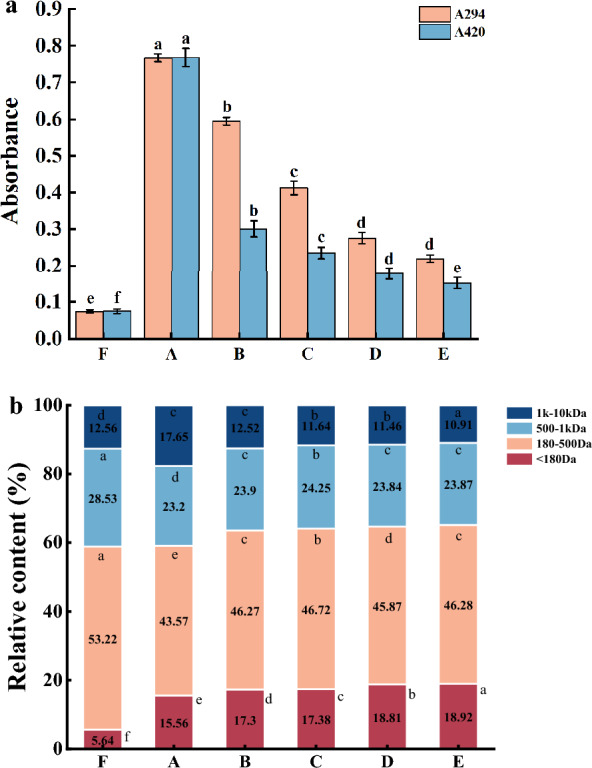
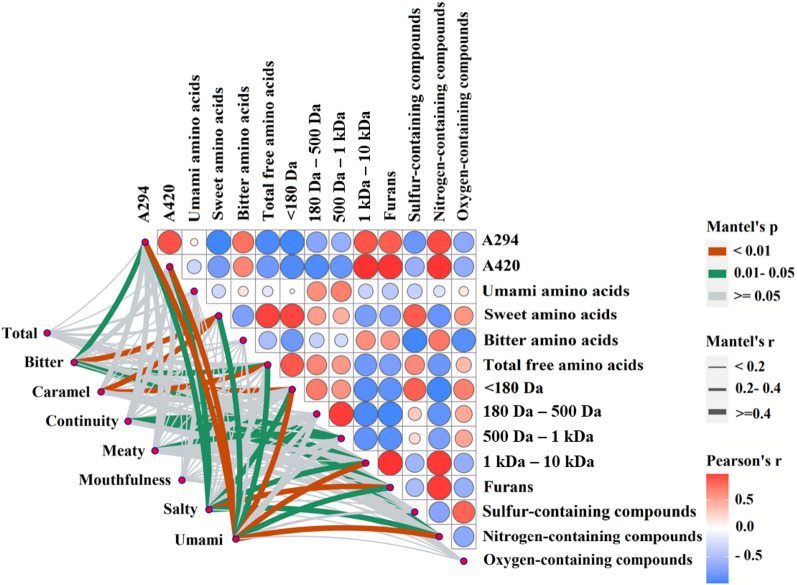
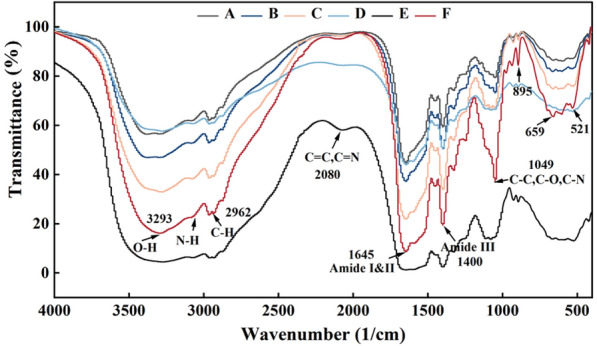
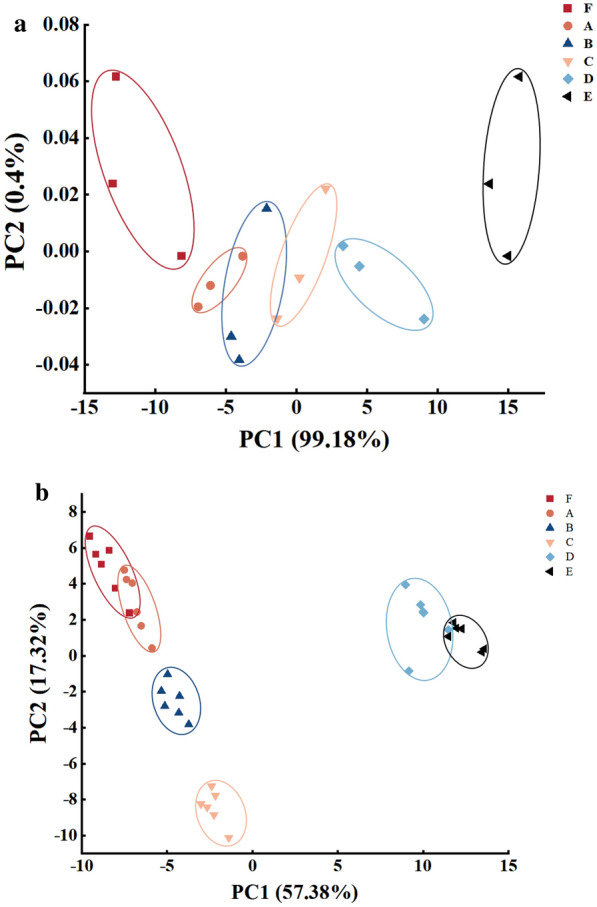
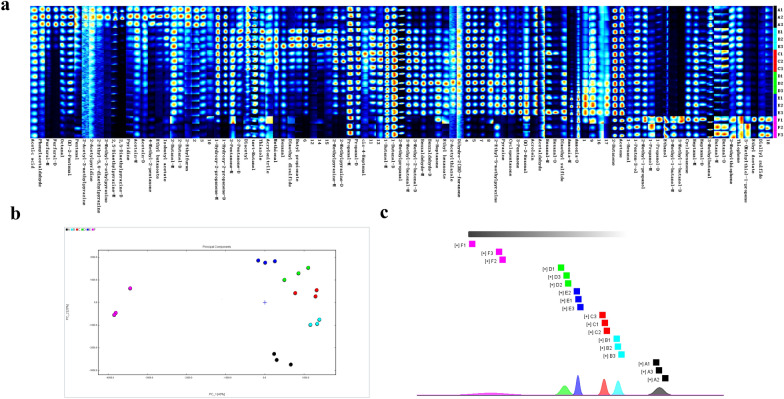
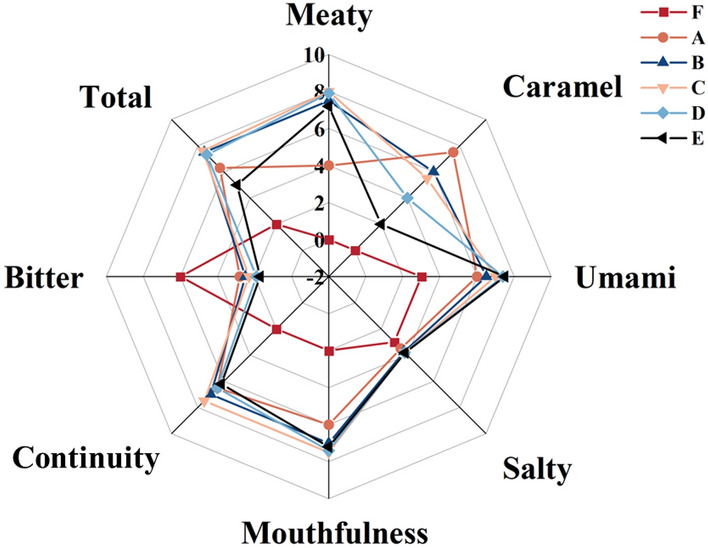
A promising way to utilize fish by-products is to develop hydrolysis of fish proteins with enzymes. The obtained fish protein hydrolysates (FPHs) are rich in peptides and amino acids, but bitterness and aroma defects impede further utilization of FPHs. The present study adopted Maillard reaction to improve FPHs' flavor and illustrated the role of cysteine in this system. We investigated the impact of cysteine (0, 0.25%, 0.5%, 0.75%, and 1%) on the browning intensity, free amino acids (FAAs), molecular weight distribution, structure of MRPs, volatile compounds changes and organoleptic characteristics of xylose-glycine-FPHs Maillard reaction systems. Results showed that the addition of cysteine lowered the browning degree of Maillard reaction products (MRPs) by inhibiting the cross-linking of small peptides and reducing the production of melanin. GC-MS and GC-IMS analysis indicated that cysteine inhibited the formation of furans and nitrogen-containing compounds and facilitated the formation of sulfur-containing compounds contributing to the meaty flavor. Sensory analysis revealed that 0.25-0.75% range of cysteine increased the meaty, caramel, umami, mouthfulness and salty notes, and caused a decrease in bitter taste of the MRPs as confirmed by GC-MS. A highly significant correlation between the organoleptic characteristics and physicochemical indicators of MRPs was found by Mantel test. These results elucidated the influence of cysteine on the formation of Maillard reaction products and will help improve the flavor profile of meat flavorings.
利用鱼类副产品的一种有前景的方法是开发用酶水解鱼蛋白。获得的鱼蛋白水解物(FPHs)富含肽和氨基酸,但苦味和香气缺陷阻碍了FPHs的进一步利用。本研究采用美拉德反应来改善FPHs的风味,并阐明了半胱氨酸在该体系中的作用。我们研究了半胱氨酸(0%、0.25%、0.5%、0.75%和1%)对木糖-甘氨酸-FPHs美拉德反应体系的褐变强度、游离氨基酸(FAAs)、分子量分布、美拉德反应产物(MRPs)的结构、挥发性化合物变化和感官特性的影响。结果表明,半胱氨酸的添加通过抑制小肽的交联和减少黑色素的产生降低了美拉德反应产物(MRPs)的褐变程度。气相色谱-质谱联用(GC-MS)和气相色谱-离子迁移谱(GC-IMS)分析表明,半胱氨酸抑制了呋喃和含氮化合物的形成,并促进了有助于肉香味的含硫化合物的形成。感官分析表明,0.25-0.75%范围的半胱氨酸增加了MRPs的肉香味焦糖味、鲜味、口感和咸味,并如GC-MS所证实的那样使MRPs的苦味降低。通过Mantel检验发现MRPs的感官特性与理化指标之间存在高度显著的相关性。这些结果阐明了半胱氨酸对美拉德反应产物形成的影响,并将有助于改善肉类调味料的风味特征。