Precision Research Center for Refractory Diseases, Institute for Clinical Research, Shanghai Key Laboratory of Pancreatic Disease, Shanghai General Hospital, Shanghai Jiao Tong University School of Medicine, 200080, Shanghai, China.
Department of Gastrointestinal Surgery, Shanghai General Hospital, Shanghai Jiao Tong University School of Medicine, 200080, Shanghai, China.
EMBO J. 2024 Jun;43(12):2337-2367. doi: 10.1038/s44318-024-00101-9. Epub 2024 Apr 22.
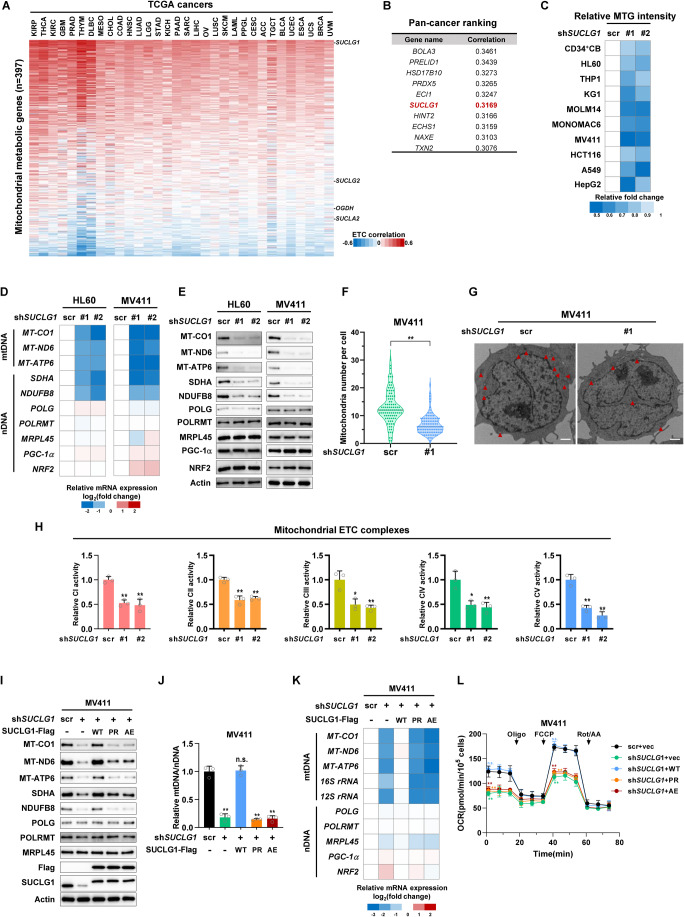
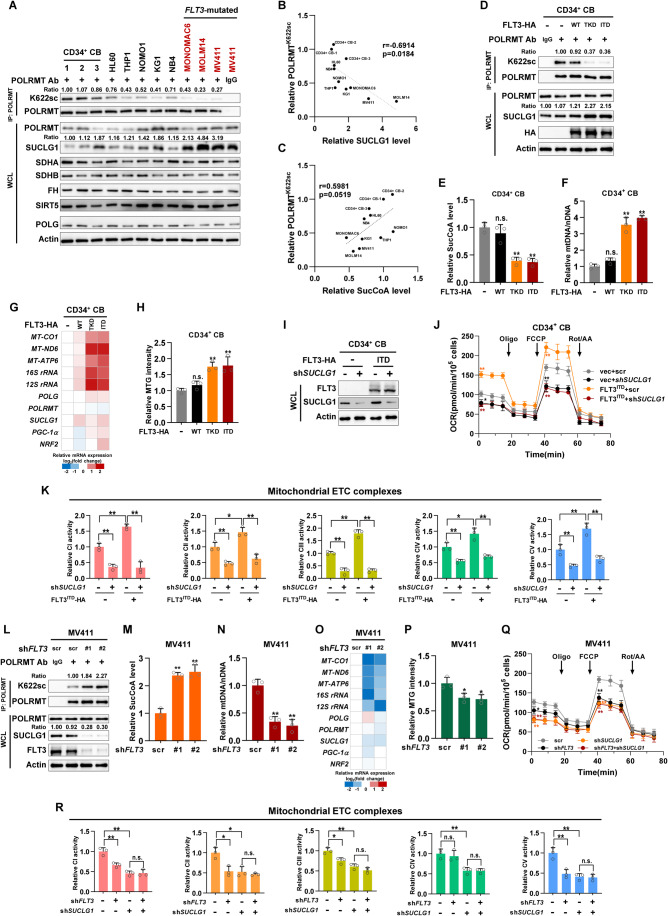
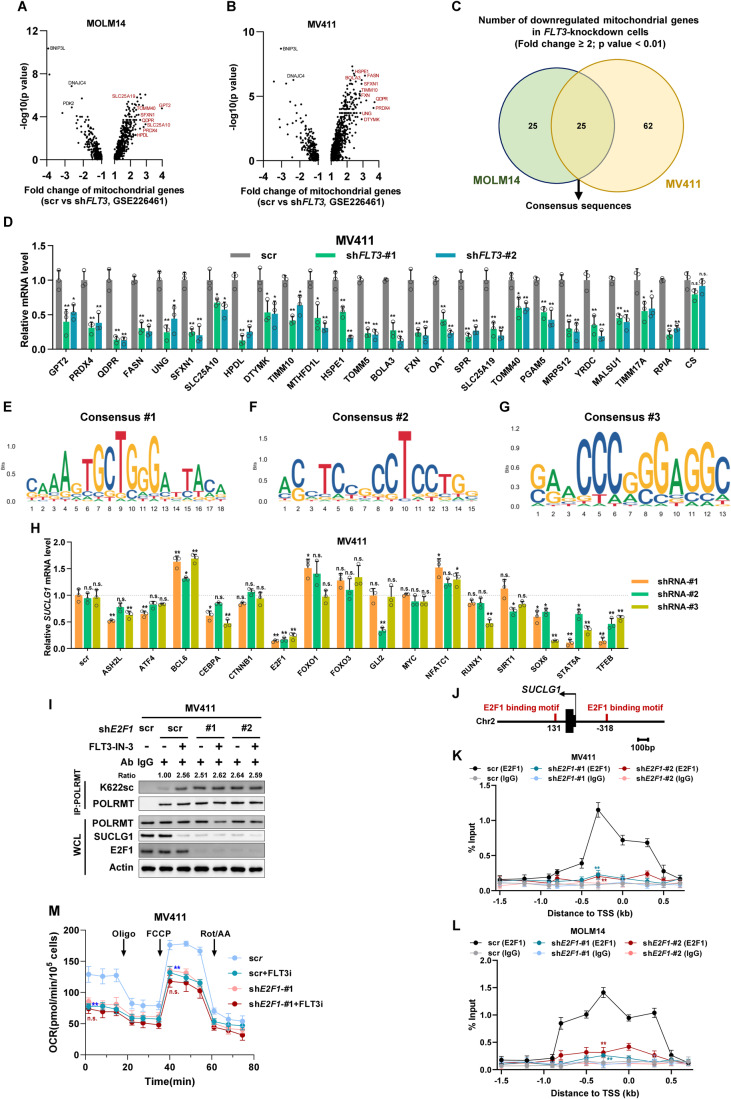
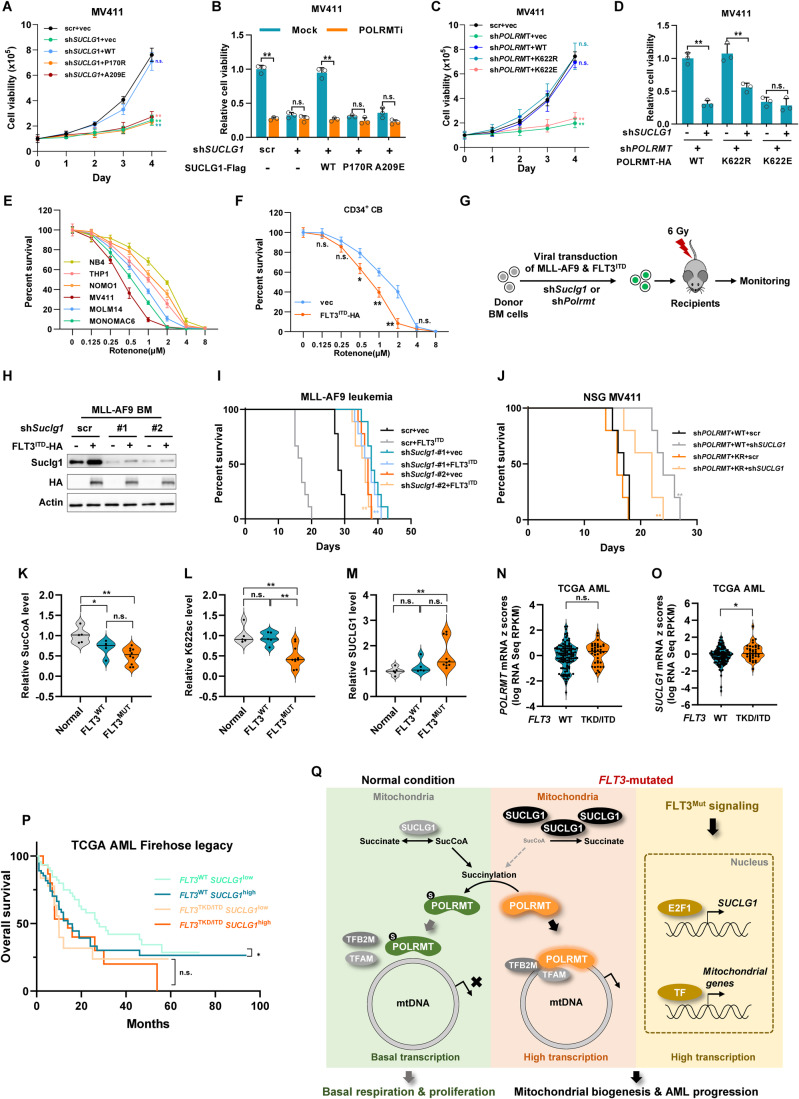
Mitochondria are cellular powerhouses that generate energy through the electron transport chain (ETC). The mitochondrial genome (mtDNA) encodes essential ETC proteins in a compartmentalized manner, however, the mechanism underlying metabolic regulation of mtDNA function remains unknown. Here, we report that expression of tricarboxylic acid cycle enzyme succinate-CoA ligase SUCLG1 strongly correlates with ETC genes across various TCGA cancer transcriptomes. Mechanistically, SUCLG1 restricts succinyl-CoA levels to suppress the succinylation of mitochondrial RNA polymerase (POLRMT). Lysine 622 succinylation disrupts the interaction of POLRMT with mtDNA and mitochondrial transcription factors. SUCLG1-mediated POLRMT hyposuccinylation maintains mtDNA transcription, mitochondrial biogenesis, and leukemia cell proliferation. Specifically, leukemia-promoting FMS-like tyrosine kinase 3 (FLT3) mutations modulate nuclear transcription and upregulate SUCLG1 expression to reduce succinyl-CoA and POLRMT succinylation, resulting in enhanced mitobiogenesis. In line, genetic depletion of POLRMT or SUCLG1 significantly delays disease progression in mouse and humanized leukemia models. Importantly, succinyl-CoA level and POLRMT succinylation are downregulated in FLT3-mutated clinical leukemia samples, linking enhanced mitobiogenesis to cancer progression. Together, SUCLG1 connects succinyl-CoA with POLRMT succinylation to modulate mitochondrial function and cancer development.
线粒体是细胞的能量工厂,通过电子传递链(ETC)产生能量。线粒体基因组(mtDNA)以分隔的方式编码必需的 ETC 蛋白,然而,mtDNA 功能代谢调节的机制尚不清楚。在这里,我们报告三羧酸循环酶琥珀酰辅酶 A 连接酶 SUCLG1 的表达与各种 TCGA 癌症转录组中的 ETC 基因强烈相关。在机制上,SUCLG1 限制琥珀酰辅酶 A 水平以抑制线粒体 RNA 聚合酶(POLRMT)的琥珀酰化。赖氨酸 622 琥珀酰化破坏了 POLRMT 与 mtDNA 和线粒体转录因子的相互作用。SUCLG1 介导的 POLRMT 低琥珀酰化维持 mtDNA 转录、线粒体生物发生和白血病细胞增殖。具体而言,促进白血病的 FMS 样酪氨酸激酶 3(FLT3)突变调节核转录并上调 SUCLG1 表达,以降低琥珀酰辅酶 A 和 POLRMT 琥珀酰化,从而增强线粒体生物发生。与此一致,在小鼠和人源化白血病模型中,POLRMT 或 SUCLG1 的遗传缺失显著延迟疾病进展。重要的是,FLT3 突变的临床白血病样本中琥珀酰辅酶 A 水平和 POLRMT 琥珀酰化降低,将增强的线粒体生物发生与癌症进展联系起来。总之,SUCLG1 将琥珀酰辅酶 A 与 POLRMT 琥珀酰化联系起来,以调节线粒体功能和癌症发展。