Department of Endocrinology, Affiliated Hospital of Jiangsu University, Zhenjiang, China.
Diabetes Metab J. 2024 May;48(3):354-372. doi: 10.4093/dmj.2023.0277. Epub 2024 Apr 1.
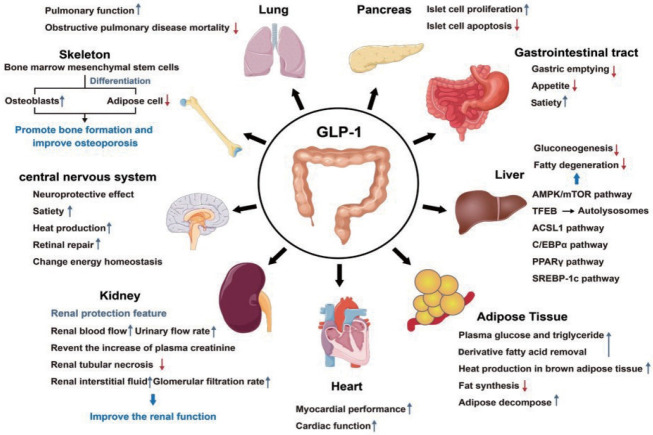
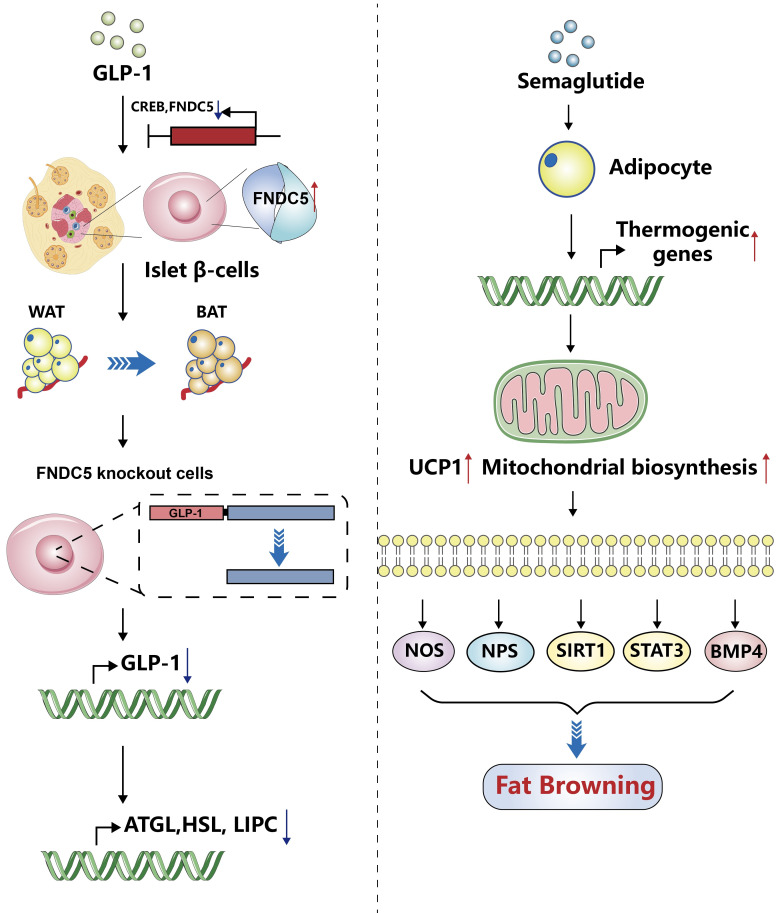
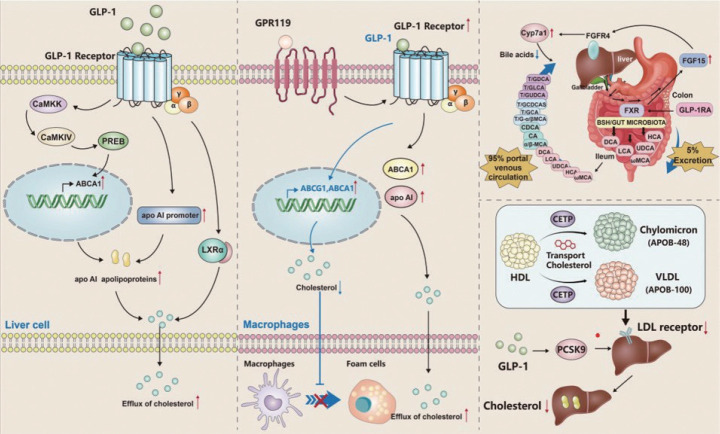
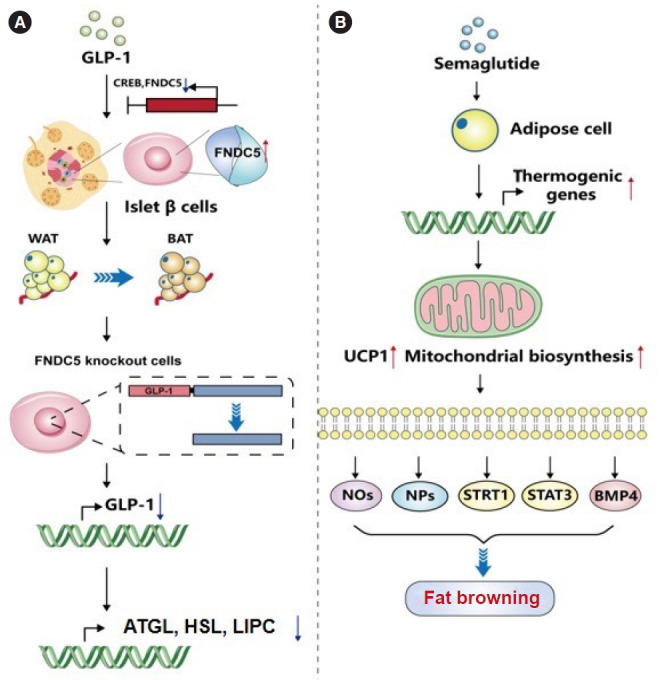
Glucagon-like peptide-1 (GLP-1) is a 30-amino acid peptide hormone that is mainly expressed in the intestine and hypothalamus. In recent years, basic and clinical studies have shown that GLP-1 is closely related to lipid metabolism, and it can participate in lipid metabolism by inhibiting fat synthesis, promoting fat differentiation, enhancing cholesterol metabolism, and promoting adipose browning. GLP-1 plays a key role in the occurrence and development of metabolic diseases such as obesity, nonalcoholic fatty liver disease, and atherosclerosis by regulating lipid metabolism. It is expected to become a new target for the treatment of metabolic disorders. The effects of GLP-1 and dual agonists on lipid metabolism also provide a more complete treatment plan for metabolic diseases. This article reviews the recent research progress of GLP-1 in lipid metabolism.
胰高血糖素样肽-1(GLP-1)是一种由 30 个氨基酸组成的肽类激素,主要在肠道和下丘脑表达。近年来,基础和临床研究表明,GLP-1 与脂代谢密切相关,它可以通过抑制脂肪合成、促进脂肪分化、增强胆固醇代谢和促进脂肪棕色化来参与脂代谢。GLP-1 通过调节脂代谢在肥胖症、非酒精性脂肪肝和动脉粥样硬化等代谢性疾病的发生和发展中起关键作用。它有望成为治疗代谢紊乱的新靶点。GLP-1 和双重激动剂对脂代谢的影响也为代谢性疾病提供了更完整的治疗方案。本文综述了 GLP-1 在脂代谢方面的最新研究进展。