
川崎病的热点话题与研究前沿态势:科学计量学分析
The landscape of hot topics and research frontiers in Kawasaki disease: Scientometric analysis.
作者信息
Li Mengling, Zheng Zaiyong, Yi Qijian
机构信息
National Clinical Key Cardiovascular Specialty, Key Laboratory of Children's Important Organ Development and Diseases of Chongqing Municipal Health Commission, Ministry of Education Key Laboratory of Child Development and Disorders, Chongqing Key Laboratory of Pediatric Metabolism and Inflammatory Diseases, National Clinical Research Center for Child Health and Disorders, International Science and Technology Cooperation Base of Child Development and Critical Disorders, Children's Hospital of Chongqing Medical University, Chongqing, 400014, China.
Department of Pediatrics, Sichuan Mianyang 404 Hospital, Mianyang, 621000, China.
出版信息
Heliyon. 2024 Apr 14;10(8):e29680. doi: 10.1016/j.heliyon.2024.e29680. eCollection 2024 Apr 30.
PURPOSE
Kawasaki disease(KD) is a vascular inflammatory disease that was first identified in 1967. Numerous studies have been conducted on KD and have yielded valuable recent insights. This current bibliometric analysis aimed to determine the intellectual landscape of research interest in KD.
METHODS
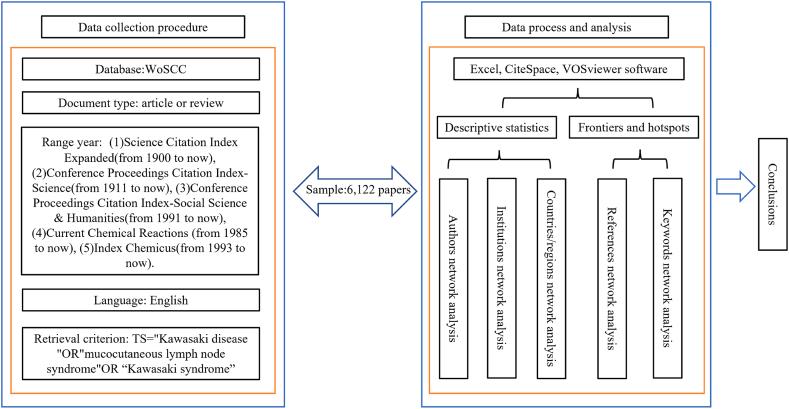
Publications were collected from the Web of Science Core Collection. Bibliometric tools such as CiteSpace and VOSviewer were utilized to analyze the research focus, emerging trends, frontiers, and hot topics in this specific field.
RESULTS
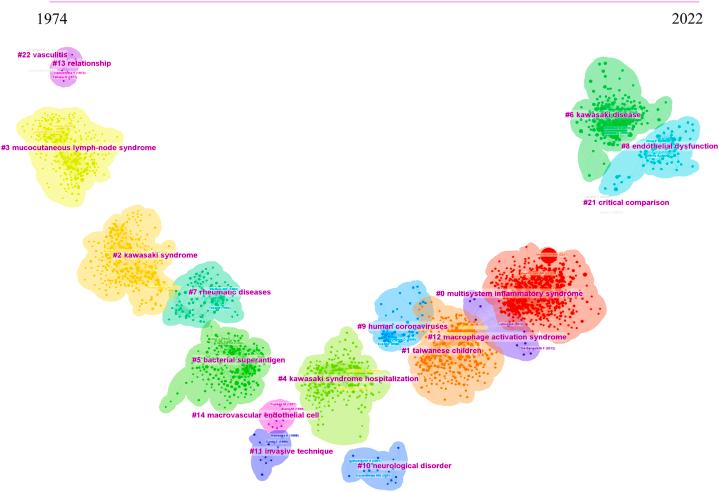
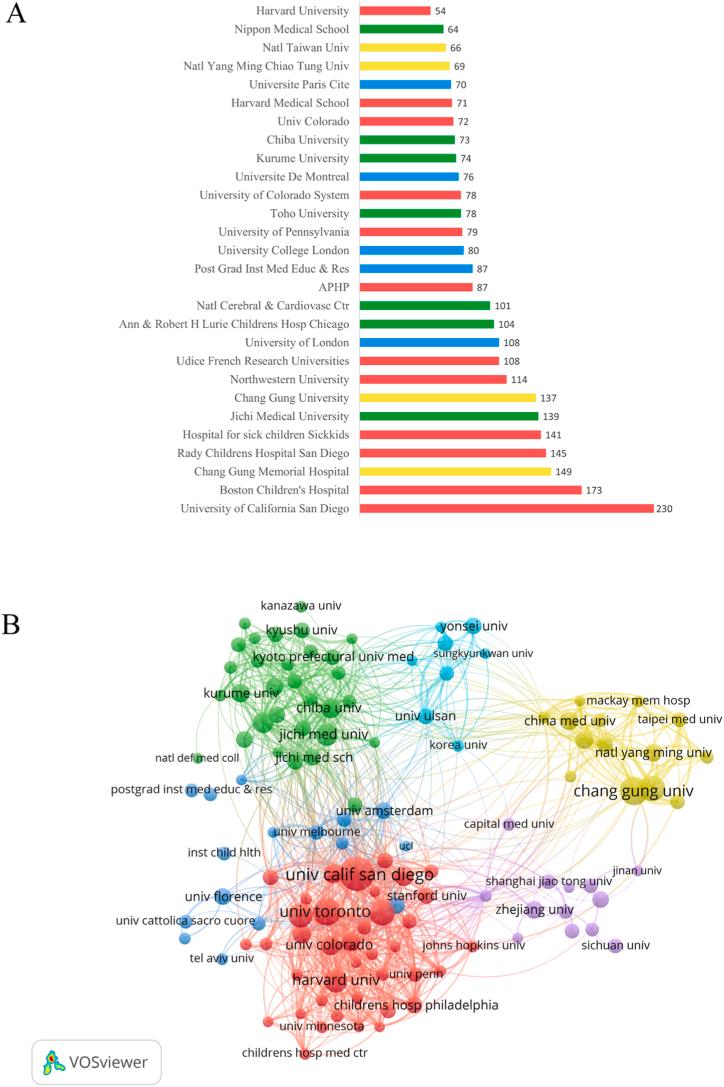
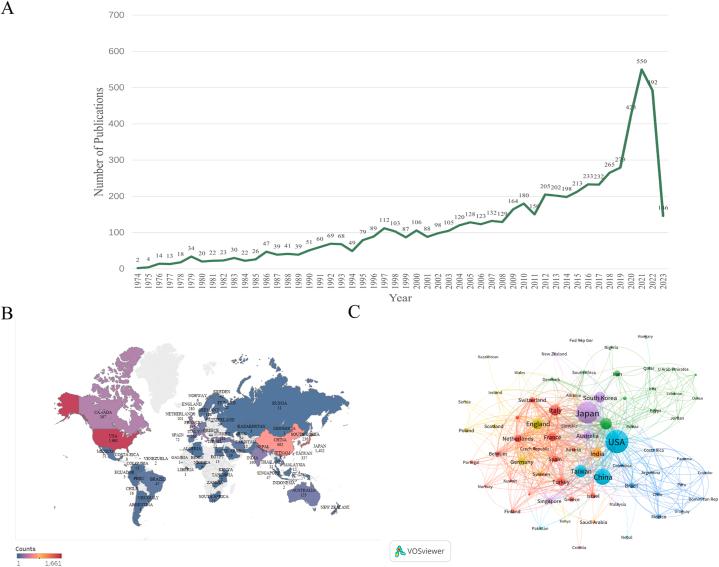
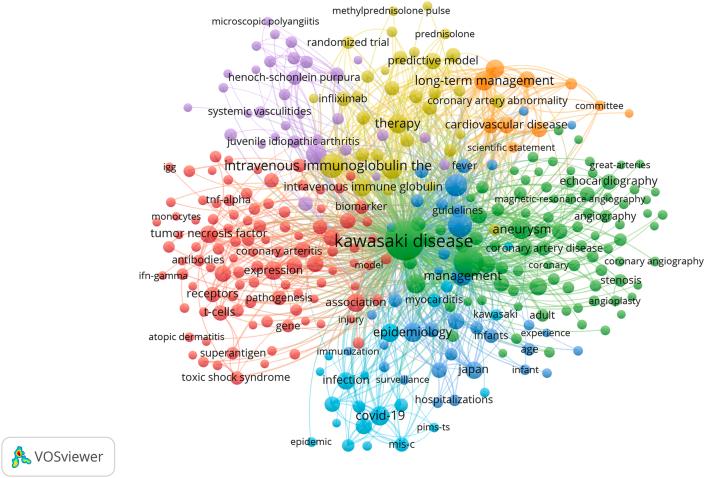
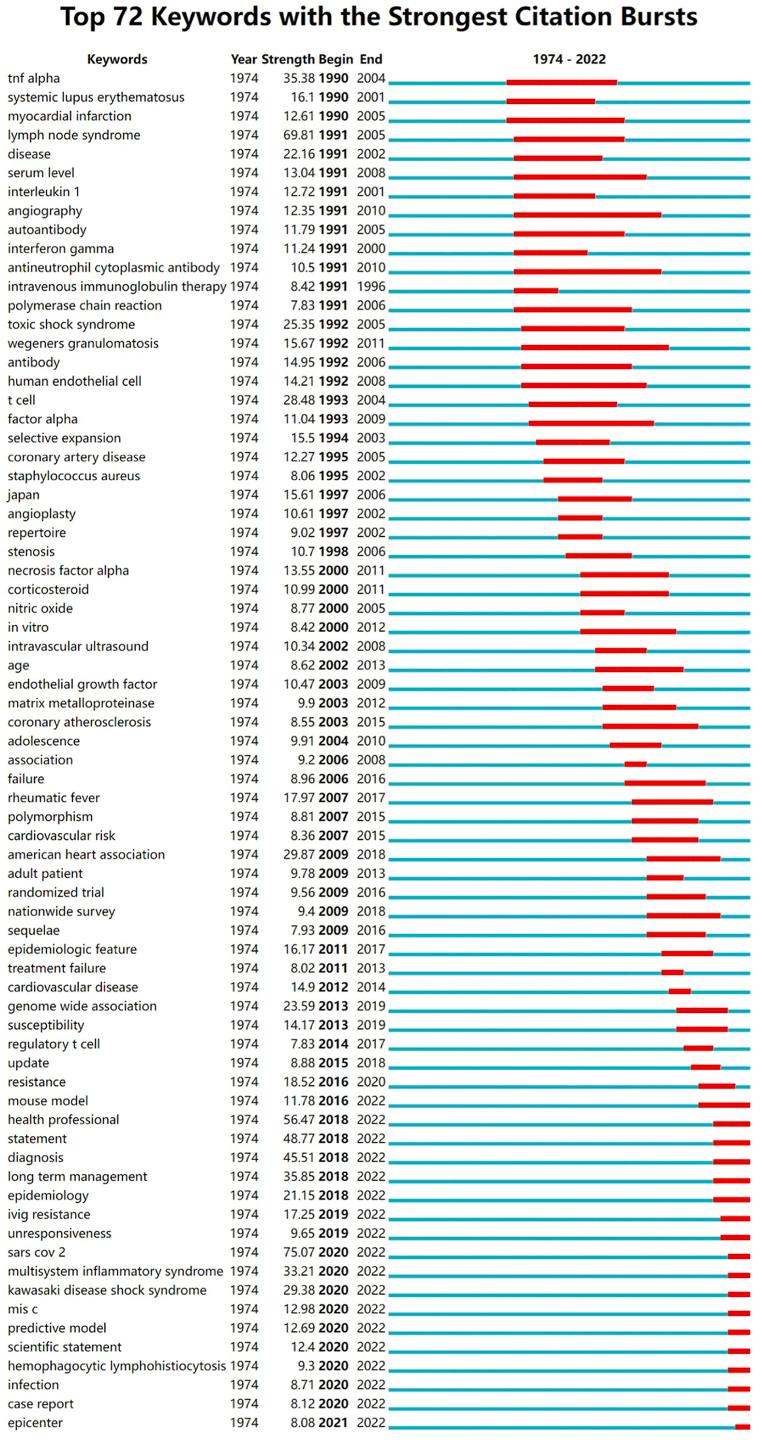
A total of 6122 articles on KD were retrieved. Pediatric Cardiology, Pediatrics International, and Pediatric Infections Disease Journal were the three most productive journals reporting KD development. The University of California San Diego was the most productive institution, with 230 publications. The USA was the most productive country, with 1661 articles in KD. SARS-CoV-2, diagnostic serum biomarkers, and risk factor prediction models for coronary arterial lesions and subtypes of KD are popular topics in KD research. Factors that induce smooth muscle cell transition to myofibroblastic cell, potentially halting the subacute/chronic vasculitis process and endothelial dysfunction in macrophage activation syndrome associated with KD were the frontiers in the study of KD.
CONCLUSION
KD has attracted widespread attention worldwide that has continued to increase since 1974. The most productive institution and country are the University of California San Diego and the USA, respectively. SARS-CoV-2, serum biomarkers, and prediction models are hot topics in this field.
目的
川崎病(KD)是一种血管炎性疾病,于1967年首次被发现。针对KD已经开展了大量研究,并取得了近期有价值的见解。本次文献计量分析旨在确定KD研究兴趣的知识格局。
方法
从科学网核心合集收集出版物。利用CiteSpace和VOSviewer等文献计量工具分析该特定领域的研究重点、新兴趋势、前沿和热点话题。
结果
共检索到6122篇关于KD的文章。《儿科心脏病学》《国际儿科学》和《儿科传染病杂志》是报道KD进展的三大高产期刊。加利福尼亚大学圣地亚哥分校是最高产的机构,有230篇出版物。美国是最高产的国家,有1661篇关于KD的文章。SARS-CoV-2、诊断血清生物标志物以及冠状动脉病变和KD亚型的危险因素预测模型是KD研究中的热门话题。诱导平滑肌细胞向肌成纤维细胞转变、可能阻止与KD相关的巨噬细胞活化综合征中的亚急性/慢性血管炎过程和内皮功能障碍的因素是KD研究的前沿。
结论
KD自1974年以来在全球引起了广泛关注且关注度持续上升。最高产的机构和国家分别是加利福尼亚大学圣地亚哥分校和美国。SARS-CoV-2、血清生物标志物和预测模型是该领域的热门话题。
 Zotero 插件