Gangadharan Nambiar Gopinathan, Gonzalez Szachowicz Sussette, Zirbes Christian F, Hill Jared J, Powers Linda S, Meyerholz David K, Thornell Ian M, Stoltz David A, Fischer Anthony J
Stead Family Department of Pediatrics, University of Iowa, Iowa City, IA, United States.
Department of Pediatrics, East Tennessee State University, Johnson City, TN, United States.
Front Pediatr. 2024 Apr 11;12:1387171. doi: 10.3389/fped.2024.1387171. eCollection 2024.
Meconium ileus (MI) is a life-threatening obstruction of the intestines affecting ∼15% of newborns with cystic fibrosis (CF). Current medical treatments for MI often fail, requiring surgical intervention. MI typically occurs in newborns with pancreatic insufficiency from CF. Meconium contains mucin glycoprotein, a potential substrate for pancreatic enzymes or mucolytics. Our study aim was to determine whether pancreatic enzymes in combination with mucolytic treatments dissolve obstructive meconium using the CF pig model.
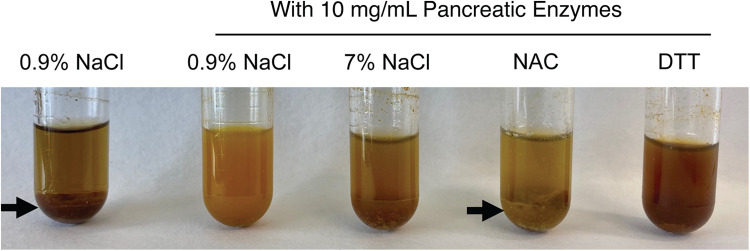
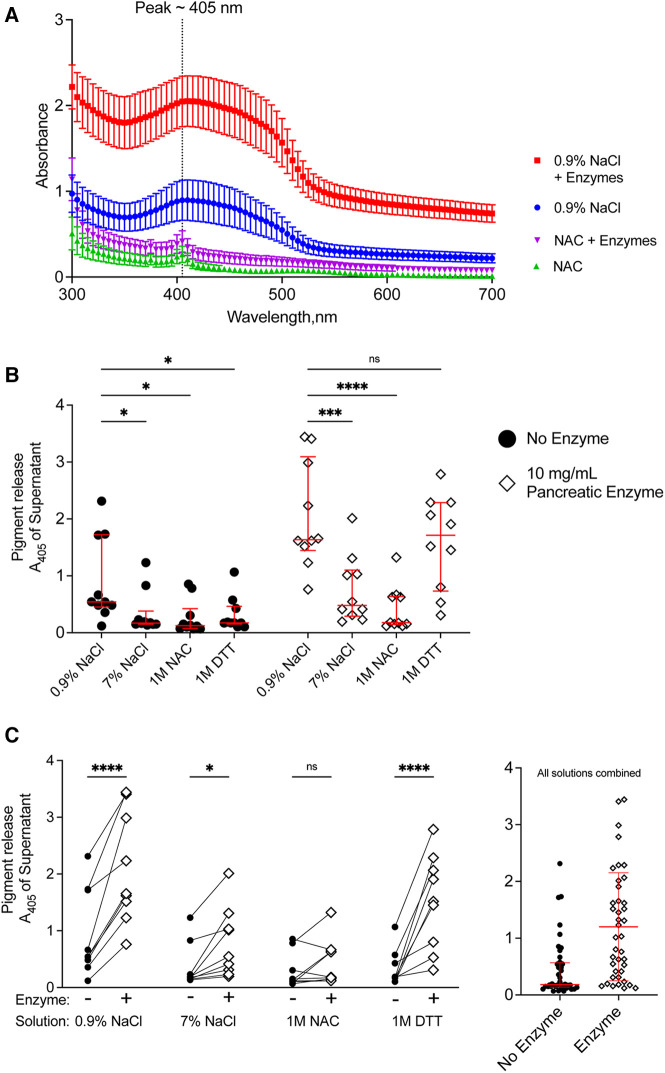
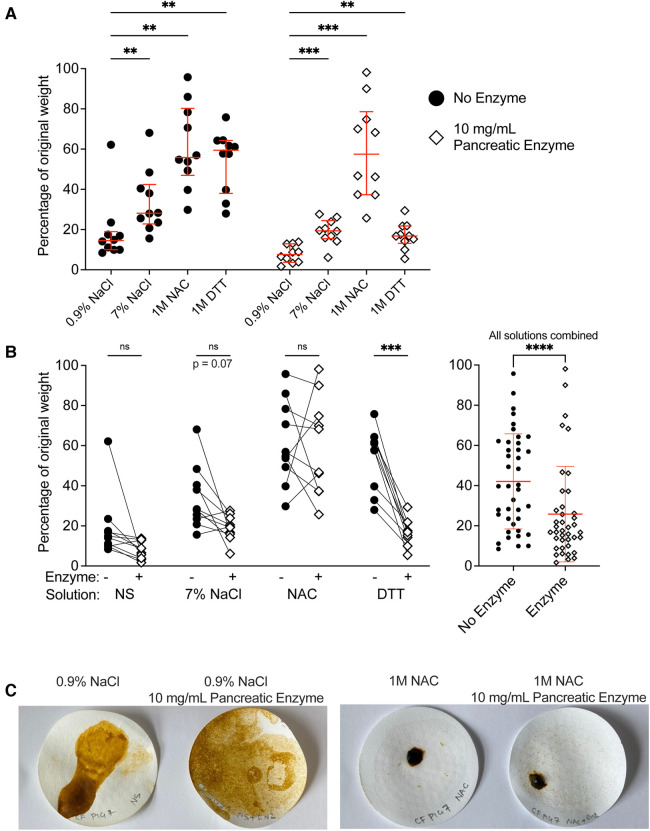
We collected meconium from CF pigs at birth and submerged it in solutions with and without pancreatic enzymes, including normal saline, 7% hypertonic saline, and the reducing agents N-acetylcysteine (NAC) and dithiothreitol (DTT). We digested meconium at 37 °C with agitation, and measured meconium pigment release by spectrophotometry and residual meconium solids by filtration.
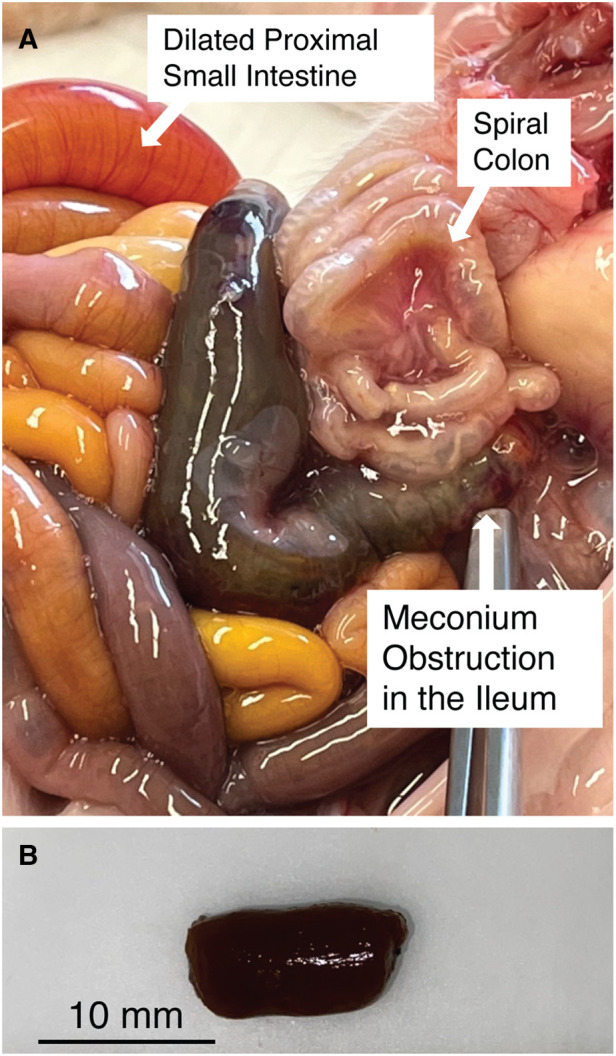
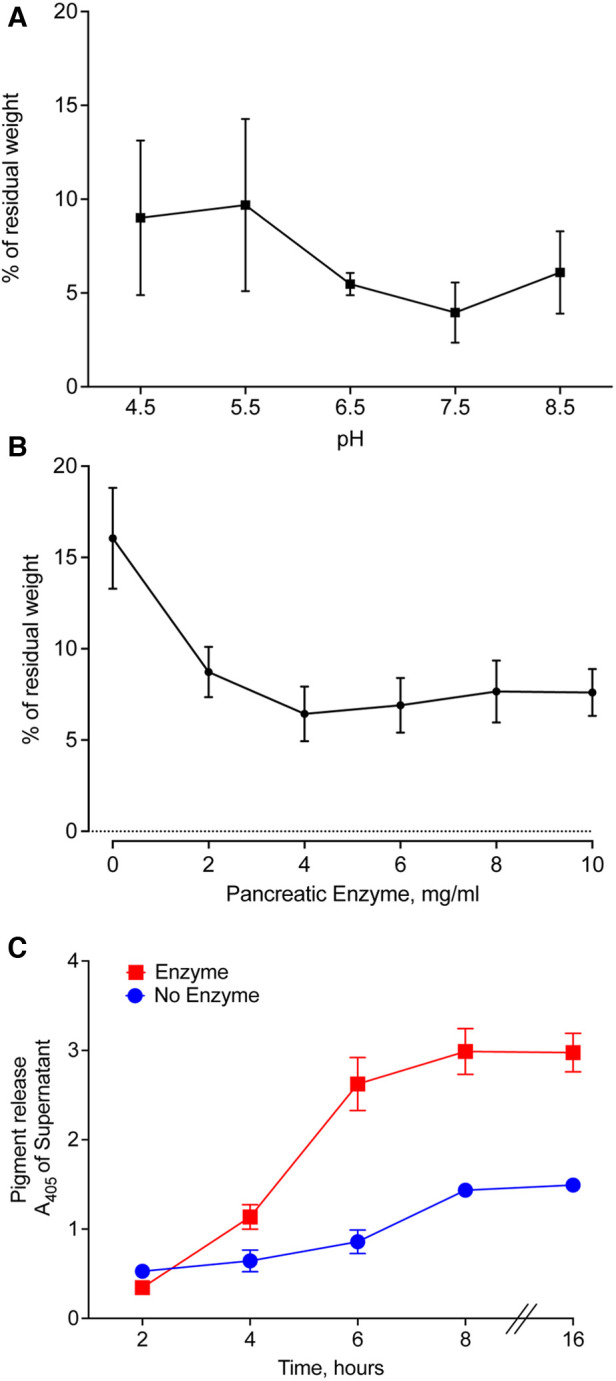
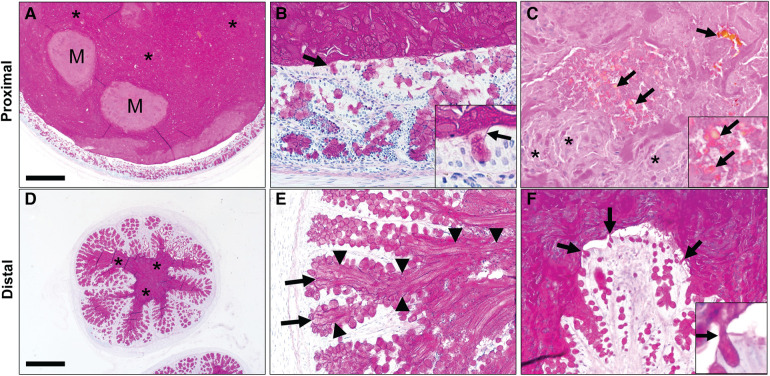
In CF pigs, meconium appeared as a solid pigmented mass obstructing the ileum. Meconium microscopically contained mucus glycoprotein, cellular debris, and bile pigments. Meconium fragments released pigments with maximal absorption at 405 nm after submersion in saline over approximately 8 h. Pancreatic enzymes significantly increased pigment release and decreased residual meconium solids. DTT did not improve meconium digestion and the acidic reducing agent NAC worsened digestion. Pancreatic enzymes digested CF meconium best at neutral pH in isotonic saline. We conclude that pancreatic enzymes digest obstructive meconium from CF pigs, while hydrating or reducing agents alone were less effective. This work suggests a potential role for pancreatic enzymes in relieving obstruction due to MI in newborns with CF.
胎粪性肠梗阻(MI)是一种危及生命的肠道梗阻疾病,影响约15%的囊性纤维化(CF)新生儿。目前针对MI的药物治疗常常失败,需要进行手术干预。MI通常发生在患有CF且胰腺功能不全的新生儿中。胎粪含有粘蛋白糖蛋白,这是胰腺酶或粘液溶解剂的潜在底物。我们的研究目的是使用CF猪模型确定胰腺酶联合粘液溶解治疗是否能溶解阻塞性胎粪。
我们在CF猪出生时收集胎粪,并将其浸泡在含有和不含有胰腺酶的溶液中,包括生理盐水、7%高渗盐水以及还原剂N - 乙酰半胱氨酸(NAC)和二硫苏糖醇(DTT)。我们在37°C下搅拌消化胎粪,通过分光光度法测量胎粪色素释放量,并通过过滤测量残留胎粪固体量。
在CF猪中,胎粪表现为阻塞回肠的固体色素团块。显微镜下,胎粪含有粘液糖蛋白、细胞碎片和胆色素。胎粪碎片在盐水中浸泡约8小时后释放出在405 nm处具有最大吸收的色素。胰腺酶显著增加色素释放并减少残留胎粪固体量。DTT并未改善胎粪消化,而酸性还原剂NAC则使消化恶化。胰腺酶在等渗盐水中的中性pH条件下对CF胎粪的消化效果最佳。我们得出结论,胰腺酶可消化CF猪的阻塞性胎粪,而单独使用保湿剂或还原剂效果较差。这项工作表明胰腺酶在缓解CF新生儿因MI导致的梗阻方面具有潜在作用。