Justen Anna, Schaldach Gerhard, Thommes Markus
Laboratory of Solids Process Engineering, Department of Biochemical and Chemical Engineering, Technical University Dortmund, Emil-Figge-Straße 68, 44227 Dortmund, Germany.
Pharmaceutics. 2024 Apr 7;16(4):510. doi: 10.3390/pharmaceutics16040510.
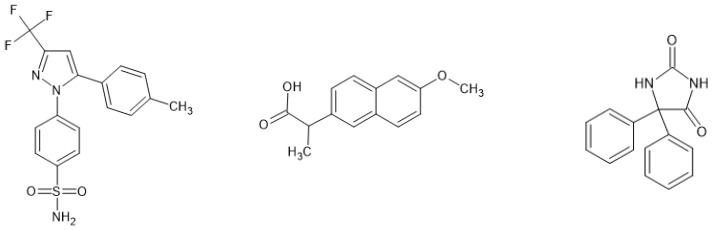
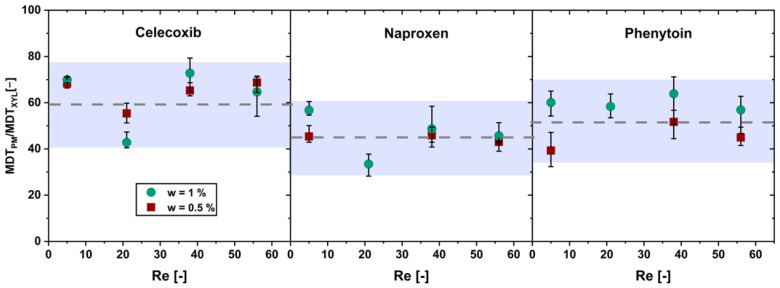
Solid dispersions are a promising approach to enhance the dissolution of poorly water-soluble drugs. Solid crystalline formulations show a fast drug dissolution and a high thermodynamic stability. To understand the mechanisms leading to the faster dissolution of solid crystalline formulations, physical mixtures of the poorly soluble drugs celecoxib, naproxen and phenytoin were investigated in the flow through cell (apparatus 4). The effect of drug load, hydrodynamics in the flow through cell and particle size reduction in co-milled physical mixtures were studied. A carrier- and drug-enabled dissolution could be distinguished. Below a certain drug load, the limit of drug load, carrier-enabled dissolution occurred, and above this value, the drug defined the dissolution rate. For a carrier-enabled behavior, the dissolution kinetics can be divided into a first fast phase, a second slow phase and a transition phase in between. This study contributes to the understanding of the dissolution mechanism in solid crystalline formulations and is thereby valuable for the process and formulation development.
固体分散体是提高难溶性药物溶出度的一种有前景的方法。固体结晶制剂表现出快速的药物溶出和高的热力学稳定性。为了理解导致固体结晶制剂更快溶出的机制,在流通池(装置4)中研究了难溶性药物塞来昔布、萘普生和苯妥英的物理混合物。研究了药物负载量、流通池中的流体动力学以及共研磨物理混合物中粒径减小的影响。可以区分载体介导的溶出和药物介导的溶出。在一定药物负载量以下,即药物负载量极限,发生载体介导的溶出,高于该值时,药物决定溶出速率。对于载体介导的行为,溶出动力学可分为第一个快速阶段、第二个缓慢阶段以及两者之间的过渡阶段。本研究有助于理解固体结晶制剂中的溶出机制,因此对工艺和制剂开发具有重要价值。