Mazzantini Costanza, El Bourji Zahraa, Parisio Carmen, Davolio Pier Luigi, Cocchi Arianna, Pellegrini-Giampietro Domenico E, Landucci Elisa
Department of Health Sciences, Section of Clinical Pharmacology and Oncology, University of Florence, Viale Pieraccini 6, 50139 Florence, Italy.
Farmacia del Madonnone, Via Aretina 9R, 50135 Florence, Italy.
Pharmaceuticals (Basel). 2024 Apr 7;17(4):467. doi: 10.3390/ph17040467.
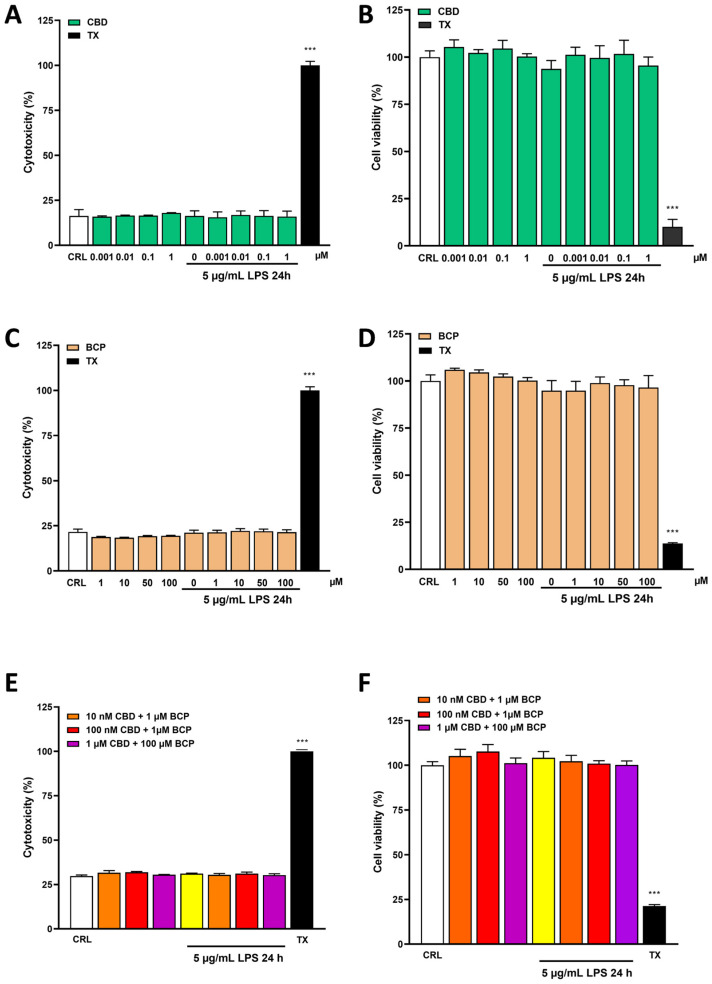
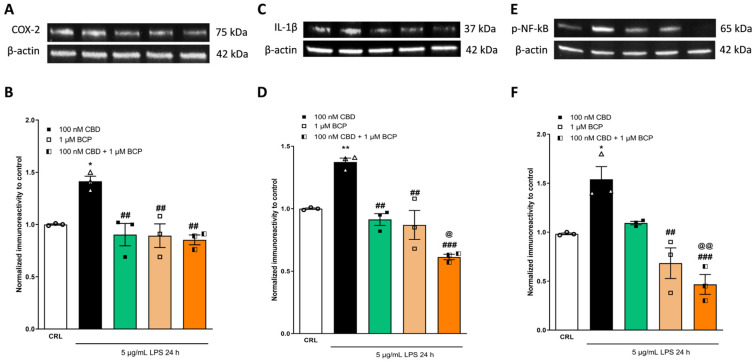
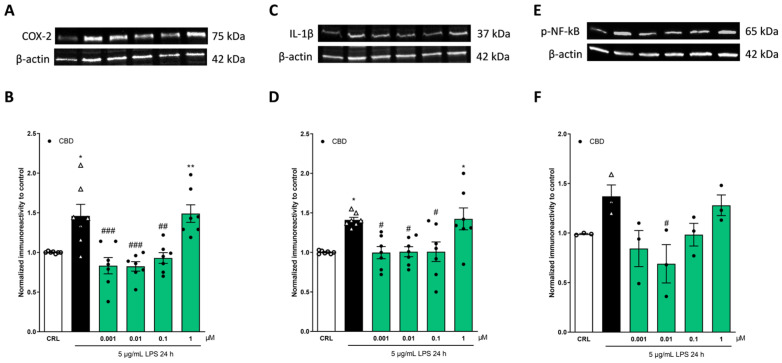
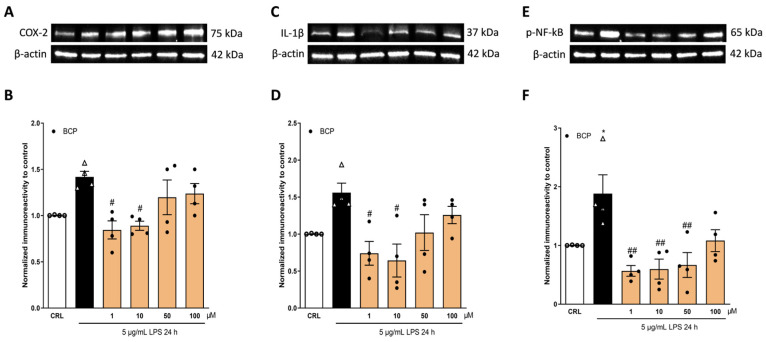
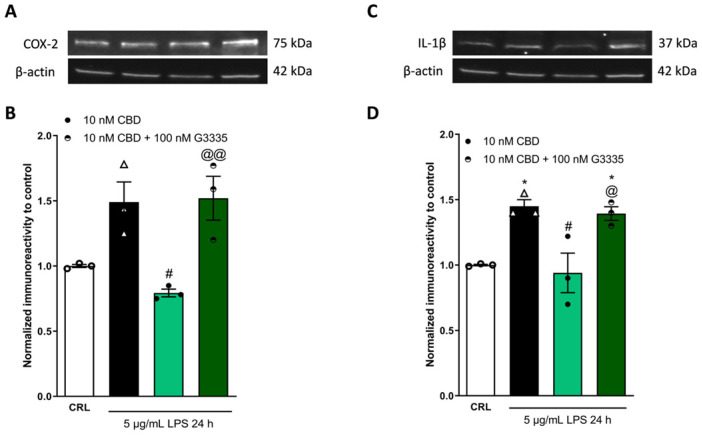
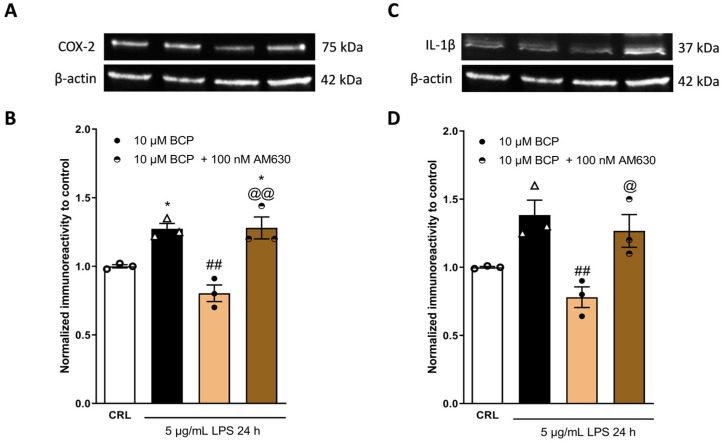
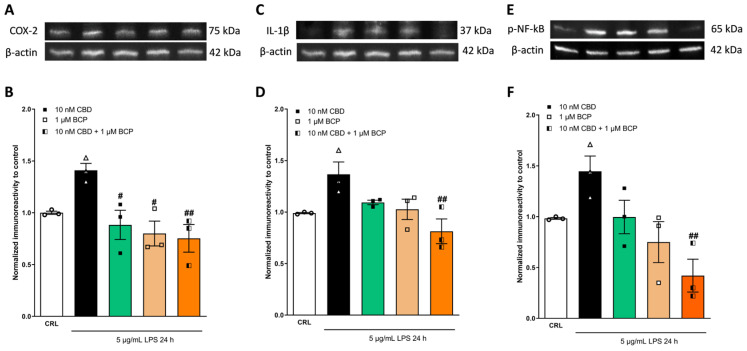
Cannabis contains over 500 different compounds, including cannabinoids, terpenoids, and flavonoids. Cannabidiol (CBD) is a non-psychoactive constituent, whereas beta-caryophyllene (BCP) is one of most the well-known terpenoids of . In recent years, there has been an emerging idea that the beneficial activities of these compounds are greater when they are combined. The aim of this study was to evaluate the anti-inflammatory effect of CBD and BCP using the in vitro model of lipopolysaccharide (LPS)-stimulated human keratinocytes (HaCaT) cells. The vitality of the cells was quantified using LDH and MTT assays. The levels of the following pro-inflammatory proteins and genes were quantified: IL-1β, COX-2, and phospho-NF-κB p65 (p-p65) through Western blotting (WB) and interleukin-1β (IL-1β), interleukin-6 (IL-6), and tumor necrosis factor-α (TNFα) through quantitative real-time polymerase chain reaction (RT-qPCR). When present in the incubation medium, CBD and BCP reduced the increased levels of pro-inflammatory proteins (IL-1β, COX-2, and p-NF-kB) induced by LPS. The anti-inflammatory effects of CBD were blocked by a PPARγ antagonist, whereas a CB2 antagonist was able to revert the effects of BCP. Selected concentrations of CBD and BCP were able to revert the increases in the expression of pro-inflammatory genes (IL-1β, IL-6, and TNFα), and these effects were significant when the drugs were used in combination. Our results suggest that CBD and BCP work in concert to produce a major anti-inflammatory effect with good safety profiles.
大麻含有500多种不同的化合物,包括大麻素、萜类化合物和黄酮类化合物。大麻二酚(CBD)是一种不具有精神活性的成分,而β-石竹烯(BCP)是最著名的萜类化合物之一。近年来,一种新出现的观点认为,这些化合物联合使用时的有益活性更强。本研究的目的是使用脂多糖(LPS)刺激的人角质形成细胞(HaCaT)的体外模型来评估CBD和BCP的抗炎作用。使用乳酸脱氢酶(LDH)和噻唑蓝(MTT)试验对细胞活力进行定量。通过蛋白质免疫印迹法(WB)对以下促炎蛋白和基因的水平进行定量:白细胞介素-1β(IL-1β)、环氧化酶-2(COX-2)和磷酸化核因子-κB p65(p-p65),并通过定量实时聚合酶链反应(RT-qPCR)对白细胞介素-1β(IL-1β)、白细胞介素-6(IL-6)和肿瘤坏死因子-α(TNFα)进行定量。当存在于孵育培养基中时,CBD和BCP降低了LPS诱导的促炎蛋白(IL-1β、COX-2和p-NF-κB)水平的升高。PPARγ拮抗剂可阻断CBD的抗炎作用,而CB2拮抗剂能够逆转BCP的作用。选定浓度的CBD和BCP能够逆转促炎基因(IL-1β、IL-6和TNFα)表达的增加,并且当药物联合使用时这些作用具有显著性。我们的结果表明,CBD和BCP协同发挥作用,产生主要的抗炎作用,且安全性良好。