Ravic Marko, Srejovic Ivan, Novakovic Jovana, Andjic Marijana, Sretenovic Jasmina, Muric Maja, Nikolic Marina, Bolevich Sergey, Alekseevich Kasabov Kirill, Petrovich Fisenko Vladimir, Stojanovic Aleksandra, Jakovljevic Vladimir
Department of Pharmacy, Faculty of Medical Sciences, University of Kragujevac, Svetozara Markovica 69, 34000 Kragujevac, Serbia.
Center of Excellence for the Study of Redox Balance in Cardiovascular and Metabolic Disorders, University of Kragujevac, Svetozara Markovica 69, 34000 Kragujevac, Serbia.
Pharmaceuticals (Basel). 2024 Apr 19;17(4):525. doi: 10.3390/ph17040525.
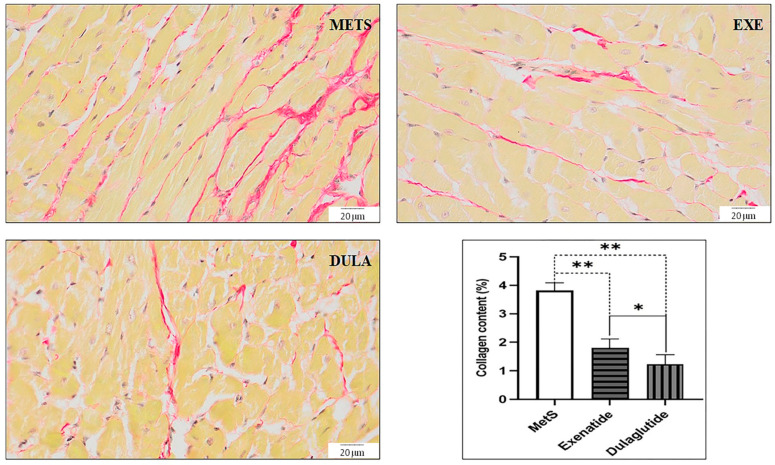
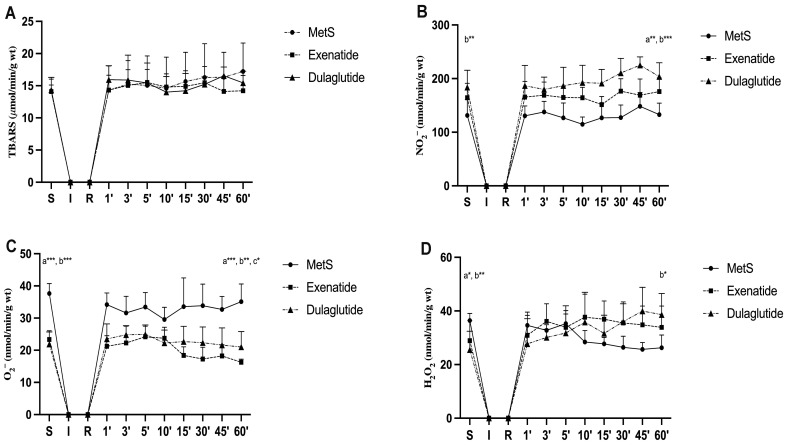
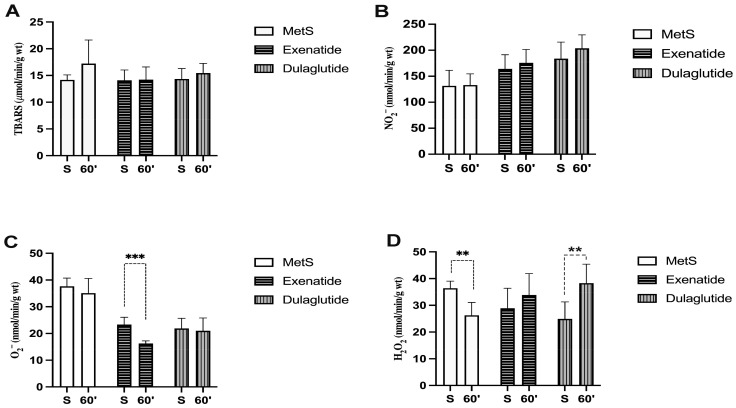
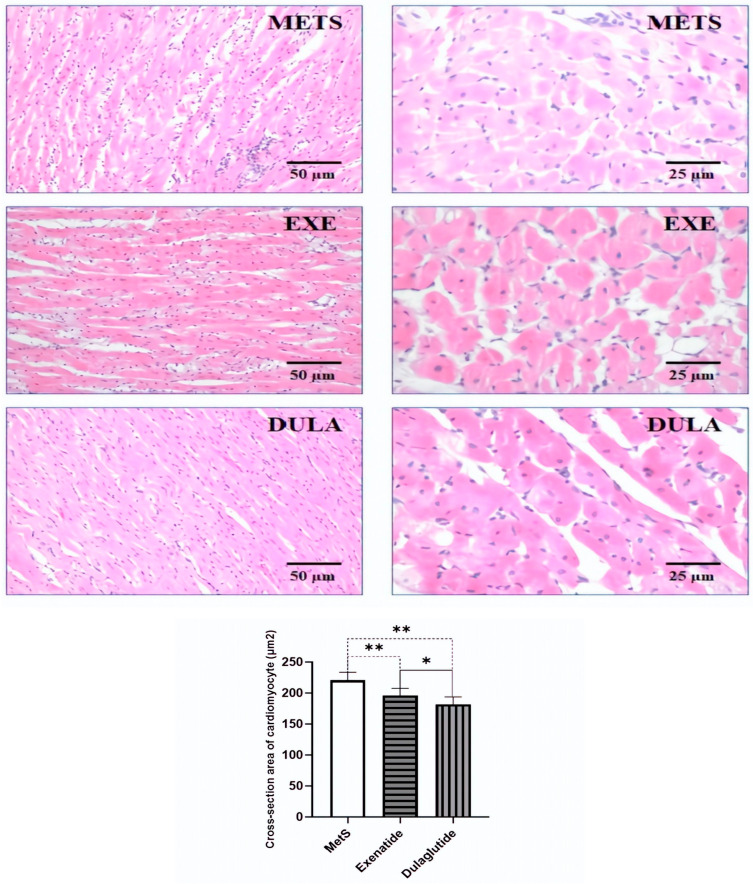
Metabolic syndrome (MetS) represents an important factor that increases the risk of myocardial infarction, and more severe complications. Glucagon Like Peptide-1 Receptor Agonists (GLP-1RAs) exhibit cardioprotective potential, but their efficacy in MetS-related myocardial dysfunction has not been fully explored. Therefore, we aimed to assess the effects of exenatide and dulaglutide on heart function and redox balance in MetS-induced rats. Twenty-four Wistar albino rats with induced MetS were divided into three groups: MetS, exenatide-treated (5 µg/kg), dulaglutide-treated (0.6 mg/kg). After 6 weeks of treatment, in vivo heart function was assessed via echocardiography, while ex vivo function was evaluated using a Langendorff apparatus to simulate ischemia-reperfusion injury. Heart tissue samples were analyzed histologically, and oxidative stress biomarkers were measured spectrophotometrically from the coronary venous effluent. Both exenatide and dulaglutide significantly improved the ejection fraction by 3% and 7%, respectively, compared to the MetS group. Histological analyses corroborated these findings, revealing a reduction in the cross-sectional area of cardiomyocytes by 11% in the exenatide and 18% in the dulaglutide group, indicating reduced myocardial damage in GLP-1RA-treated rats. Our findings suggest strong cardioprotective potential of GLP-1RAs in MetS, with dulaglutide showing a slight advantage. Thus, both exenatide and dulaglutide are potentially promising targets for cardioprotection and reducing mortality in MetS patients.
代谢综合征(MetS)是增加心肌梗死风险及更严重并发症的重要因素。胰高血糖素样肽-1受体激动剂(GLP-1RAs)具有心脏保护潜力,但其在与MetS相关的心肌功能障碍中的疗效尚未得到充分研究。因此,我们旨在评估艾塞那肽和度拉糖肽对MetS诱导大鼠心脏功能和氧化还原平衡的影响。将24只诱导出MetS的Wistar白化大鼠分为三组:MetS组、艾塞那肽治疗组(5μg/kg)、度拉糖肽治疗组(0.6mg/kg)。治疗6周后,通过超声心动图评估体内心脏功能,同时使用Langendorff装置评估离体功能以模拟缺血再灌注损伤。对心脏组织样本进行组织学分析,并通过分光光度法从冠状静脉流出液中测量氧化应激生物标志物。与MetS组相比,艾塞那肽和度拉糖肽分别使射血分数显著提高了3%和7%。组织学分析证实了这些结果,显示艾塞那肽组心肌细胞横截面积减少了11%,度拉糖肽组减少了18%,表明GLP-1RA治疗的大鼠心肌损伤减轻。我们的研究结果表明GLP-1RAs在MetS中具有强大的心脏保护潜力,度拉糖肽显示出轻微优势。因此,艾塞那肽和度拉糖肽都是心脏保护及降低MetS患者死亡率的潜在有前景的靶点。